


Antique Glass Condiment Bottles
Antique glass condiment bottles appear in domestic settings as cruet sets, cruet stands, and decanter sets, offering period charm for the dining table.
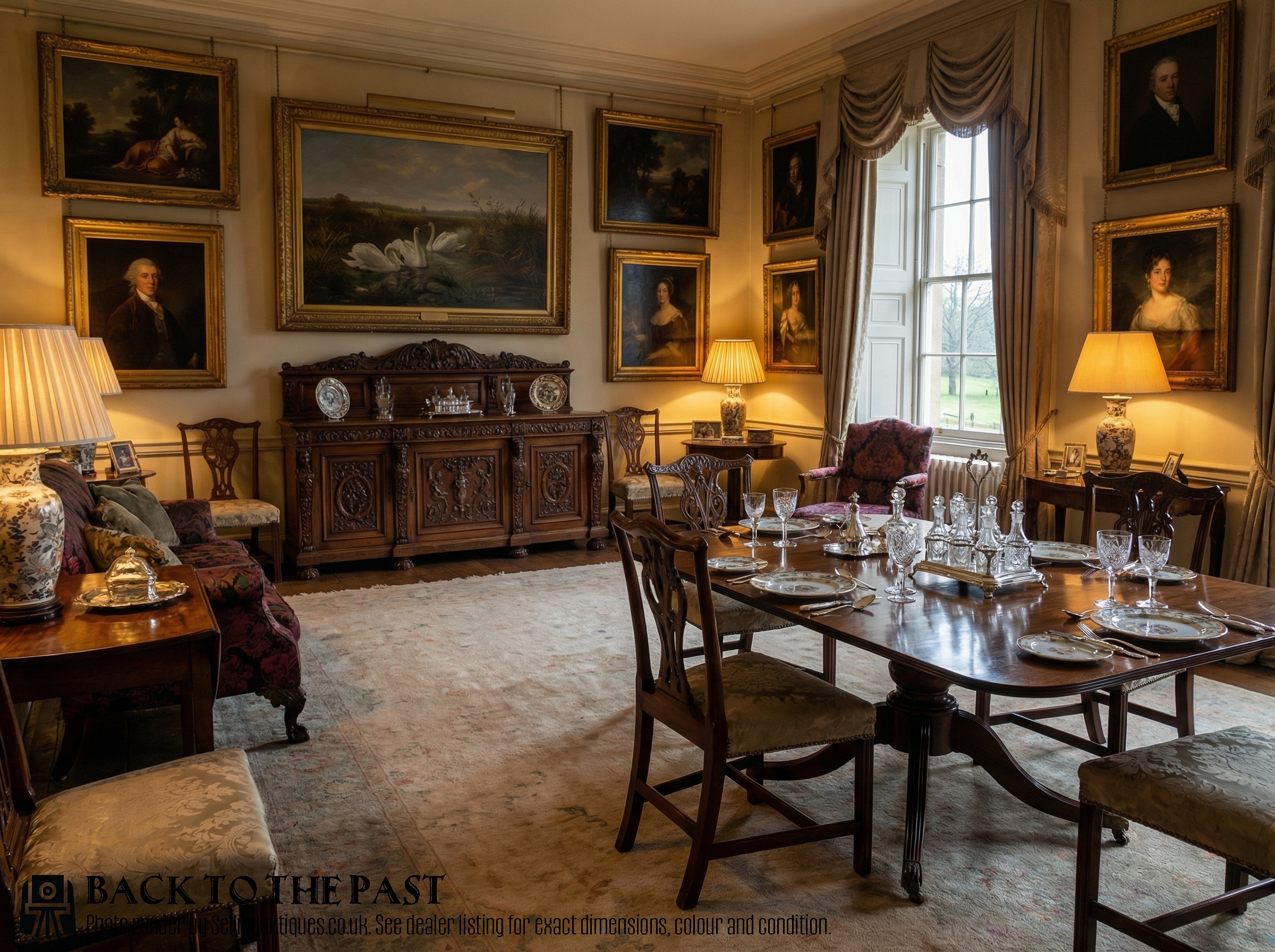
Antique Glass Condiment Bottles
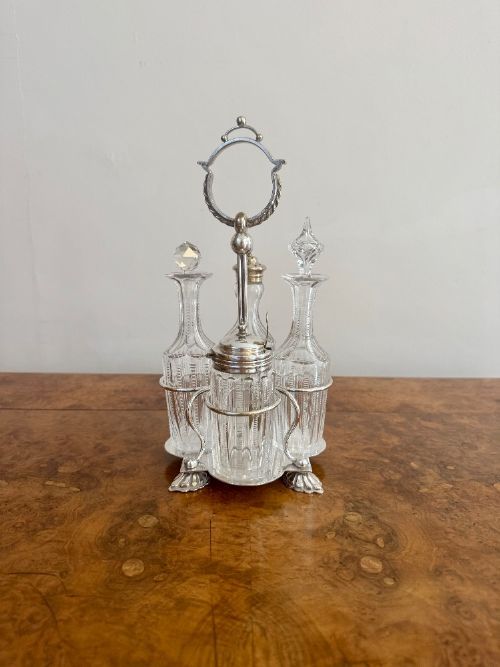
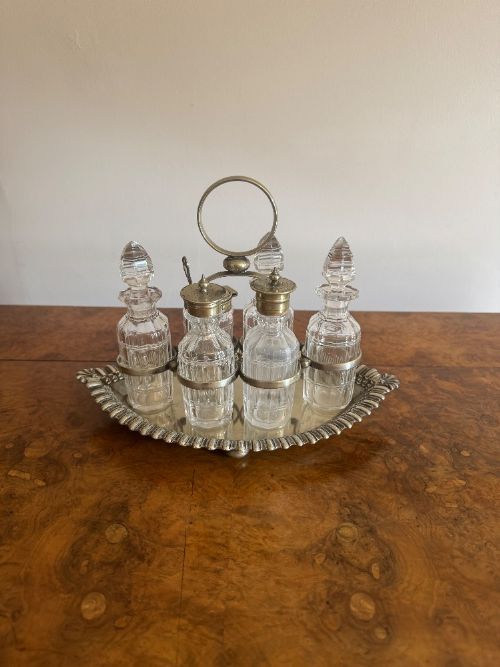
When you search for antique glass condiment bottles, you encounter items primarily structured around cruet sets, cruet stands, and decanter sets spanning the Georgian, Victorian, Edwardian, and Art Deco periods. The Edwardian silver plated six bottle cruet set stands as the version most frequently met on this page, reflecting the formal dining habits of the early twentieth century.
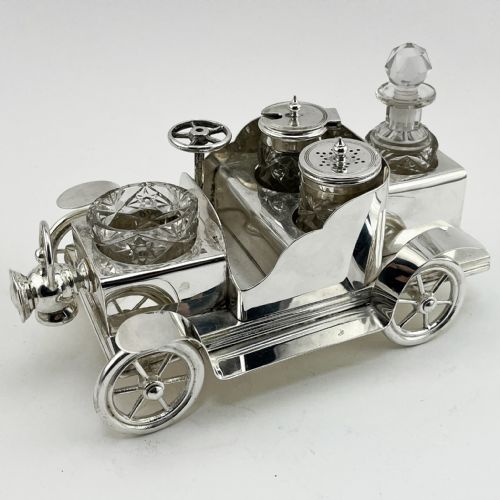
These table wares range from modest three bottle decanter cruets up to large oval eight piece silver plated assemblies designed to hold oil, vinegar, and various sauces. Many examples combine glass vessels with silver plate, sterling silver, Sheffield plate, or ebonised stands, demonstrating the functional elegance of nineteenth and early twentieth century dining.
Materials and construction
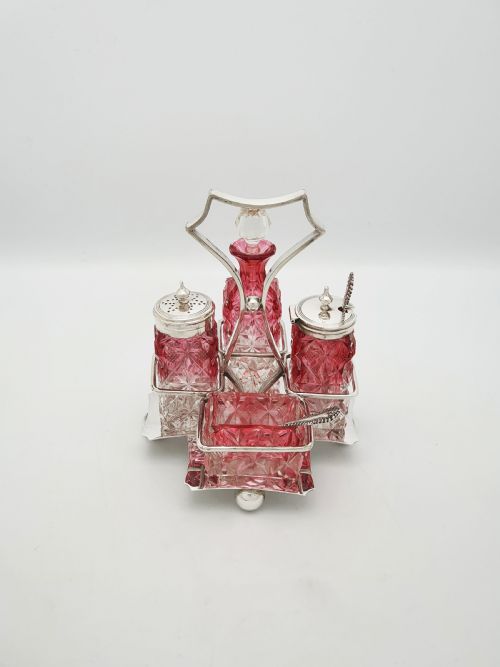
Makers utilised clear glass, cut glass, lead crystal, and cranberry glass for the bottles, pairing them with metal mounts and stands formed from sterling silver, silver plate, and Old Sheffield plate. Heavy lead crystal provides the refractive weight seen in later Art Deco items, while cranberry flashed cut glass introduces vibrant colour to Edwardian table services.
Metal components involve cast or plated frameworks, sometimes featuring complex handles and collar mounts that secure the glass inserts. Stands often incorporate specialised rings to hold individual bottles firmly in place during service.
Listings feature periods from the eighteenth century through to the Art Deco era of the 1920s, utilising materials such as cranberry glass and Sheffield plate.
Assessing quality in antique cruets
Quality rests upon the clarity and depth of the glass cutting, the weight of the metal mounts, and the completeness of the set. Heavier lead crystal and deeply hand cut patterns separate superior vessels from simpler pressed glass alternatives.
The integration between the glass bottles and their silver or plated stands dictates overall refinement. Matching original glass bottles within a hallmarked or marked silver stand command greater regard than assembled or later replacement sets.
Walker & Hall·Charles Thomas Fox·Elkington & Co·Hester Bateman·Wade Wingfield Wilkins
The Antique Glass Condiment Bottles Glossary
- Cruet set
- A matched assembly of glass bottles or cruets held in a stand for condiments such as oil, vinegar, salt, and pepper.
- Cranberry glass
- A rich red glass produced by adding gold chloride to the molten batch, popular during the Victorian and Edwardian eras.
- Sheffield plate
- An early form of composite metal made by fusing a thin sheet of silver to a thicker copper base, utilised before electroplating.
- Lead crystal
- Glass containing lead oxide, which increases brilliance, weight, and the capacity to refract light.
- Cruet stand
- The metal, wooden, or ebonised frame designed to hold multiple condiment bottles securely for table service.
Antique Glass Condiment Bottles: Frequently Asked Questions
What are antique glass condiment bottles used for?
These glass vessels served dining tables by holding liquid condiments such as oil and vinegar, alongside dry seasonings contained in associated castors. They allowed hosts to present various table sauces in coordinated glass and metal holders during formal meals.
Over time, dining customs changed, shifting these sets from everyday utility on the dining table to decorative display pieces in domestic interiors.
How do I identify a Georgian cruet set?
Georgian cruet sets date from the eighteenth and early nineteenth centuries, characterised by restrained forms, often featuring hallmarked silver frames and matching cut glass bottles. Look for hallmarks and specific silversmith marks that confirm the period of production.
These pieces typically display heavier silver work and simpler, more classical proportions compared to later Victorian and Edwardian examples.
How should I display a cruet set at home?
Cruet sets sit well on sideboards, dining tables, or within glazed cabinets where light can catch the cut glass surfaces. Ensuring the bottles are clean and securely seated in their stands highlights their decorative form.
Keep them away from direct heat sources to protect any original plating or delicate glass components from unnecessary wear.