
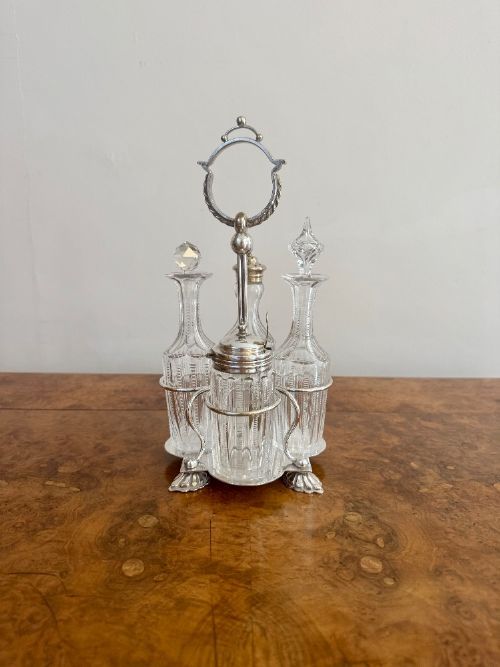
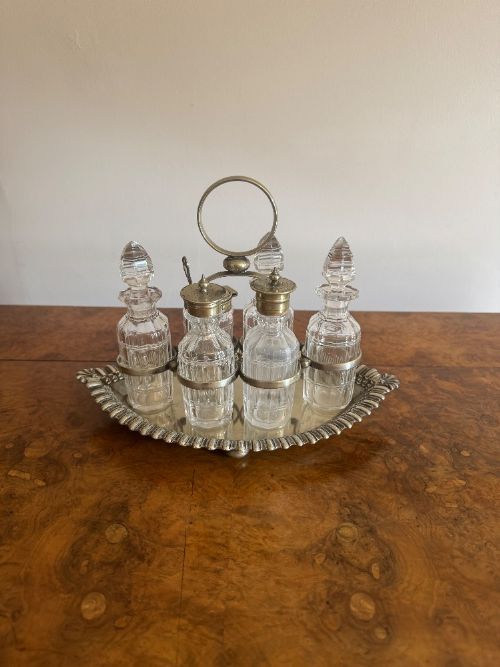


Victorian Silver Oil Vinegar
These Victorian silver oil vinegar pieces are functional dining table accessories designed to hold condiments, offering genuine period character for the dining room.
Victorian Silver Oil Vinegar
When you search for victorian silver oil vinegar, you are looking at tableware accessories designed to hold and dispense liquid condiments at the dining table. These pieces range from pairs of glass bottles with silver mounts to multi-bottle cruet stands incorporating compartments for oil and vinegar alongside other seasonings.
You are most likely to meet silver-plated and sterling silver frames holding cut glass bottles, often featuring hinged caps or spouts. These items date primarily from the nineteenth century and the Edwardian period, reflecting formal dining habits of past eras.
How they were made
The construction of these items combines silversmithing with glass cutting. Frames and mounts utilise sterling silver or silver plate, shaped into stands and bottle collars.
Bottles are formed from heavy cut glass, paired with metal stoppers, spouts, or silver caps. Gilt finishes occasionally appear on internal components or mounts.
What varies in quality
Quality varies according to the weight of the silver or plating and the precision of the glass cutting. Heavier frames with substantial mounts and deeply cut glass bottles represent the upper end of the range.
The complexity of the stand design also distinguishes pieces, with ornate Victorian and novelty figural frames showing greater labour than simple utilitarian stands.
Mappin Brothers·Walker & Hall·Elkington & Co·Wade Wingfield Wilkins·William Hutton & Sons
The Victorian Silver Oil Vinegar Glossary
- Cruet stand
- A metal frame designed to hold multiple condiment bottles securely for table service. These stands often feature a central carrying handle.
- Silver plate
- A base metal coated with a thin layer of silver, commonly utilised for nineteenth-century dining wares. This technique provided the appearance of solid silver at a lower cost.
- Sterling silver
- An alloy consisting of silver and other metals, standardised for durability and quality in silverware. Pieces made from this material bear official hallmarks.
- Cut glass
- Glass decorated by abrasive wheel cutting to create geometric patterns that refract light. This material forms the body of oil and vinegar bottles.
Victorian Silver Oil Vinegar: Frequently Asked Questions
How were oil and vinegar bottles used?
These bottles stood on the dining table to allow guests to dress salads and dishes to individual taste. The spouts or caps controlled the flow of liquid.
They were typically housed within a cruet stand alongside mustard pots and pepper castors during formal meals.
How do I clean silver mounts?
Clean silver mounts with a soft cloth and a specialised silver polish designed to remove tarnish without scratching the metal. Avoid getting polish on the glass or inside the bottles.
Wash the glass bottles separately in warm, soapy water and dry thoroughly before replacing the silver caps.
Are all cruet bottles made of glass?
The bottles themselves are invariably glass, often featuring cut geometric designs to catch the light on the dining table. The mounts, collars, and caps provide the silver or silver-plated elements.
Stands are constructed from metal, holding the glass bottles securely in place by the base or shoulders.
How can I tell the period of a set?
Dating relies on hallmarks stamped into the silver, registry marks on plated items, and stylistic clues such as Victorian Gothic revival details or Edwardian proportions. Maker marks also help narrow down the decade of production.
Comparing the cut of the glass and the design of the stand against documented examples confirms the era.