
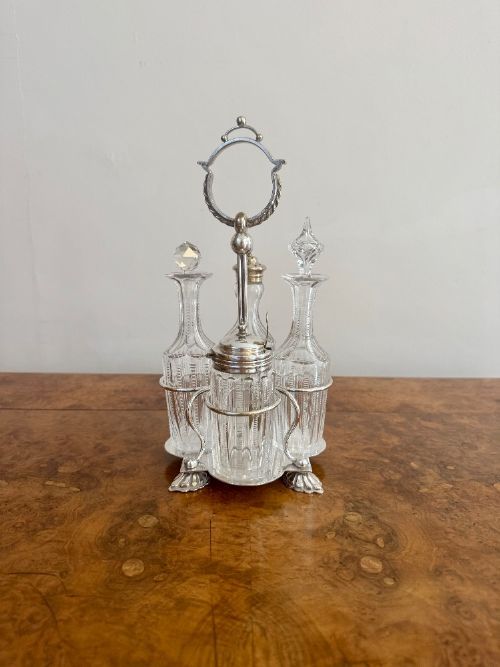
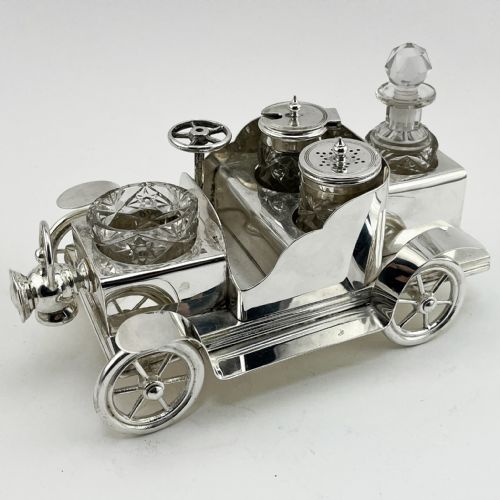


Vintage Glass Oil Decanter
These vintage glass oil decanter pieces bring practical elegance to the table, combining heavy cut glass with brilliant silver mounts.
Vintage Glass Oil Decanter
A vintage glass oil decanter sits at the centre of dining tables and cruet sets, designed to hold and pour culinary oils cleanly. Buyers examining this page encounter pieces spanning the Georgian, Victorian, Edwardian, and Art Deco periods, ranging from single ewers to multi-bottle cruet frames.
The selections here most frequently take the form of silver-plated or sterling silver mounted cruet sets, alongside standalone cut glass and cranberry glass bottles. Dating stretches from the nineteenth century into the twentieth century, showing diverse styles from novelty car cruet sets to formal Georgian frames.
Form follows function closely in these table wares, where narrow necks control the flow of oil and fitted stoppers preserve freshness. Whether configured as a pair of oil and vinegar bottles or integrated into an eight-piece frame, each item reflects the dining habits of its respective era.
How they were made
Glass bodies are formed from clear glass, crystal, or striking cranberry glass, frequently shaped through deep cutting techniques to catch the light. Workshops combined these glass vessels with silver plate and sterling silver mounts, creating secure collars, lips, and handles.
Some examples incorporate mahogany elements into their frames or bases, adding structural warmth alongside the cold brilliance of metal and glass. Silversmiths and glass cutters worked in tandem to produce vessels sturdy enough for daily dining yet refined enough for formal presentation.
The selection includes standalone decanters, ewers, matched pairs of oil and vinegar bottles, and multi-bottle cruet frames incorporating mahogany.
What varies in quality
Quality rests in the depth and crispness of the glass cutting, where sharper facets and heavier crystal create greater brilliance. The weight and thickness of the silver plate or sterling silver mounts also distinguish finer examples from standard production.
Design ambition separates basic containers from exceptional pieces, visible in unusual forms like novelty frames or paired oil and vinegar bottles with matching stoppers. Makers who invested greater skill in both the metal framework and the glass vessel produced enduring table wares that retain their balance and clarity.
Wade Wingfield Wilkins
The Vintage Glass Oil Decanter Glossary
- Cruet set
- A matched collection of glass bottles or decanters held in a metal frame for condiments and oils at the table. These sets often include receptacles for oil, vinegar, mustard, and pepper.
- Cranberry glass
- A rich red-pink glass created by adding gold chloride to the molten batch. It gained immense popularity during the Victorian era for decorative tableware.
- Sterling silver
- An alloy containing ninety-two point five percent silver by mass, with the remainder being other metals for durability. British pieces carry hallmark stamps indicating the assay office and year of testing.
- Cut glass
- Glassware decorated by grinding facets and patterns into the surface using rotating wheels. Deeper cuts require greater skill and yield brighter refraction.
- Silver plate
- A base metal coated with a thin layer of pure silver through electroplating or older fusion methods. This technique allowed makers to achieve the look of solid silver at a lower cost.
Vintage Glass Oil Decanter: Frequently Asked Questions
What is a vintage glass oil decanter used for?
These vessels held and poured culinary oils at the dining table, often paired alongside vinegar within a larger frame. Their narrow necks and fitted stoppers allowed precise pouring while protecting the contents.
Over generations, they transitioned from active dining furniture to decorative objects appreciated for their cut glass brilliance and silver mounts.
How do I date a glass oil decanter?
Dating relies on stylistic clues, glass colour, and any accompanying metal mounts or silver hallmarks. Georgian pieces tend toward simple elegance, while Victorian and Edwardian examples often feature heavier cut glass and elaborate silver-plated frames.
Art Deco items introduce geometric styling typical of the early twentieth century. Hallmarks on silver mounts provide the most precise manufacturing dates.
Are cruet sets and oil decanters the same thing?
An oil decanter is a single vessel designed specifically for oil, whereas a cruet set is a collection of multiple bottles housed in a frame. Many listings for oil decanters actually refer to individual bottles removed from larger cruet sets or made as matched pairs.
Both serve the same fundamental purpose of holding table condiments.
How do I clean an old glass oil decanter?
Cleaning requires gentle warm water and mild soap, avoiding harsh abrasives that might scratch the vintage glass or damage silver plate. Stubborn residue inside narrow necks responds best to specialised cleaning beads rather than harsh brushes.
Silver mounts should be polished carefully with a soft cloth to preserve the metal without touching the glass.