







Antique Giltwood Urns
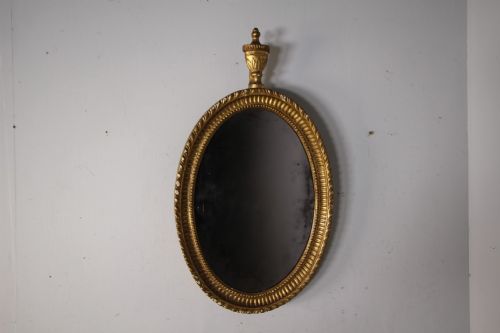
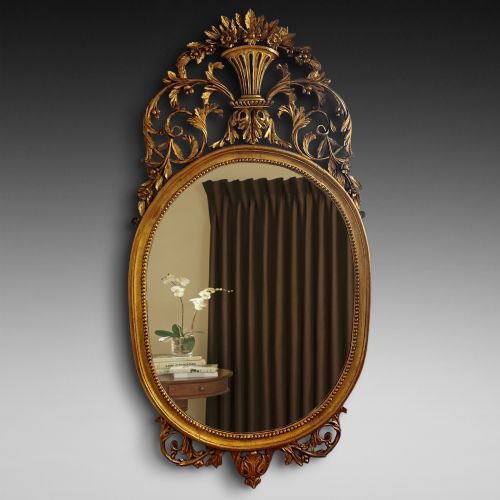
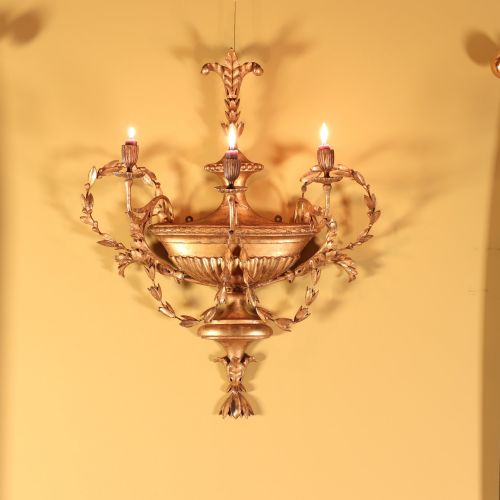
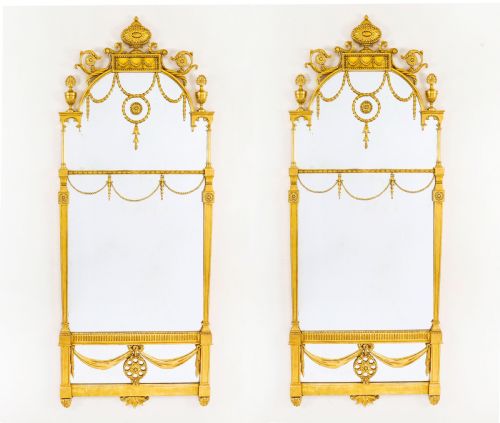
Antique giltwood urns bring classical form and metallic warmth to a room, appearing here primarily as stands, torcheres, and architectural fixtures.
Antique Giltwood Urns
Antique giltwood urns and their related supports take several forms across this selection, including urn stands, torcheres, and pedestals designed to elevate decorative objects. These items emerge from periods spanning the Georgian era through the Victorian and Edwardian decades, reflecting sustained interest in classical design.
Makers and craftsmen of the 18th and 19th centuries produced these forms in both English and continental workshops, drawing heavily on Neoclassical and Adam revival vocabularies. Buyers will frequently encounter torchere stands with marble tops, triform pedestals, and related display furniture alongside wall-mounted fittings.
The domestic role of these objects centres on display and elevation, placing sculptural vessels or lighting in prominent interior locations. Their survival demonstrates the enduring appeal of carved and gilded timber within period and eclectic schemes alike.
How they were made
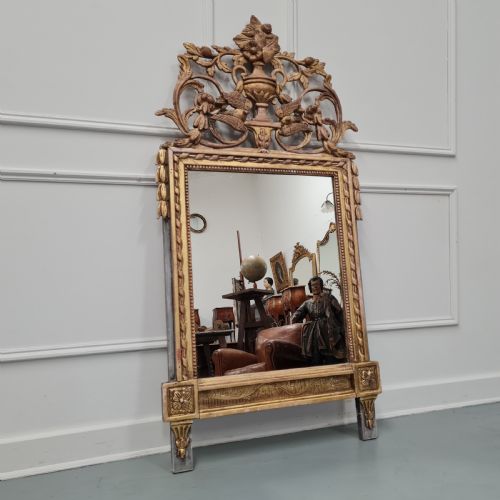
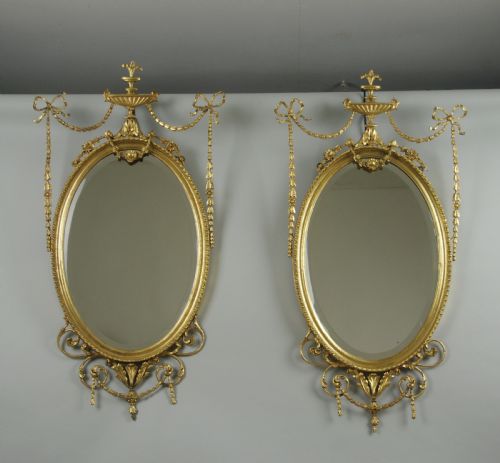
Makers constructed these pieces from timber substrates, applying layers of gesso to smooth the surface before adding gold leaf or parcel-gilt details. Carving directly into the wood provided crisp relief work for classical swags, fluting, and foliate motifs.
Surface finishing often combined burnished and matte sections of gold leaf to catch ambient light within a room. Structural stability for taller torchere stands and pedestals relied on traditional joinery, sometimes paired with inset marble table tops.
Listings span the 18th century through the Edwardian period, uniting giltwood, gesso, and marble in functional display forms.
What varies in quality
The depth and crispness of the hand-carving separate standard production from exceptional examples, as skilled carvers achieved sharper undercut details in the wood and gesso. Finer pieces retain their original gilding surfaces with minimal later intervention, showing natural ageing of the gold leaf over the gesso base.
Proportion and structural integrity define the upper tier of these stands and pedestals, ensuring that load-bearing elements remain balanced and secure. The quality of secondary materials, such as matched marble inserts on torchere tops, further distinguishes finer commissions from simpler workshop output.
The Antique Giltwood Urns Glossary
- Giltwood
- Timber covered with a thin layer of gold leaf. This finish gives the carved surfaces their characteristic metallic luminosity.
- Gesso
- A plaster-like mixture applied to wood surfaces as a preparation for gilding. It provides a smooth base that can be modelled or carved before leaf is laid.
- Torchere
- A tall stand designed to support a candelabrum or decorative urn. These pieces frequently feature marble tops and slender carved shafts.
- Neoclassical
- A style inspired by the classical art and architecture of ancient Greece and Rome. It dominates the design vocabulary of these pieces through symmetry and restrained ornamentation.
Antique Giltwood Urns: Frequently Asked Questions
What were antique urn stands used for?
These stands served to elevate decorative urns, vases, or lighting fixtures within formal rooms. Placing objects at eye level highlighted their sculptural qualities and craftsmanship.
In period interiors, they occupied corners, landings, or spaces between windows as part of a coordinated decorative scheme.
How do I care for giltwood surfaces?
Giltwood requires gentle dusting with a soft, dry brush to protect the delicate gold leaf and underlying gesso. Moisture and harsh cleaning agents must be avoided entirely.
Keeping pieces away from direct heat sources and strong sunlight prevents the timber substrate from warping and the gesso from cracking.
How do I identify Adam revival pieces?
Adam revival items draw on the 18th-century neoclassical designs associated with the Adam brothers. They typically feature symmetrical layouts, urn motifs, husks, and delicate fluting.
Later Victorian and Edwardian revivals adopted these same motifs, often combining carved giltwood with composition ornament.
Can these stands support heavy objects?
Most antique torcheres and pedestals are engineered to hold moderate weights such as porcelain urns, bronze figures, or lamps. Heavy stone sculptures require careful assessment of the central shaft and base stability.
Checking the rigidity of the joints ensures the piece can safely bear the intended display item.