

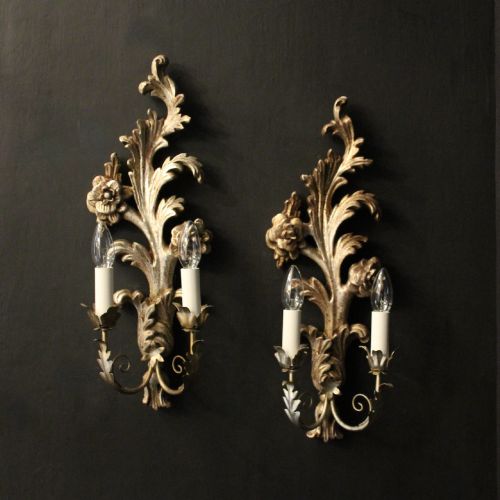
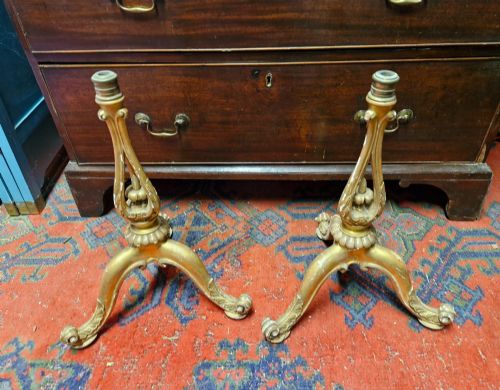
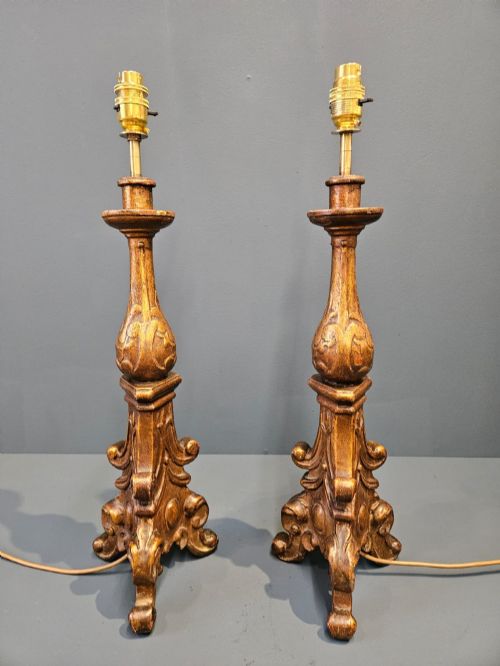


Pair of Giltwood Lamps
A pair of giltwood lamps brings warmth and carved texture to a room, offering matched illumination through time-worn gilded surfaces.
Pair of Giltwood Lamps
A pair of giltwood lamps comprises matched dual lighting fixtures shaped from timber and coated in gold leaf or metallic paint. These items emerge in forms ranging from table lamps and bedside consol pieces to towering floor standards and wall lights.
Buyers seeking this phrase encounter pieces spanning the eighteenth, nineteenth, and early twentieth centuries. Italian and French workshops dominate the origin points, applying regional vocabularies from Baroque to Neoclassical.
Standard lamp conversions often adapt older candle-lamps, torcheres, or candlesticks into electrified formats. Fabric shades or bare bulbs complete structures built originally to hold wax candles.
How they were made
Carved timber forms the core of these items, shaped by hand from woods like solid timber before receiving decorative gesso layers. Artisans then apply thin sheets of gold or silver leaf over the prepared wooden base.
Secondary materials such as brass, marble, and fabric appear in supporting roles for bases, weightings, and shades. Metal components integrate during later electrification phases while marble offers heavy counterweights to tall standard lamps.
The documented forms include table lamps, wall lights, floor standards, candelabra, and bedside console pieces originating mainly from France and Italy.
What varies in quality
The depth and crispness of the hand carving dictate the visual impact of the wooden structure beneath the gilding. Deeper undercut foliage and figures indicate skilled artisan labour compared to shallow mechanical shaping.
The application and wear of the gold or silver leaf determine surface authenticity and richness. Subtle craquelure and worn high points reveal genuine age, whereas flat modern paints lack the luminous depth of traditional leaf.
The Pair of Giltwood Lamps Glossary
- Giltwood
- Timber coated with gold leaf or metal powder over a prepared gesso base. This finish provides the characteristic metallic sheen seen across antique lighting.
- Neoclassical
- A design style drawing inspiration from classical antiquity, featuring symmetry, urns, and strict architectural proportions. It appears frequently in nineteenth-century French and Italian pieces.
- Torchere
- A tall decorative stand designed originally to hold a torch or single candle, often converted into a floor lamp. These items provide significant height and sculptural presence.
- Candelabra
- A branched lighting fixture holding multiple candles or bulbs simultaneously. Examples in this category often feature twin or triple arms branching from a central stem.
- Gesso
- A plaster-like mixture applied to wood surfaces to create a smooth foundation for gilding. It allows carvers to achieve sharp details before applying gold leaf.
Pair of Giltwood Lamps: Frequently Asked Questions
How do I wire old lamps safely?
Rewiring requires a qualified electrician to insert modern cord sets through the carved wooden channels without damaging the internal structure. Many older lamps retain hollow stems designed originally for weights or simple wiring pathways.
Fittings should match the scale of the timber base while complying with current safety standards. Retaining original switches or plugs is rarely practical for daily domestic use.
Are these originally lamps?
Numerous pieces begin life as candlesticks, torcheres, or candle-lamps before undergoing conversion to electricity in later decades. Alterations respect the original timber body while adding modern lamp holders.
Candle-lamps and standard lamps from earlier centuries adapt readily to contemporary wiring without losing their decorative function.
How do I clean giltwood surfaces?
Dusting requires a soft, dry brush to prevent abrasive particles from scratching the delicate metallic leaf. Moisture and chemical cleaners damage the underlying gesso and gold leaf layers permanently.
Gentle maintenance preserves the aged patina and prevents the thin metallic coating from flaking away from the timber.
What styles are common?
Italian Baroque and French Rococo styles bring exuberant, curved acanthus leaves and playful motifs to the woodwork. Neoclassical examples offer restrained lines, fluted columns, and symmetrical urn shapes.
Florentine and Venetian origins appear frequently among pieces displaying distinct regional carving traditions.