


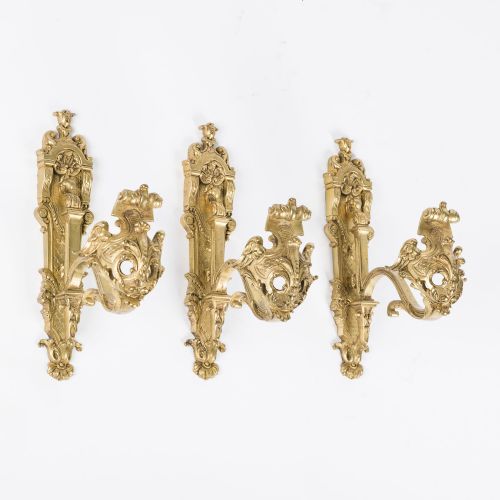


Antique Gilt Curtain Hooks
These antique gilt curtain hooks hold heavy window drapery with the heavy, golden gleam of French and English rooms.
Antique Gilt Curtain Hooks
Antique gilt curtain hooks are heavy metal fasteners designed to hold back window drapery on either side of a casement. When you search for antique gilt curtain hooks, you encounter hardware created to shape heavy fabrics in formal rooms.
The most common examples on this page date to the nineteenth century, particularly the eighteen-eighties, often coming from French makers. These pieces take the form of curtain tie backs, curtain tiebacks, and wall hooks.
Design spans multiple historical revivals including French Rococo, French Rococo Revival, French Empire Revival, Louis XVI, Gothic Revival, and Georgian aesthetics. They appear in pairs or small sets intended to match the symmetry of period interiors.
How they were made
These items rely on cast metals such as ormolu, gilt bronze, brass, gilded bronze, gilt metal, copper, and gilt brass. Molten metal was poured into moulds to create decorative forms before receiving a surface layer of gold or gilt finish.
Enamel is utilised in select pieces for added colour and surface detail alongside the gilt metalwork. Artisans chased and finished the cast bronze and brass surfaces by hand to sharpen foliage, scrolls, and figural details.
Listings feature items from the eighteenth century, the Victorian era, and specific years including eighteen-seventy and eighteen-eighty.
What varies in quality
The distinction between standard hardware and finer work lies in the crispness of the cast decoration and the depth of the chasing. Superior examples display sharply defined ornament without the softening of detail that comes from worn moulds.
The quality of the gilding itself determines the longevity of the golden surface and its warmth under light. Heavier bronze castings feel substantial in the hand and maintain their structural integrity when supporting heavy drapery.
Henri Picard
The Antique Gilt Curtain Hooks Glossary
- Ormolu
- Finely chopped high-karat gold applied to a bronze base using a mercury amalgamation technique. This historic process produces a deep, matte golden finish characteristic of French decorative arts.
- Gilt bronze
- Copper alloy covered with a thin layer of gold leaf or gilt wash. It provides the durability of bronze with the appearance of solid gold.
- Tie back
- A hardware fixture mounted to the wall beside a window to hold curtains open. They secure heavy fabric drapes away from the glass.
- Rococo Revival
- A nineteenth-century design movement imitating the ornate, asymmetrical scrolls and natural motifs of the eighteenth century. This style dominates many French domestic fittings of the period.
- Gothic Revival
- An architectural and decorative style drawing on medieval forms, pointed arches, and mythical creatures such as dragons. It appears in heavier hardware designed for solemn interiors.
Antique Gilt Curtain Hooks: Frequently Asked Questions
How were antique gilt curtain hooks used?
These hooks were secured to the wall beside a window frame to hold heavy drapery back from the glass. Fabric passed over or behind the projecting arm to let light enter the room.
They functioned as both practical hardware and decorative ornaments in formal reception rooms. Pairs ensured symmetrical draping of curtains on either side of a casement.
What periods do these hooks come from?
The pieces span the eighteenth and nineteenth centuries, including the Georgian era and the Victorian period. Many examples date specifically to the eighteen-seventies and eighteen-eighties.
French workshops produced a large portion of the surviving decorative hardware from this timeframe. Design characteristics often reflect revival movements like Louis XVI and Rococo.
What materials are these curtain hooks made of?
Makers utilised cast metals including ormolu, gilt bronze, brass, gilded bronze, gilt metal, copper, and gilt brass. Enamel occasionally appears as a contrasting decorative element on the surface.
The core metal provides structural strength to support heavy fabrics, while the surface gilding delivers a rich golden appearance.
How do I live with antique curtain hooks?
These items mount directly to walls using appropriate fixings to support the weight of historical drapery. They work best with heavy textiles like velvet or damask that match their substantial character.
Cleaning requires gentle dusting with a soft cloth to protect the delicate gilt surface from abrasion. Avoid chemical polishes that can strip away the historic gold finish.