
Antique Gilt Centrepiece
An antique gilt centrepiece commands the middle of a dining table or sideboard, bringing light and presence to a room through gilded metal, crystal and porcelain.
Antique Gilt Centrepiece
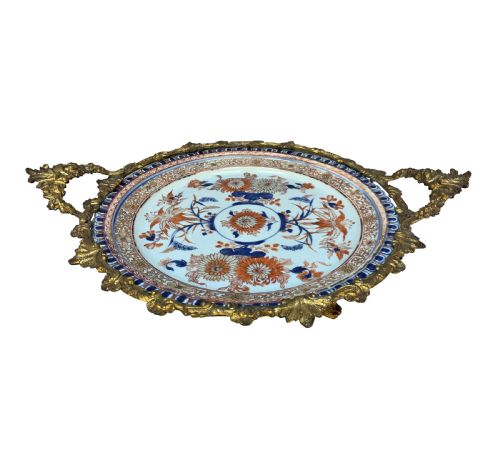
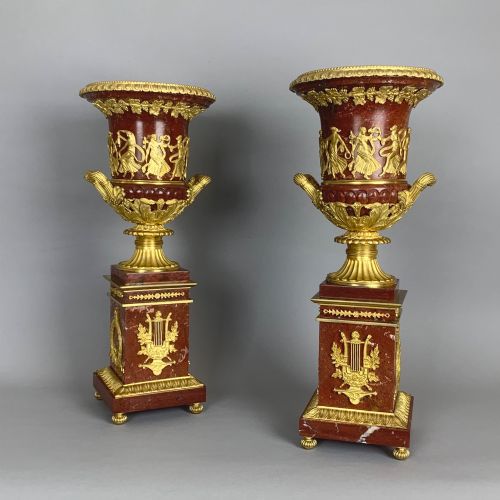
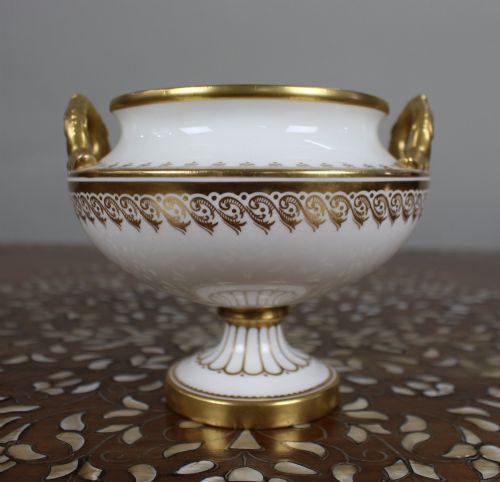
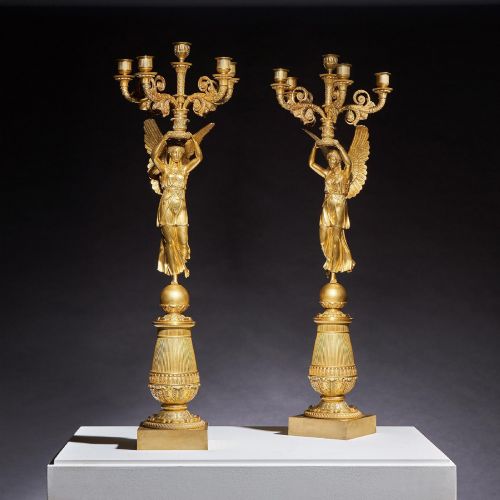
An antique gilt centrepiece takes several characteristic shapes across the listings, most frequently appearing as a decorative bowl, tazza, urn or candelabra designed to anchor a table setting. These pieces span the eighteenth, nineteenth and early twentieth centuries, drawing heavily on French Empire, Rococo Revival and Regency design vocabularies.
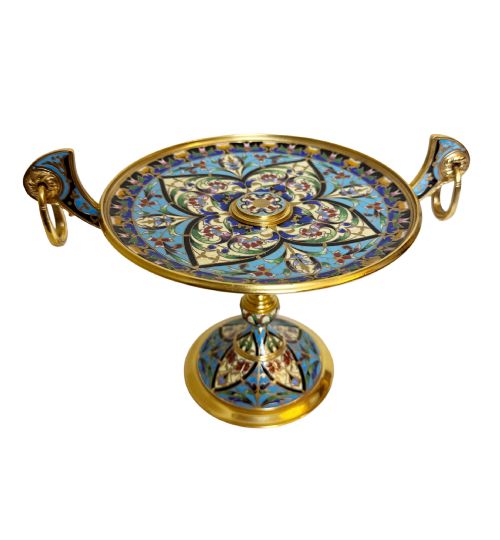
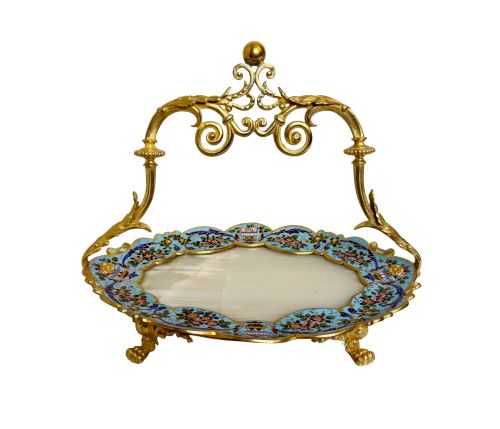
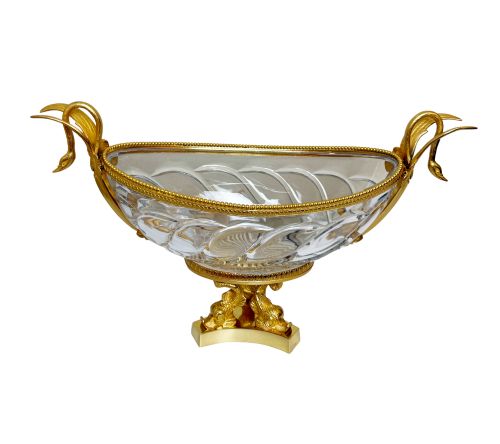
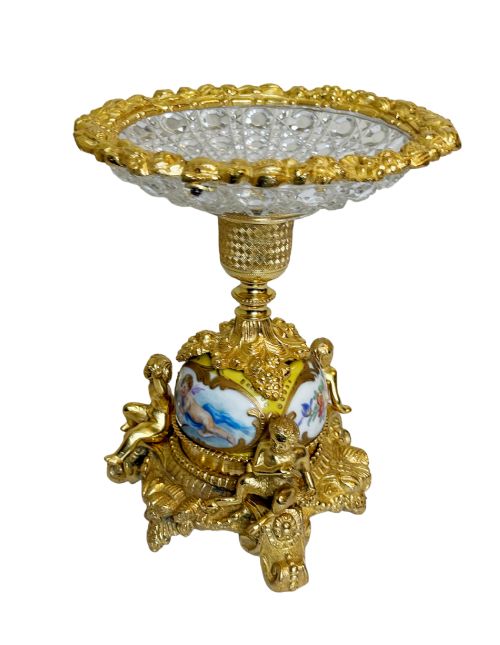
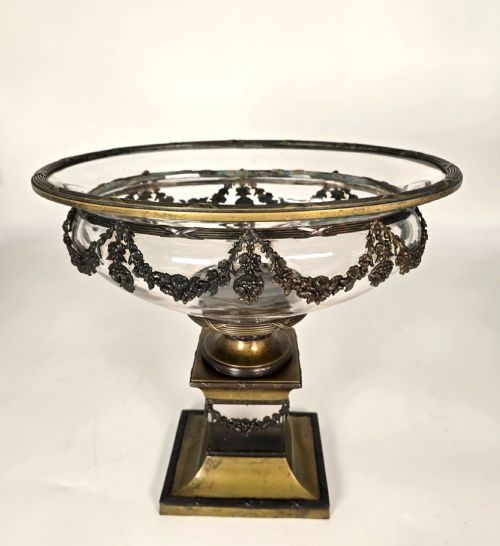
The most common examples met on this page combine gilded bronze or ormolu mounts with cut crystal vessels, porcelain bodies or champlevé enamel detailing. English and French workshops dominate the selection, often integrating classical motifs or Grand Tour reductions alongside Asian export ceramics mounted in Europe.
Materials and Technique
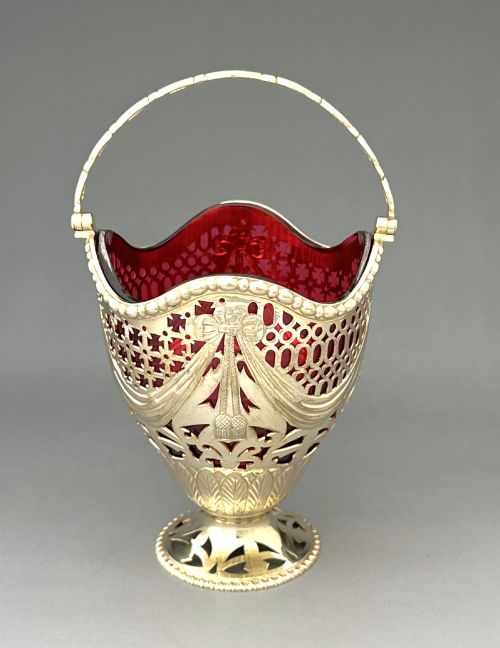
Makers utilised bronze, brass and copper cast through the lost-wax or sand-casting methods, subsequently applying mercury gilding, gold leaf or ormolu finishes to create a durable, luminous surface. These metal mounts were then meticulously chased and fitted to hand-blown cut crystal, ruby or cranberry glass liners, and hard-paste porcelain.
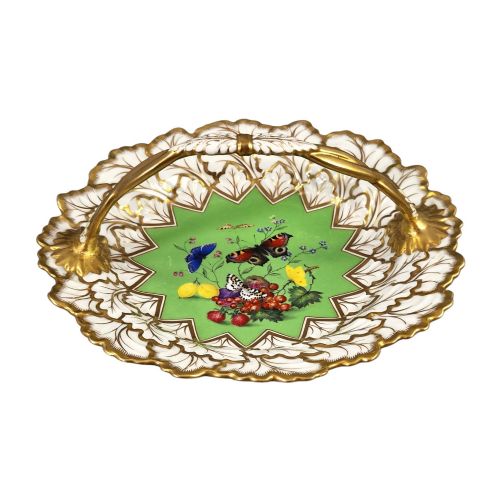
Enamelling techniques such as champlevé added vibrant fields of colour into recessed metal channels, while ceramic components relied on bone china, ironstone and soft-paste bodies painted with botanical or figural scenes. Structural integrity depended on threaded brass rods, pins and cold-setting cements to secure heavy stone bases like green onyx and marble beneath the metalwork.
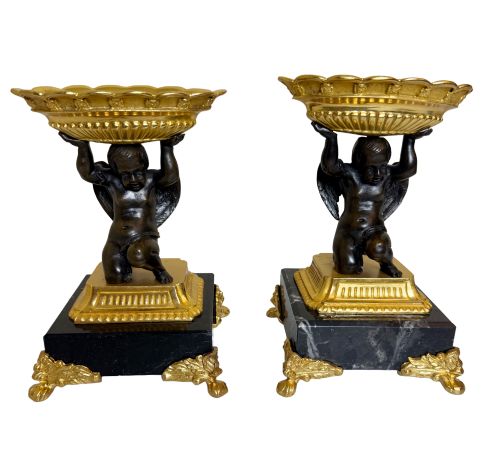
Several Victorian dining tables once hosted tiny porcelain elephants and cherubs keeping watch over elaborate bowls of fruit.
The Distinction of Execution
Superior examples separate themselves through the crispness of the bronze chasing and the depth of the mercury gilding, where hand-tooling reveals sharp relief rather than soft, cast-flat surfaces. The weight of the metal, the clarity of the cut crystal and the precision of the enamel work indicate the tier of the original workshop.
Makers who engaged master modellers produced fittings that integrate seamlessly with the glass or porcelain vessels they embrace, avoiding the clumsy joins and ill-fitting mounts found in commercial production. The presence of documented signatures, attributed foundry marks or specific porcelain factory backstamps elevates individual pieces within their period.
Fabergé·Flight, Barr and Barr·Elkington and Co·Pierre Philippe Thomire·Mason
The Antique Gilt Centrepiece Glossary
- Ormolu
- A technique of applying finely ground high-carat gold-mercury amalgam to a bronze object, creating a rich golden finish upon firing. It requires careful ventilation during production and defines the decorative surface of many French nineteenth-century mounts.
- Tazza
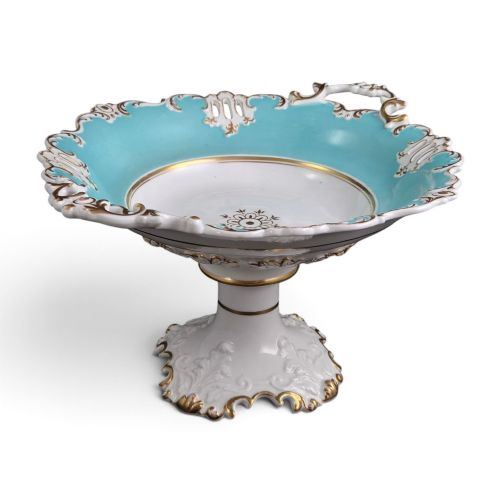
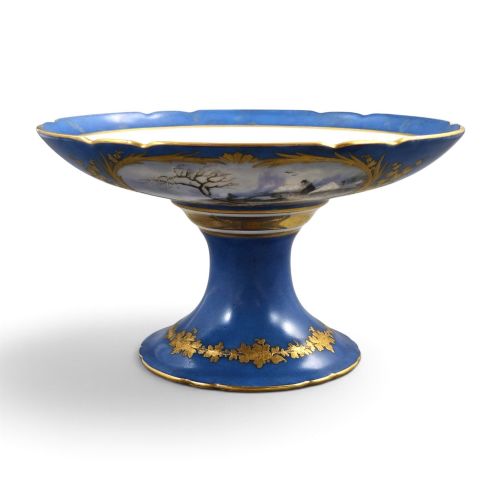
- An elevated shallow bowl or cup resting upon a stem and foot, traditionally used for serving fruit or sweetmeats. In decorative arts, it functions primarily as an ornamental centrepiece.
- Champlevé
- An enamelling technique where troughs or cells are carved into the surface of a metal object and filled with vitreous enamel powder before firing. The resulting piece shows vibrant coloured patterns framed by thin metal partitions.
- Candelabra
- A branched candlestick holder designed to support multiple lights simultaneously. These often form matching sets with centrepieces to illuminate formal dining tables.
- Grand Tour
- A cultural journey undertaken by wealthy young Europeans through France and Italy to collect antiquities and art. The reduction vases and architectural models brought back inspired subsequent nineteenth-century decorative metalwork.
Antique Gilt Centrepiece: Frequently Asked Questions
What was an antique gilt centrepiece used for?
These large ornamental objects served as the visual anchor of a dining table during formal meals, often holding fruit, flowers or sweetmeats. Wealthy households displayed them on sideboards or dining tables to demonstrate taste and hospitality to guests.
Over time, their role shifted from functional service to pure decorative display, occupying prominent positions in drawing rooms and parlours on pedestals or tables.
How do I distinguish French from English pieces?
French pieces from the nineteenth century frequently employ heavy ormolu mounts, champlevé enamel and rich contrasting materials like green onyx or Sèvres porcelain. They lean heavily into Empire and Rococo Revival aesthetics with theatrical floral and figural motifs.
English equivalents often favour refined sterling silver, Sheffield plate, or bone china from factories like Coalport and Wedgwood. Their design vocabulary tends to reflect Regency or Georgian restraint, though Victorian iterations embraced exuberant ornamentation.
How should I clean a gilded bronze surface?
Gilded and ormolu surfaces require gentle treatment using a soft, dry microfibre cloth to remove accumulated dust. Avoid chemical dips, abrasive pastes and standard metal polishes, which will strip away the historical gold layer permanently.
If the metal requires deeper cleaning, a very lightly dampened cloth with mild distilled water is sufficient, ensuring the piece dries completely afterward to prevent moisture damage.
What periods do these centrepieces come from?
The pieces listed span from the seventeenth century through the Georgian, Regency and Victorian eras, extending into Edwardian production around nineteen-10. The majority originate from the nineteenth century during the height of revivalist design.
Earlier eighteenth-century items feature hand-painted European porcelain and early bronze casting, while later nineteenth-century examples incorporate industrial glass-cutting techniques and complex enamel work.