

Antique Gilded Coffee Cup
These antique gilded coffee cups combine rich porcelain bodies with gleaming gold leaf, offering a refined way to serve after-dinner coffee.
Antique Gilded Coffee Cup
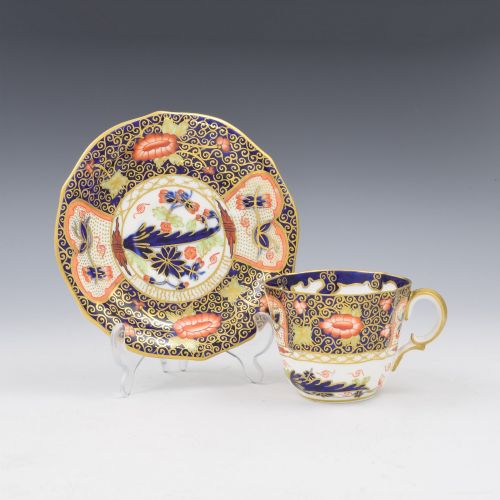
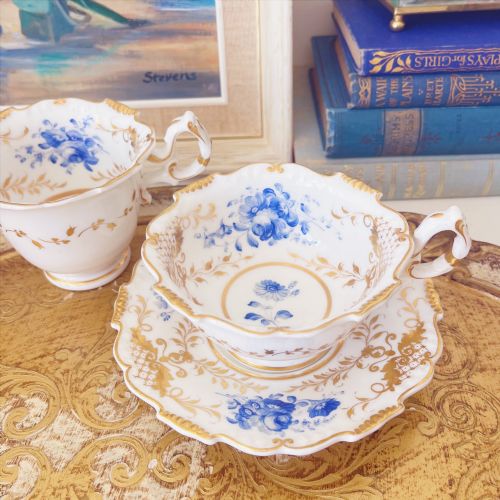
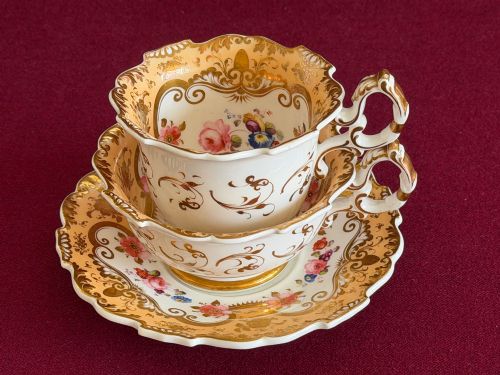
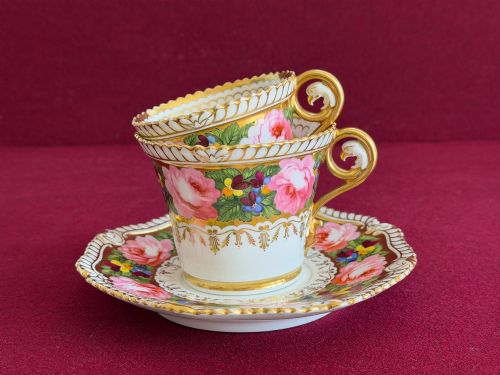
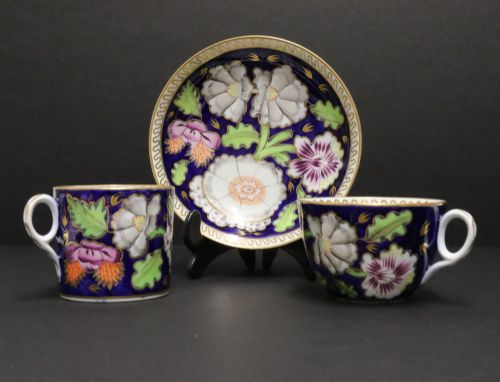
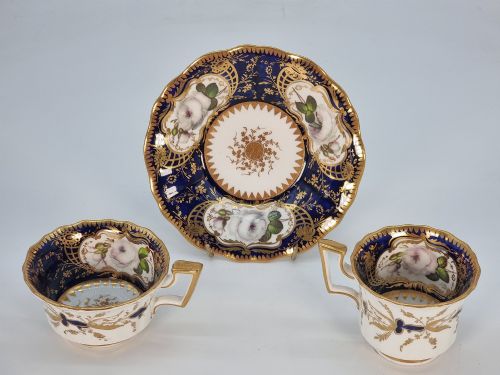
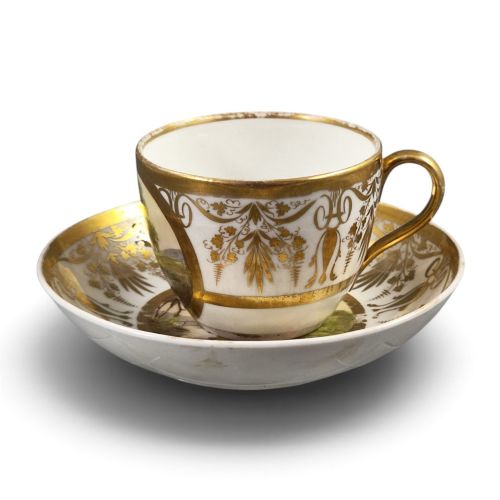
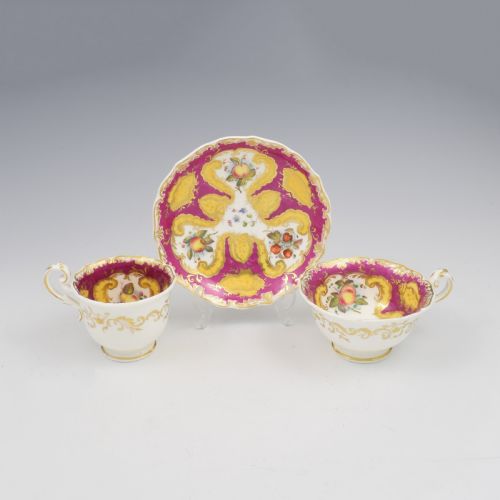
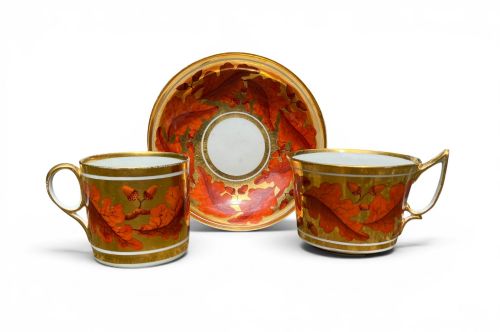
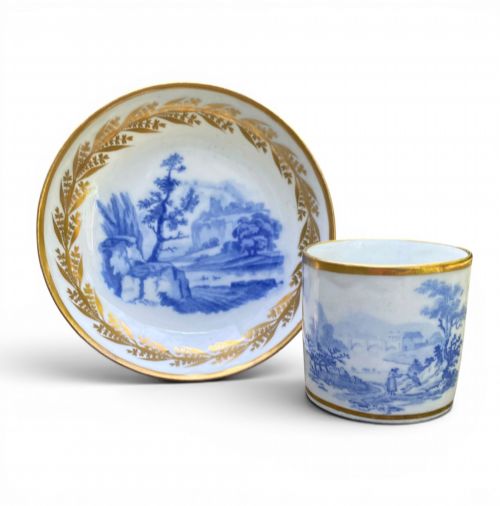
An antique gilded coffee cup typically appears as a coffee can, a demitasse cup and saucer, or part of a larger trio set alongside a tea plate. The forms span the Georgian, Regency, and Victorian eras into the Edwardian and early twentieth century, originating from English factories and continental houses.
English works from Worcester, Coalport, Minton, Spode, and Derby sit alongside continental pieces from Sèvres, Meissen, and KPM Berlin. The most frequent encounters on this page involve English porcelain trios and coffee cans from the early nineteenth century.
The objects serve as intimate cabinet pieces as well as functional tableware, reflecting the rising popularity of coffee consumption in polite society across multiple decades.
Materials and Techniques
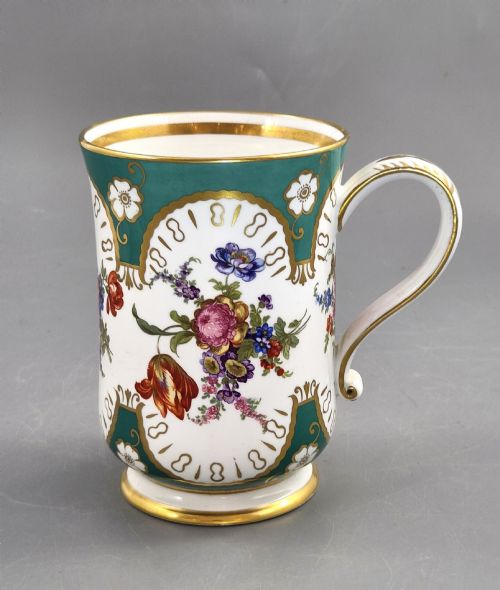
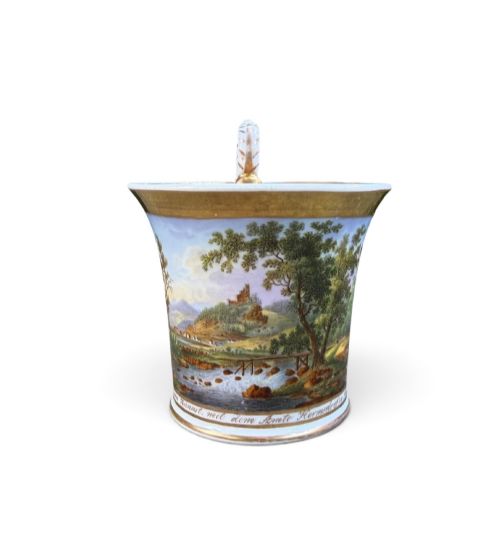
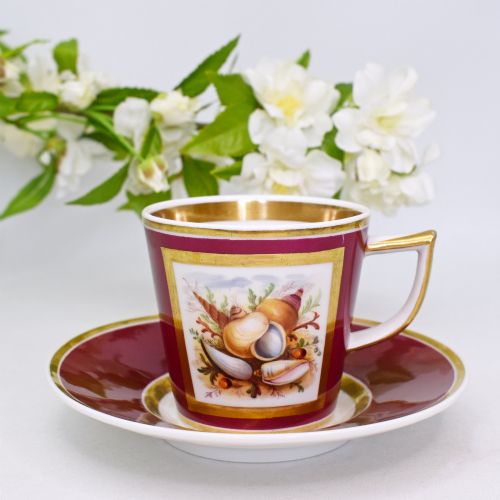
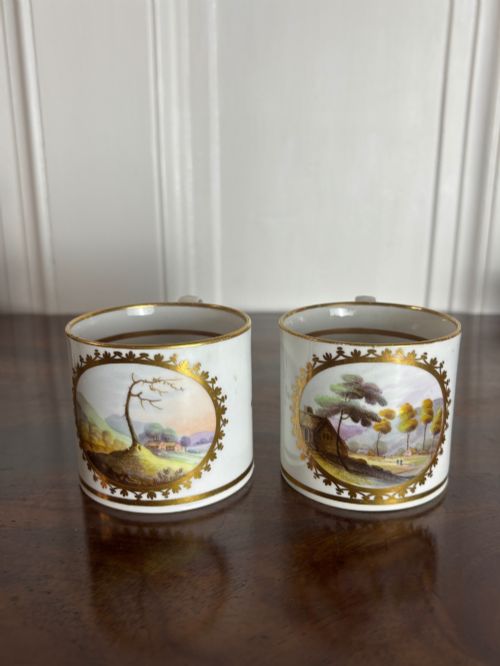
Makers utilised fine porcelain, hard-paste porcelain, and bone china as the ceramic base for these vessels. Artisans then applied rich enamel colours and detailed handpainted landscapes, florals, or patterns directly onto the surface.
Gilding was executed using gold leaf and gold gilt, applied by hand to rims, handles, and intricate borders. This metalwork was often kiln-fired to bond permanently with the ceramic glaze before receiving final burnishing.
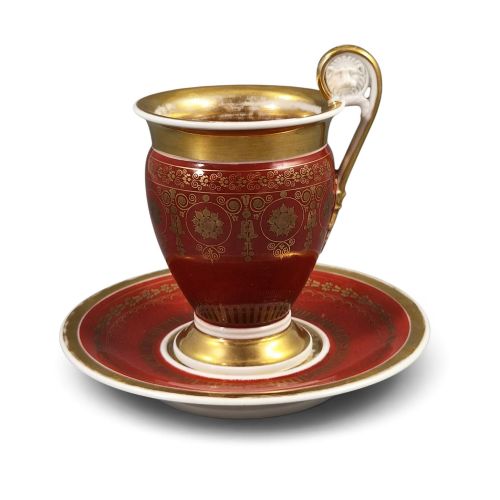
Some Regency cups feature fierce lion mask handles designed to stare back at the drinker.
Standards of Execution
The upper tier of pieces displays superior handpainting, particularly in miniature landscape panels, botanical studies, or complex Imari patterns executed by named decorators. The precision of the gilt work and the crispness of the porcelain moulding separate masterworks from standard production wares.
Subtleties in the weight of the porcelain, the depth of the cobalt or green grounds, and the complexity of the handle shaping - such as lion mask motifs - distinguish ambitious cabinet pieces from everyday service items.
Royal Crown Derby·H & R Daniel·Chamberlain Worcester·New Hall·Coalport·KPM Berlin·Flight and Barr·Rockingham·Minton·Spode·Meissen·Davenport·Royal Worcester·Hutschenreuther
The Antique Gilded Coffee Cup Glossary
- Coffee Can
- A straight-sided cylindrical cup designed specifically for drinking strong coffee in the eighteenth and nineteenth centuries. It typically lacks the curving bowl shape of a standard teacup.
- Demitasse
- A small cup used for serving Turkish or espresso coffee, usually paired with a matching saucer. The term translates literally to half-cup in French.
- Cabinet Cup
- A decorative ceramic vessel intended primarily for display in a glass-fronted cabinet rather than everyday dining use. These pieces often feature elaborate topographical paintings or rich gilding.
- Trio
- A matching set consisting of a teacup, a coffee cup, and a saucer. They became popular in English porcelain production during the Regency period.
- Hard-paste Porcelain
- A true ceramic composition fired at very high temperatures, made from kaolin and petuntse. It yields a durable, vitreous body associated with continental factories like Meissen and Berlin.
Antique Gilded Coffee Cup: Frequently Asked Questions
How do I use them today?
These cups and saucers function wonderfully for serving espresso or after-dinner coffee when handled with care. Hand washing is essential to preserve the delicate enamel and gold leaf.
Many collectors prefer to display them in cabinets or on dedicated stands to showcase the handpainted decoration.
How do I date a piece?
Dating relies on identifying factory marks, pattern numbers, and ceramic bodies such as bone china or hard-paste porcelain. Stylistic cues like Regency shapes or Edwardian colour palettes also provide clear chronological markers.
Comparing painted motifs to documented factory pattern books helps narrow the production window.
What is a trio set?
A trio set comprises a teacup, a coffee cup, and a saucer sharing the same pattern and factory origin. This format allowed households to accommodate guests who preferred either tea or coffee.
Finding a complete trio with matching gilding and enamel work remains a rewarding discovery for ceramic collectors.