



Antique German Glassware
These pieces of antique german glassware range from Georgian roemers to Jugendstil chalices, offering a tangible connection to historical European drinkware traditions.
Antique German Glassware
Antique german glassware encompasses a varied selection of drinking vessels and display pieces, stretching from eighteenth-century roemers to twentieth-century Jugendstil designs. The listings on this page frequently feature wine glasses, cordial glasses, and goblets originating from German and Bohemian workshops.
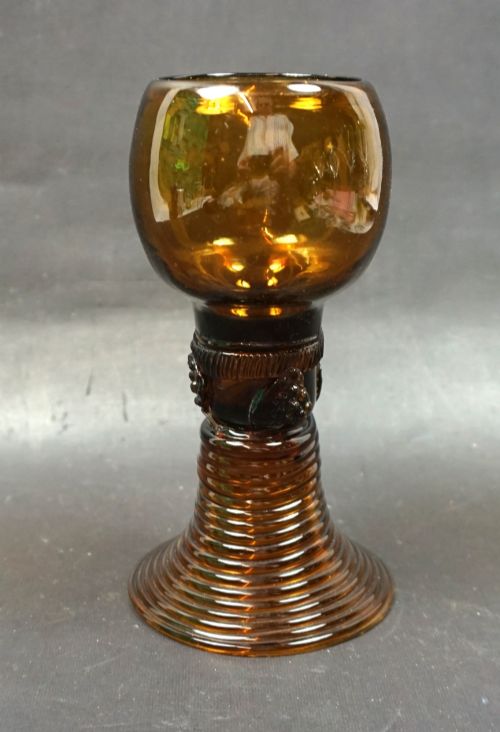
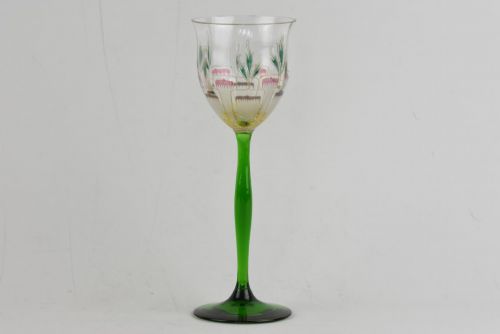
Buyers will encounter distinct stylistic periods here, including Biedermeier cut glass, historicist enamelled heraldic motifs, and delicate Art Nouveau chalices. Forms range from heavy amber roemers with coiled feet to tall green glass vases and crystal hock glasses.
The objects reflect the shifting tastes of European households across several centuries, moving from robust baroque influences to refined floral enamelwork. Each piece serves as a practical vessel or a decorative object rooted in specific historical manufacturing centres.
How they were made
Maker workshops utilised glassblowing techniques to form the basic body of vessels like roemers and vases, often producing hand-blown or blown glass variants. Artisans manipulated molten material to create characteristic shapes, such as coiled feet and coloured bowls.
Decoration involved several skilled processes, including surface engraving, cutting, and the application of enamel. Craftsmen added intricate detail using gold leaf and polychrome enamel to highlight heraldic motifs and floral patterns.
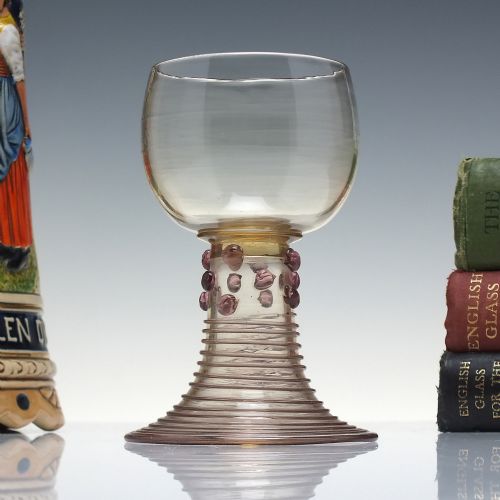
Early German drinkers relied on hefty glass prunts on roemers to maintain a secure grip during lively historic banquets.
What varies in quality
Quality in these glass pieces depends largely on the precision of the hand-cutting and the fineness of the enamelwork. Finer examples display crisp engraving and evenly applied polychrome or gold leaf decoration that remains secure on the glass surface.
The consistency of the blown glass itself, alongside the complexity of decorative motifs such as heraldic crests, separates simpler utility items from more ambitious workshop productions. Proportion and balance in forms like roemers and chalices further distinguish superior craftsmanship.
Theresienthal·Frits Hechert·Adelbert Niemeyer
The Antique German Glassware Glossary
- Roemer
- A traditional Germanic drinking vessel featuring a rounded bowl and a distinctive cylindrical foot wrapped in applied prunts or coils. These glasses were historically used for white wine.
- Hock glass
- A tall-stemmed wine glass traditionally used for hock or other white Rhine wines. They frequently appear with coloured bowls and elaborate enamel decoration.
- Historismus
- A nineteenth-century artistic movement that revived historical styles, particularly German Renaissance and Baroque motifs. Pieces from this period often incorporate heraldic designs.
- Jugendstil
- The German variant of Art Nouveau, characterised by fluid organic lines and natural forms. It appears on chalices and decorative vessels from the early twentieth century.
- Enamel
- A durable vitreous substance fused to the surface of the glass through firing. It provides the colourful floral and heraldic patterns seen on nineteenth and twentieth-century pieces.
Antique German Glassware: Frequently Asked Questions
What is a roemer glass?
A roemer is a traditional Germanic wine glass characterised by a wide bowl sitting atop a cylindrical foot decorated with applied glass coils or prunts. These pieces are typically fashioned from green or amber glass.
They originated centuries ago for serving white wine and remain one of the most recognisable forms of historic European drinkware available to collectors today.
What is Jugendstil glassware?
Jugendstil represents the German expression of Art Nouveau, emerging around the turn of the twentieth century. Glassware from this movement embraces flowing, organic shapes and stylized natural motifs.
Objects of this type, including chalices and vases, reflect a deliberate departure from historic revival styles in favour of modern artistic expression.
How were enamel decorations applied?
Enamel decoration involves painting coloured glass pastes onto the surface of a finished vessel before firing it in a kiln to fuse the materials permanently. Artisans used this technique to depict heraldic shields and floral scenes.
This method allows for vibrant polychrome details that stand out against clear, amber, or green glass bodies.
Can antique glass be used?
Many collectors choose to display these items rather than use them daily, particularly pieces featuring delicate gold leaf or hand-enamelled surfaces. Hand-washing in lukewarm water is essential to preserve the historic materials.
Careful handling ensures that fragile components like applied feet and delicate stems remain intact over time.