
Antique Georgian Chairs
These antique georgian chairs span formal mahogany dining sets to rustic elm Windsors, offering enduring craftsmanship for any interior.
Antique Georgian Chairs
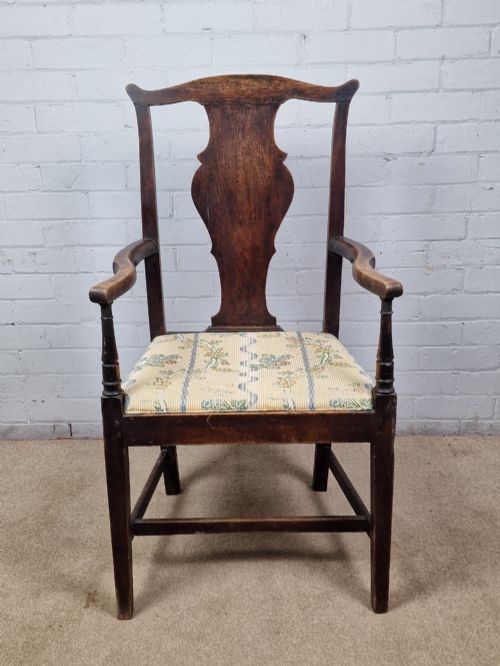
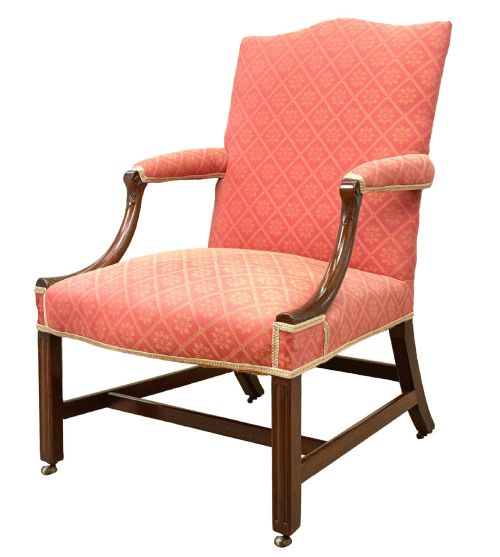
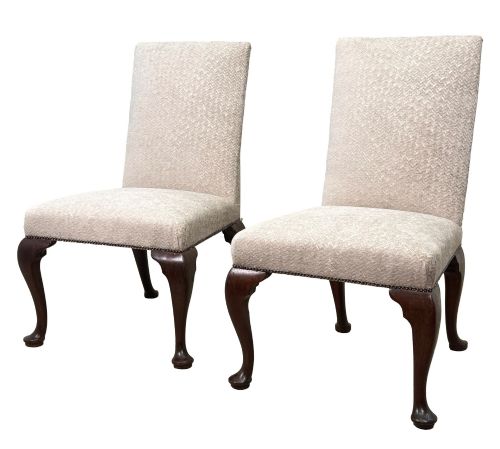
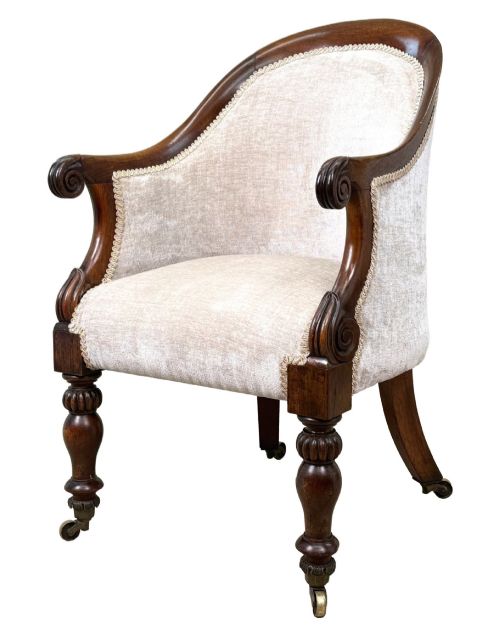
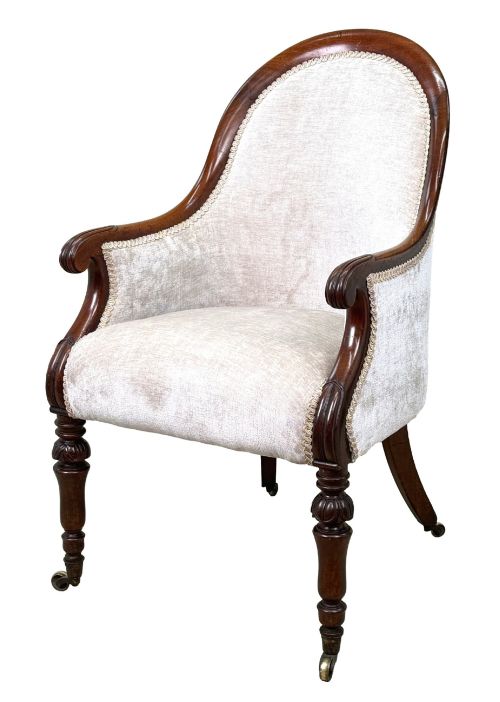
When evaluating antique georgian chairs, buyers encounter a diverse selection ranging from grand library armchairs upholstered in leather to matching sets of dining chairs in mahogany and oak. Dining chairs and carvers dominate the inventory, accompanied by side chairs, hall chairs, and desk chairs originating from the eighteenth and nineteenth centuries.
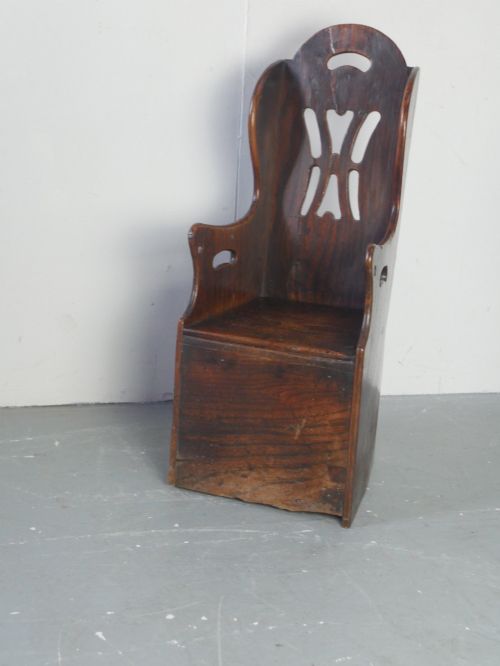
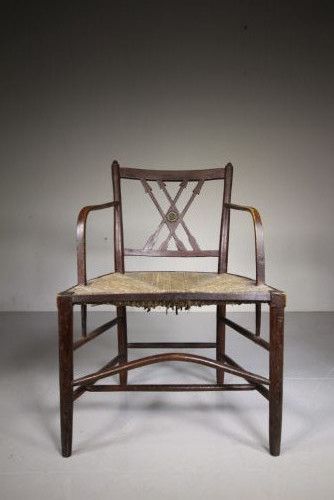
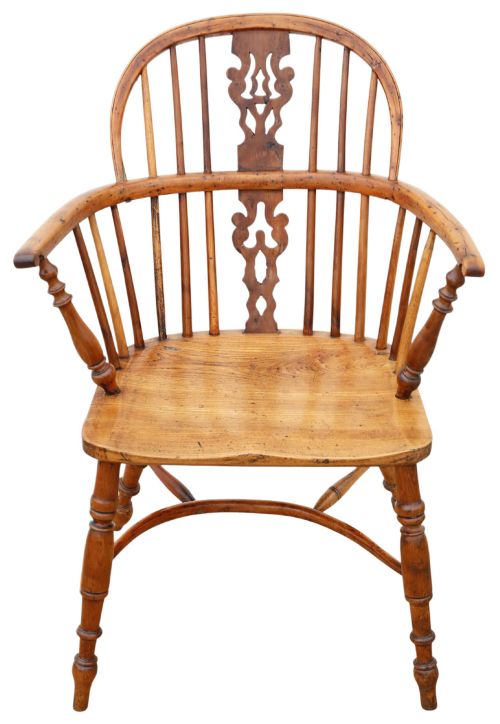
Country variants built from elm, ash, and oak sit alongside urban formal seating executed in mahogany and walnut. The material choice often indicates whether a piece served in a formal parlour or a farmhouse kitchen, providing context for its original domestic function.
How they were made
Cabinet makers utilised dense hardwoods such as mahogany, oak, walnut, and yew, frequently combining elm and ash for Windsor chair seats and spindles. Joinery relied on traditional mortise and tenon construction, occasionally reinforced with brass inlay, carved giltwood, or intricate back splats.
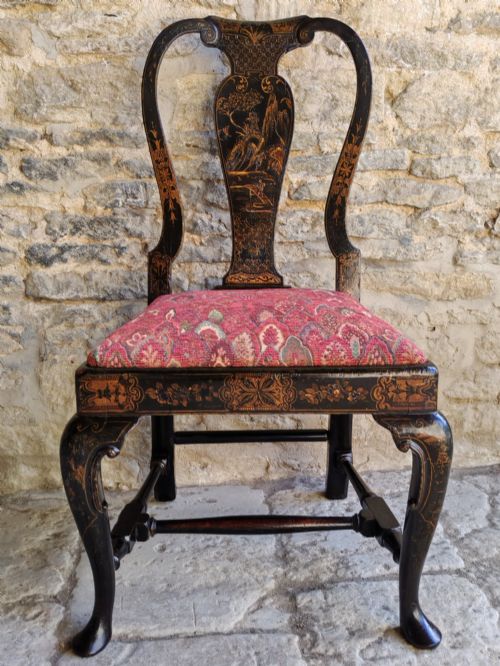
Upholstered items featured traditional stuffing secured beneath period textiles like velvet, silk, or leather. Frames demonstrated exceptional dexterity through hand-carved details, shield backs, ladder backs, and bar backs.
Several country armchairs still carry traces of their original farmhouse paint, having survived centuries of kitchen gossip.
What varies in quality
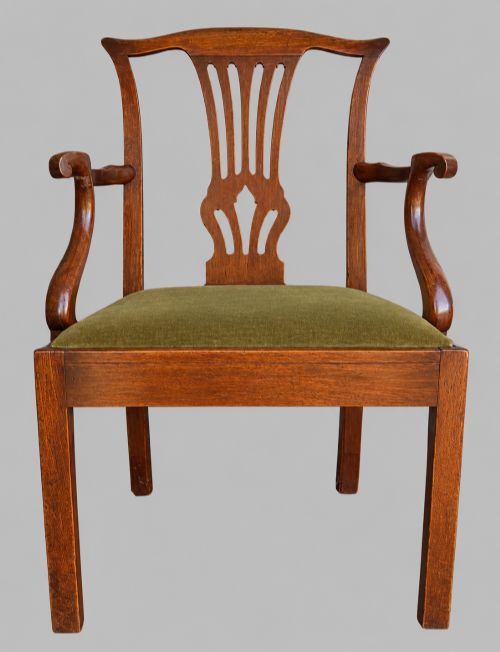
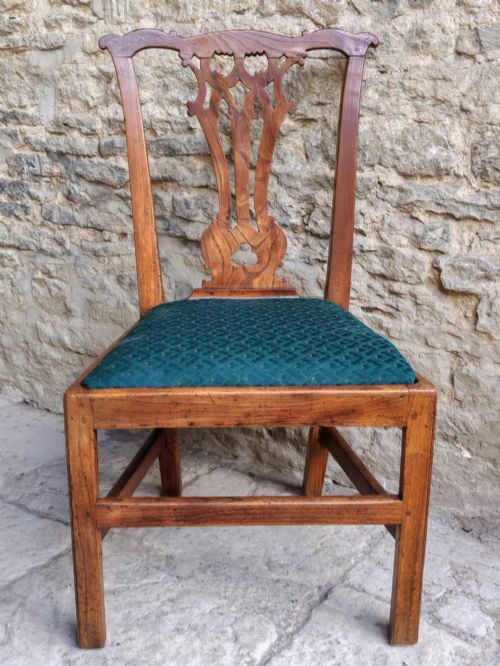
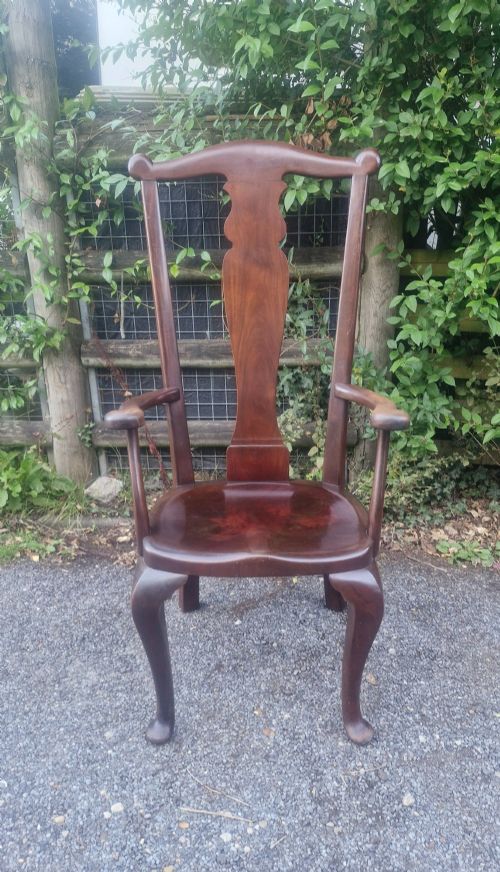
The standard of carving and the selection of timber dictate the hierarchy of these chairs. Crisp, deeply undercut pierced splats and well-figured mahogany distinguish high-end urban workshop output from simpler provincial carpentry.
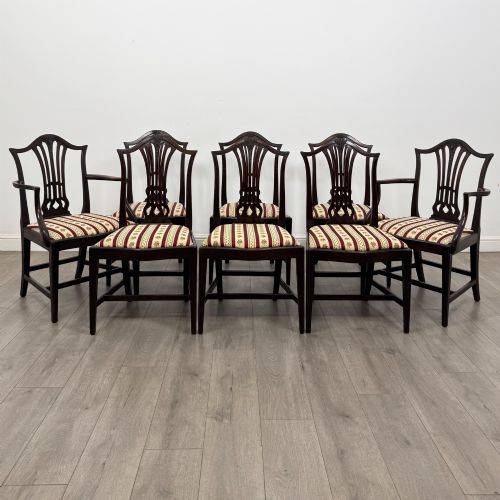
Completeness of sets and originality of surface finish heavily influence desirability. Matching sets of eight or ten command attention for their uniformity, while surviving original paint or patinated old leather elevates regional vernacular forms.
Waugh And Son·Gillows
The Antique Georgian Chairs Glossary
- Carver
- An armchair, frequently designed en suite with a set of single dining chairs to sit at the head of a table.
- Splat
- The vertical central strip of wood in the back of a chair, often intricately carved in ribbon or shield motifs.
- Windsor
- A traditional wooden chair featuring a solid saddle-shaped seat into which the legs and spindles are directly wedged.
- Giltwood
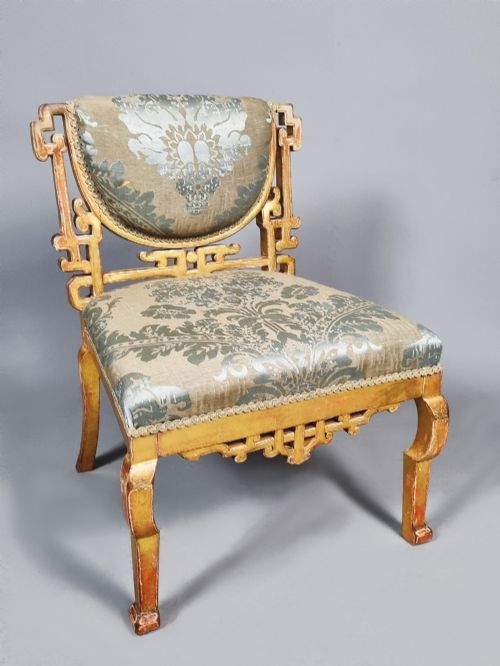
- Timber treated with gold leaf or a gold-coloured metallic finish, popular in decorative frames.
- Bar back
- A horizontal curved top rail resembling the shape of a yoke, common on dining and desk seating.
Antique Georgian Chairs: Frequently Asked Questions
How do I identify a George III chair?
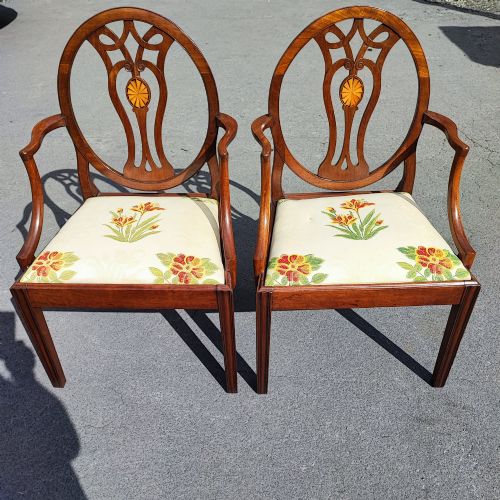
George III pieces generally display classical proportions, mahogany construction, and carved details like wheat sheaf or shield backs.
They reflect the dominant stylistic shifts of the later eighteenth century, moving from heavy cabriole legs towards straight legs and refined splats.
Can I mix carvers with single chairs?
Mixing carved armchairs with matching single side chairs follows historical dining room conventions established during the Georgian period.
Armchairs typically anchored the ends of the dining table while single chairs lined the sides for everyday meals.
What is the difference between Regency and Georgian styles?
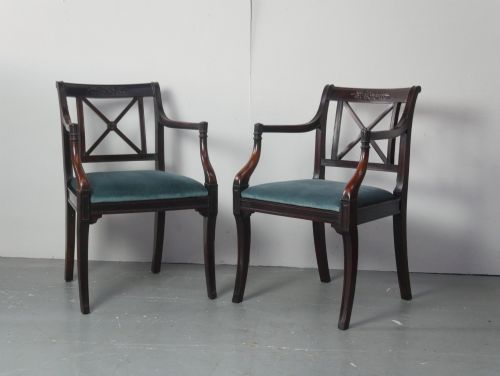
Regency style emerges from the early nineteenth century, introducing bolder brass inlay, sabre legs, and classical revival motifs.
Georgian design encompasses a broader eighteenth-century timeline defined by Chippendale, Hepplewhite, and Sheraton aesthetic developments.