
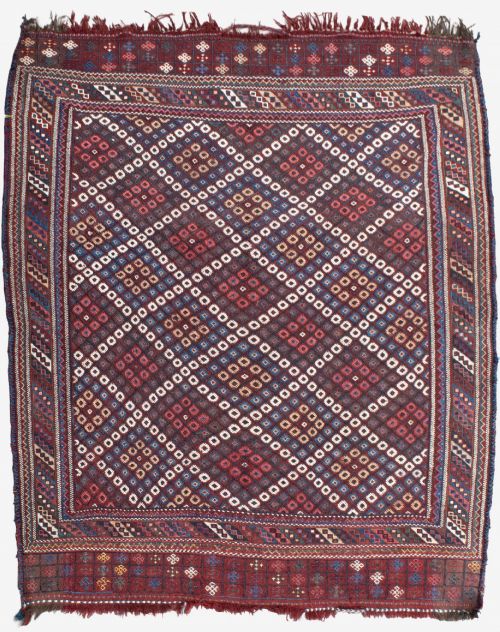


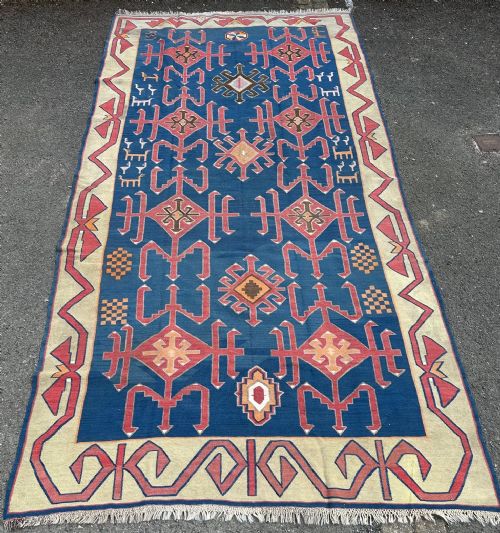


Antique Geometric Kilim
An antique geometric kilim brings tribal flatweave craftsmanship and graphic motifs into an interior.
Antique Geometric Kilim
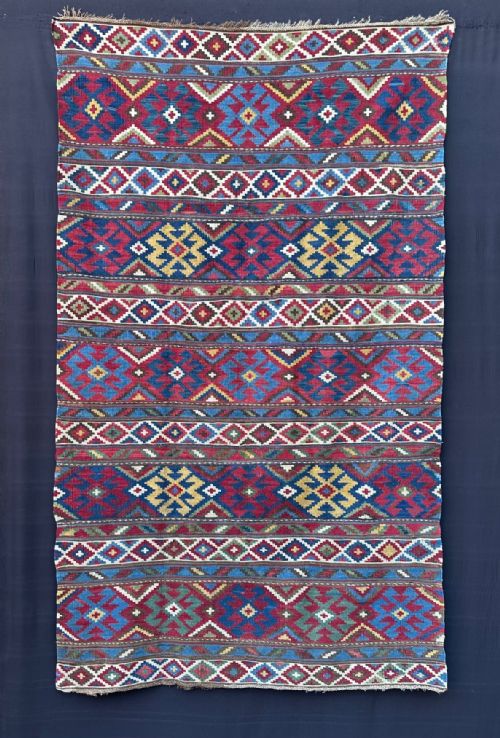
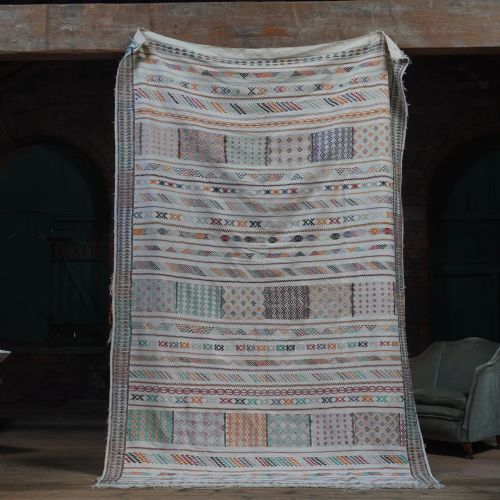
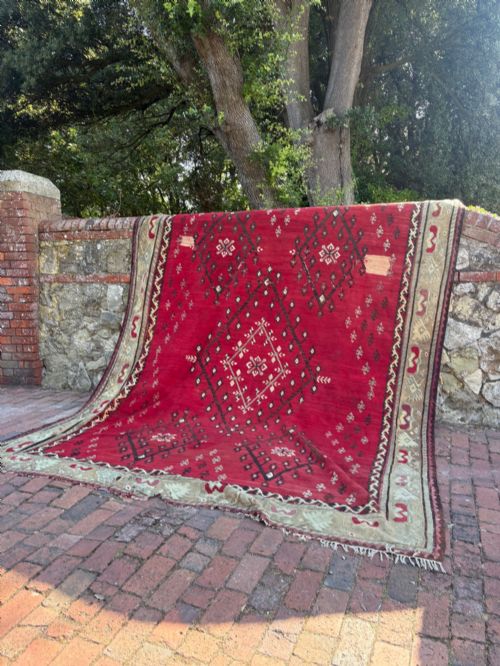
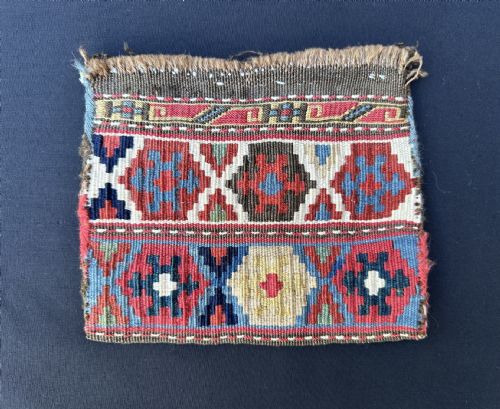
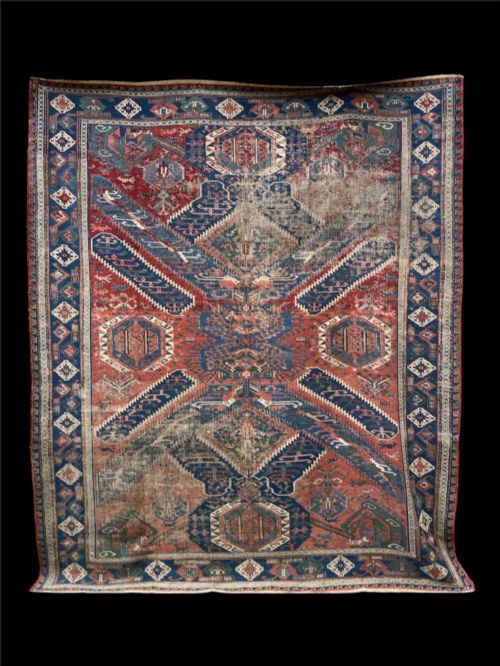
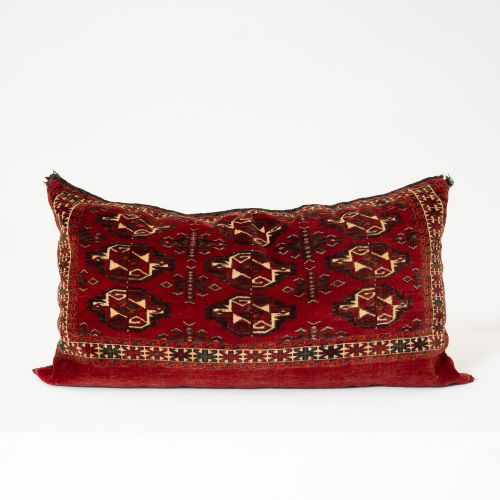
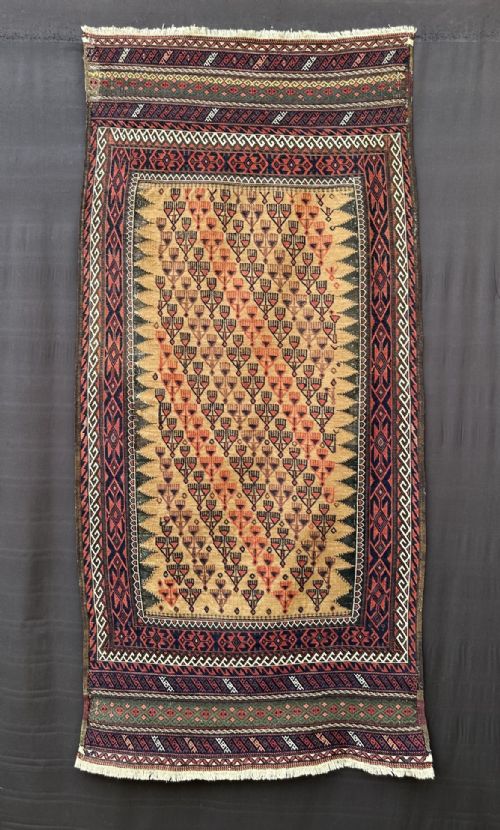
An antique geometric kilim is a flat-woven textile produced by nomadic and village tribes across Anatolia, the Caucasus, Persia, and Central Asia. Buyers seek these pieces for their bold symbols, rectilinear medallions, and rich ethnic character that anchors a room. The selections on this page span floor carpets, runners, sofa cushions, and functional flatweaves like sofreh dining cloths and storage bags.
The regional variety ranges from Anatolian Malatya and Ushak pieces to Caucasian Shirvan and Daghestan weaves, alongside Persian Qashqai, Afshar, and Shahsavan works. Most examples date from the middle of the nineteenth century through the early decades of the twentieth century. These textiles served daily nomadic functions before entering the decorative market as collectible flatweaves.
How They Were Made
These textiles rely on wool and hand-spun wool warp and weft foundations, occasionally incorporating cotton for structural clarity. Weavers employed slit-tapery flat-weaving techniques alongside supplementary weft-wrapping methods such as Soumak to create crisp, angular edges along the pattern lines. Natural dyes provide the historic palette, yielding shifting tones that develop depth across the surface over decades of use.
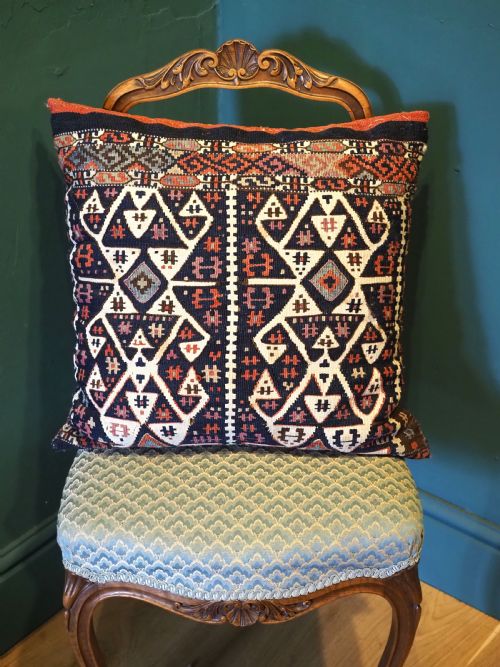
Nomadic workshops produced diverse structural forms, from large room-size carpets and runners down to smaller bag faces and animal trappings subsequently adapted into cushions. The construction uses tightly beaten wefts that conceal the vertical warps entirely, producing a durable textile intended originally for floor deployment or camp storage.
Nomadic weavers packed entire households into wool bags that now peer out from modern sofas as cushions.
What Varies in Quality
Quality rests upon the fineness of the weave, the precision of the geometric layout, and the integrity of the natural dye palette. Tighter knotting and denser flat-weave structures distinguish superior tribal outputs from standard utility pieces, ensuring greater longevity under foot traffic.
The preservation of original borders, the complexity of the tribal iconography, and the consistency of the hand-spun wool define the upper tier of the market. Pieces exhibiting harmonious colour saturation and uncompromised structural tension hold higher regard among collectors of nomadic textiles.
The Antique Geometric Kilim Glossary
- Kilim
- A flat-woven textile produced without a pile by tightly interlacing warp and weft threads. This technique creates a lightweight carpet with identical patterns visible on both sides.
- Sofreh
- A woven cloth utilised traditionally for dining, bread preparation, or food serving among nomadic Persian tribes. These rectangular flatweaves often display striking minimalist geometry.
- Soumak
- A supplementary weft-wrapping technique that leaves decorative floating threads on the reverse side while producing a raised, textured pattern on the face. It adds structural weight to Caucasian and Persian tribal rugs.
- Mafrash
- A large rectangular storage chest panel or complete transport bag woven by nomadic groups for domestic belongings. Collectors prize individual panels for their bold end-to-end stripe and medallion compositions.
- Chuval
- A large storage sack made by Turkmen tribes, frequently featuring guls and primary geometric güllü motifs. Surviving fragments and face cushions preserve the robust wool construction of these utilitarian pieces.
Antique Geometric Kilim: Frequently Asked Questions
What is a flatweave rug?
A flatweave rug is constructed by interweaving warp and weft threads directly on a vertical or horizontal loom without creating a knotted pile surface. This method results in a thinner, reversible textile suited for versatile placement in living spaces.
Nomadic weavers utilised this technique to produce lightweight carpets and utilitarian cloths that could be easily folded, transported, and laid across camp floors.
How do I care for an old kilim?
Maintenance requires regular gentle vacuuming without a rotating brush roll to prevent snagging the delicate wool and cotton foundations. Professional textile cleaning is recommended periodically to address deep-set dust without damaging natural dyes.
Using a quality underlay beneath floor pieces reduces friction against hard surfaces, extending the usable life of the flatweave.
Where were these tribal rugs made?
Production centres span across Anatolia, the Caucasus, Persia, and Central Asia through the efforts of distinct nomadic confederations and settled village communities. Specific regions like Shirvan, Daghestan, Fars, and Malatya developed characteristic geometric vocabularies.
Weavers embedded cultural symbols and regional dyeing traditions into each piece, reflecting the heritage of groups such as the Qashqai, Afshar, and Shahsavan.
Can I use these flatweaves on the floor?
Many sturdy room-size carpets, runners, and large kilims function effectively as floor coverings when paired with a secure rug pad. Lighter utility cloths and smaller bag faces serve well in low-traffic zones or as decorative wall hangings.
Evaluating the structural density of the wool helps determine whether a specific antique flatweave suits daily foot traffic or delicate display.