

Antique Geometric Furniture
Antique geometric furniture brings together centuries of pattern and grain, from seventeenth-century oak drawer fronts to nineteen-thirties walnut cabinets.
Antique Geometric Furniture
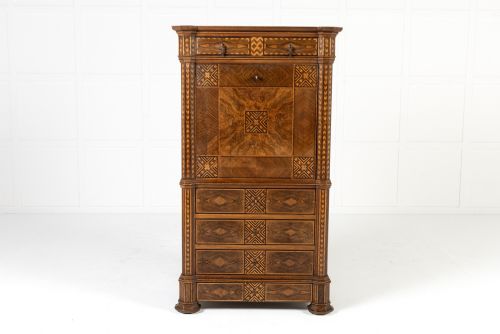
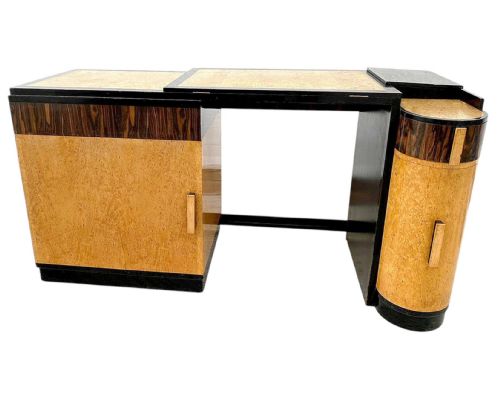
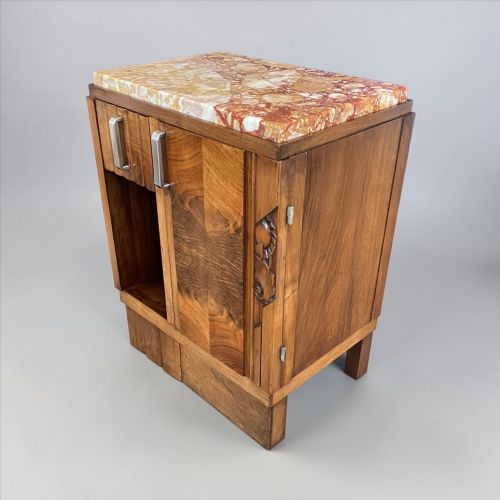
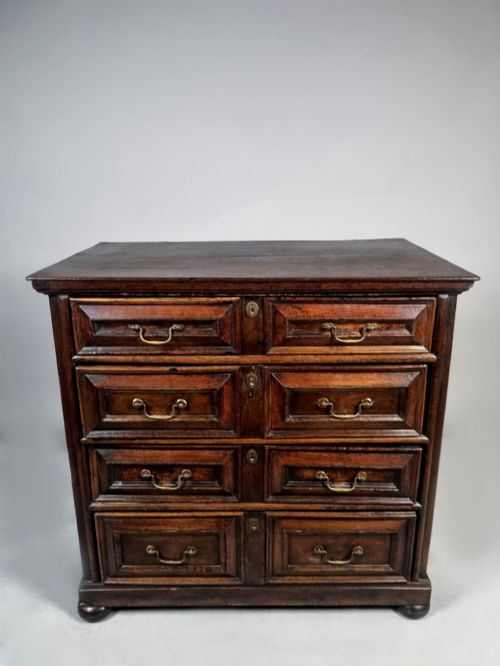
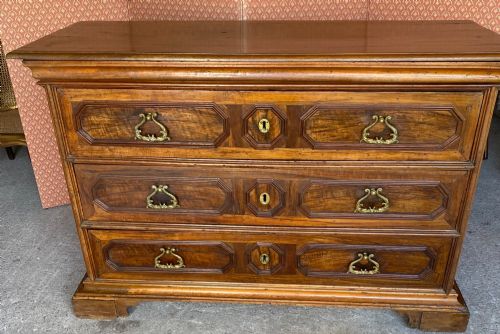
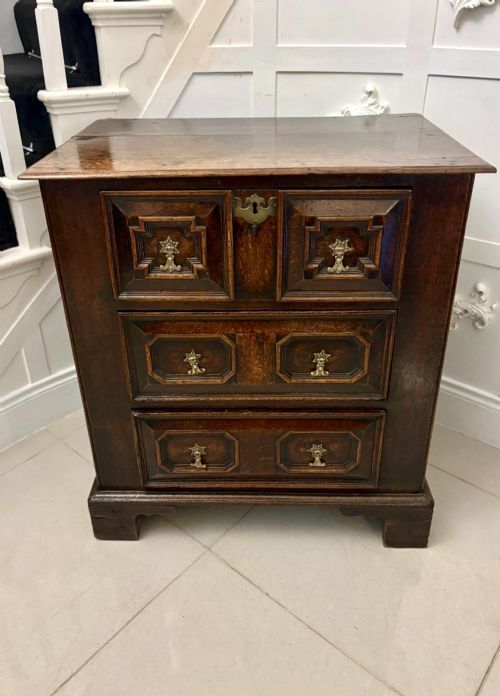
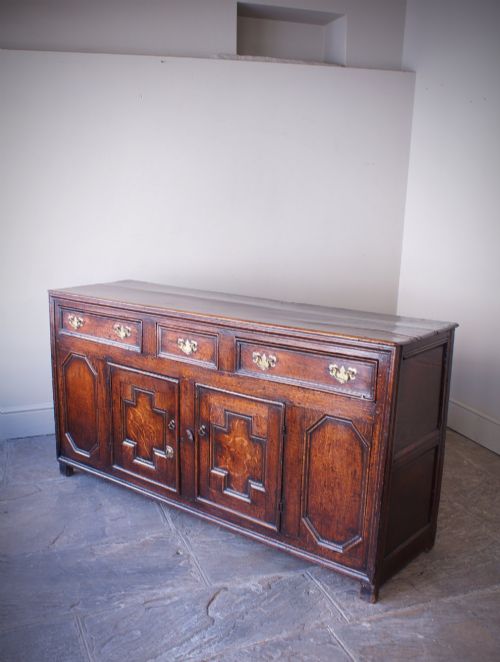
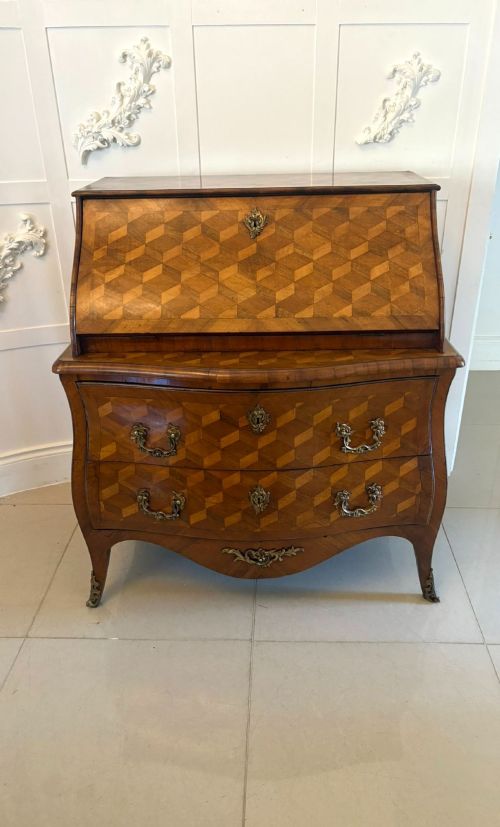
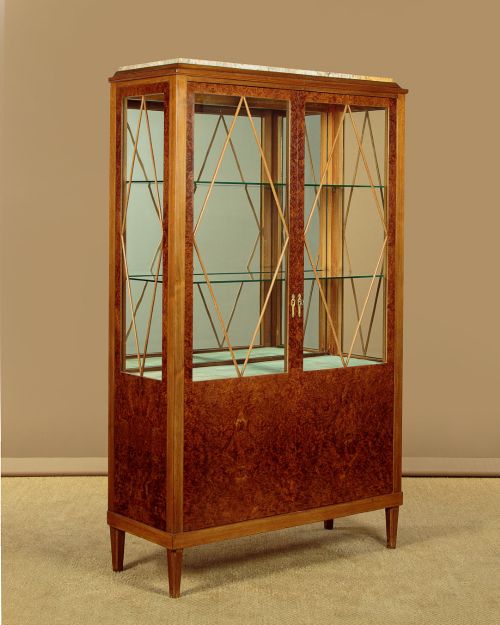
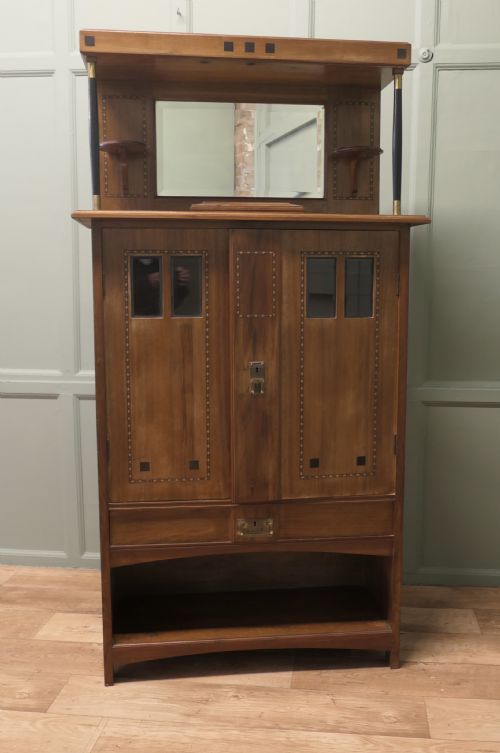
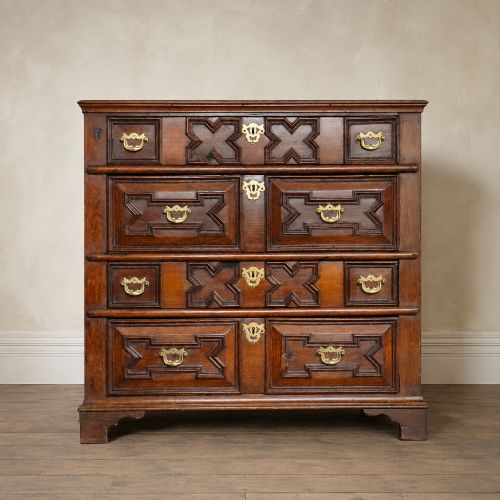
Antique geometric furniture consists largely of chests of drawers, dressers, and display cabinets shaped by rectilinear mouldings and parquetry patterns. The pieces appearing here span from the seventeenth century through the Edwardian era and into nineteen-thirty Art Deco designs.
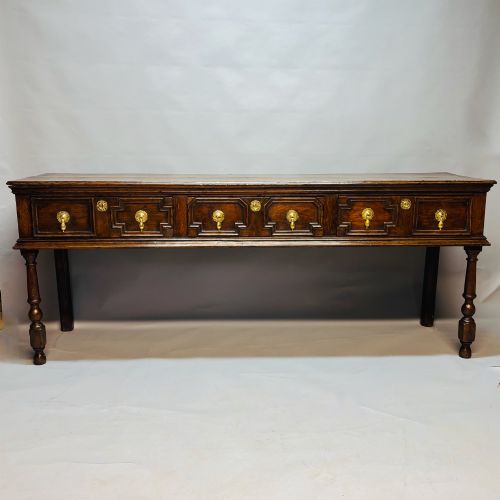
The seventeenth-century examples rely heavily on oak with applied geometric mouldings on drawer fronts. Later pieces introduce walnut, ebonised wood, and amboyna alongside distinct styles such as Jacobean and Secessionist.
How they were made
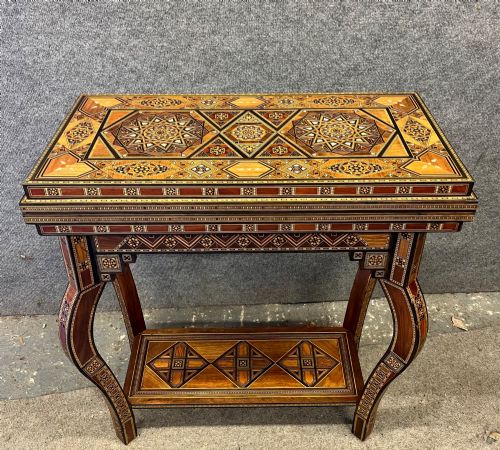
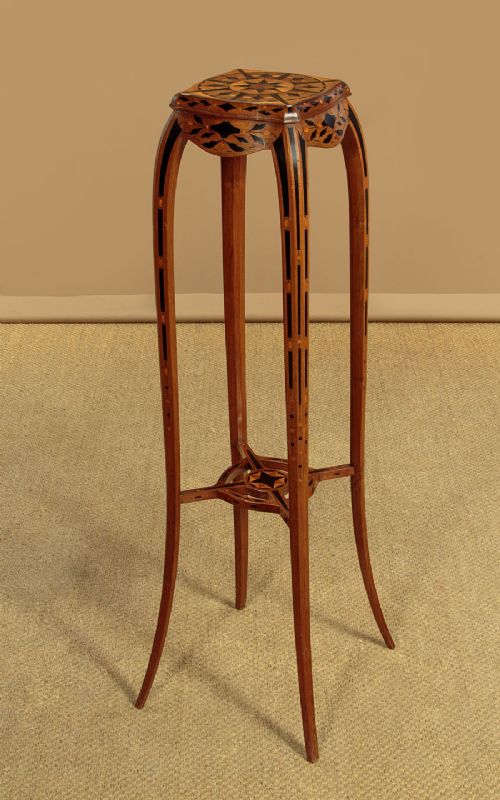
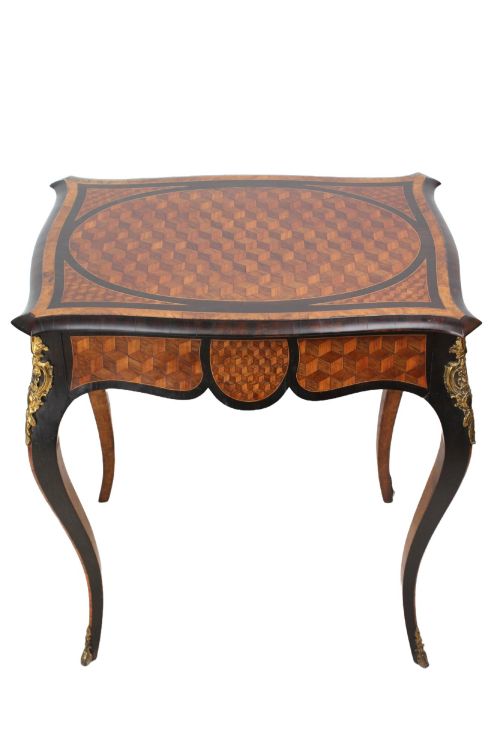
Cabinetmakers constructed these forms using solid oak, walnut, and rosewood, often enhanced with brass hardware, bone inlay, and glass panels. Surfaces frequently display intricate parquetry and specimen wood marquetry arranged in precise geometric repeats.
Techniques range from early applied geometric mouldings and chip carving to later French walnut inlay and ebonised finishes. Joinery aligns with the period of production, joining seventeenth-century framing methods with twentieth-century decorative glazing.
Antique Geometric Furniture Retail Price Guide 2026
Typical asking prices for geometric furniture among the pieces listed under this phrase on Sellingantiques today, from the lower quarter to the upper quarter. They describe what is for sale here now, not the wider market.
Listings feature items spanning the seventeenth century to nineteen-thirty, incorporating oak, walnut, rosewood, glass, and brass.
What varies in quality
Quality rests upon the precision of the geometric pattern and the selection of timber veneers such as walnut, amboyna, and rosewood. Superior examples show meticulous alignment in parquetry and mouldings that remain integrated with the underlying structure.
The sophistication of the secondary materials, including brass mounts and leaded glass, separates standard utilitarian pieces from finer artistic works. The crispness of the carving and the integrity of the original wood surfaces dictate the standing of each item.
JAS Shoolbred·Sir Clough Williams-Ellis·August Ungethüm·Heals of London
The Antique Geometric Furniture Glossary
- Parquetry
- Geometric mosaic woodwork used for surfaces, forming patterns of triangles, squares, and diagonal lines. It relies on contrasting timber tones to create visual depth.
- Geometric Moulding
- Raised wooden mouldings applied to drawer fronts and doors in repeating rectilinear patterns. This technique defines much seventeenth-century case furniture.
- Marquetry
- Decorative veneer work depicting patterns or scenes using various coloured woods. Specimen wood marquetry incorporates multiple exotic timbers.
- Ebonised Wood
- Timber treated to resemble ebony through staining or painting. It appears frequently on nineteenth-century and Art Deco furniture.
- Jacobean
- The stylistic period spanning the early seventeenth century, characterised by solid proportions and geometric panel work. Revival pieces adopted these motifs later.
- Secessionist
- The early twentieth-century design movement focusing on simplified geometric forms and modern materials. It moves away from excessive historical revivalism.
Antique Geometric Furniture: Frequently Asked Questions
What defines antique geometric furniture?
Antique geometric furniture is characterised by surface decoration and structural detailing based on repeating lines, squares, and polygon patterns. This includes applied mouldings on seventeenth-century drawer fronts and parquetry on later tables and cabinets.
The category spans multiple centuries and materials, taking in oak dressers, walnut chests, and amboyna display cabinets. The unifying element is the emphasis on pattern formed through wood grain, veneer, and carved relief.
How do I date geometric oak chests?
Dating oak chests with geometric designs depends on the construction methods and the profile of the mouldings. Seventeenth-century examples typically feature hand-riven panels, pegged joints, and applied geometric mouldings built directly into the drawer fronts.
Later pieces from the Edwardian period often adopt Jacobean Revival styles using machine-cut timber and standardised hardware. Examining the interior drawer construction and timber shrinkage helps clarify the age.
Where should I place a display cabinet?
Display cabinets work best in rooms with stable ambient temperatures away from direct sunlight to protect delicate veneers like amboyna and rosewood. Placing them against interior walls preserves the structural integrity of older timber.
Adequate clearance allows glass doors and leaded panels to open fully without obstruction. These cabinets suit studies, drawing rooms, and living spaces where they can house collections securely.
How do I care for parquetry surfaces?
Parquetry surfaces require gentle cleaning with a dry or barely damp cloth to remove dust from the intricate joints between wood veneers. Avoiding excessive moisture prevents the small wooden tesserae from lifting or warping.
Occasional application of appropriate natural wax feeds the timber and maintains the sheen without sealing the pores. Direct heat sources should be avoided to protect the underlying glue and wood.