


Antique Geometric Brooch
An antique geometric brooch delivers sharp lines and symmetrical brilliance, bringing the definitive modernist edge of the early twentieth century straight to a lapel.
Antique Geometric Brooch
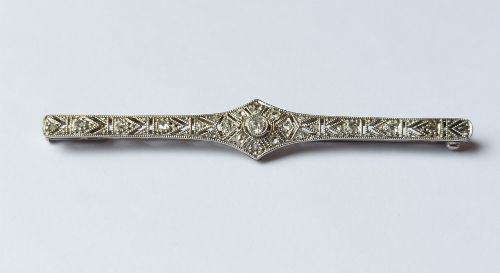
When searching for an antique geometric brooch, collectors encounter striking linear designs primarily rooted in the Art Deco and Edwardian periods, stretching from the late nineteenth century through to the mid twentieth century. These pieces rely on symmetrical layouts, rectangular bars, and sharp angles rather than flowing floral motifs.
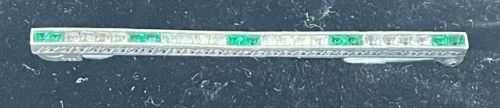
The most common examples on this page are platinum and diamond bar brooches dating from the 1920s, often incorporating contrasting black onyx or calibré cut gemstones. Alongside standard pin brooches and double clip pendants, the selection includes occasional fob watches converted or styled for wear.
Origins span domestic workshops and continental makers, including pieces specifically designated as French manufacture in yellow gold, white gold, and platinum. Each item relies on disciplined spatial arrangement to create pattern and rhythm across the metalwork.
Materials and construction methods
Platinum and gold serve as the primary structural metals, with platinum providing the strength needed for delicate millegrain edges and secure settings. Yellow and white gold appear frequently, sometimes paired together within a single mounting to contrast the warmth of the gold against bright white stones.
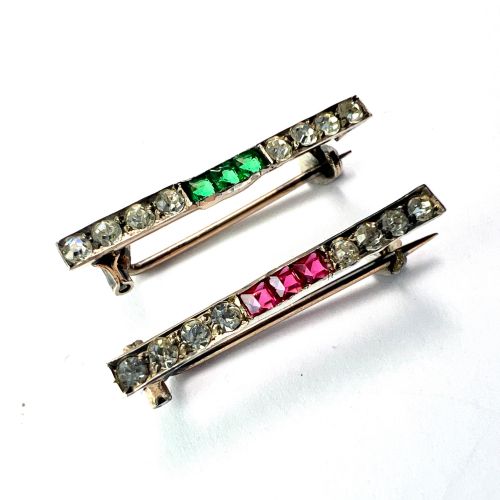
Gemstone selection divides sharply between natural diamonds, emeralds, rubies, and onyx on one side, and paste or paste glass imitations on the other. Stones are typically old cut or table cut, set flush or in linear channels that accentuate the rigid architecture of the design.
Listings span periods from 1890 through the 1960s, with a strong concentration on pieces dated around 1920.
Assessing craftsmanship and composition
Quality rests in the precision of the metalwork, where hand-pierced galleries and sharp corners reveal the hand of a skilled bench worker. Superior pieces maintain crisp symmetry in their repeat patterns without any softening of the geometric edges.
The choice of materials shifts the character of the piece entirely, moving from substantial carat weights of genuine diamonds paired with solid platinum to lighter silver and paste configurations. Higher grade examples integrate contrasting onyx or calibrated coloured stones with tight tolerances between each element.
The Antique Geometric Brooch Glossary
- Bar brooch
- A horizontal pin designed as a narrow elongated shape, frequently decorated with stones centred along the bar.
- Paste
- Hand-cut glass used to imitate gemstones, valued in period jewellery for its bright refractive qualities rather than intrinsic mineral worth.
- Millegrain
- A decorative technique creating a raised border of tiny, bead-like metal points along the edge of a setting.
- Old cut
- A diamond facet arrangement predating modern brilliant cuts, characterised by a smaller table, higher crown, and open culet.
- Calibré cut
- Small gemstones precisely shaped and cut to fit tightly into a specific geometric channel within the mounting.
Antique Geometric Brooch: Frequently Asked Questions
What defines an Art Deco brooch?
Art Deco pieces rely on strict symmetry, angular lines, and stark contrasts between materials like platinum and onyx.
Maker choices lean heavily into geometric repetition rather than organic curves.
How do I date these brooches?
Dating relies on stylistic markers such as platinum usage and specific gemstone cuts typical of the 1920s and 1930s.
Earlier Edwardian examples introduce softer filigree, while mid century pieces adopt bolder, heavier profiles.
Are paste stones modern?
Paste glass represents a historic technique used historically to achieve high sparkle without precious mineral cost.
Period pieces utilise hand-cut glass secured in genuine antique metal settings.
How were these brooches worn?
Original owners pinned them to lapels, collars, or the shoulders of evening dresses to anchor fabric folds.
Double clip versions split apart to function as separate dress ornaments.