
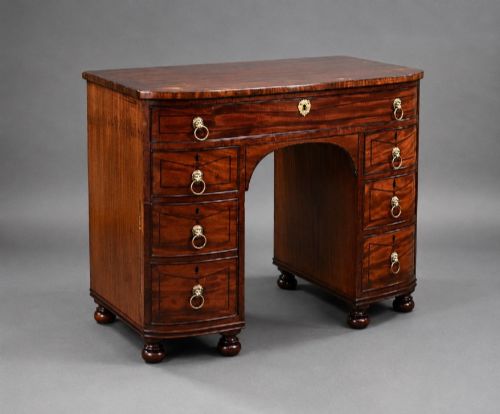

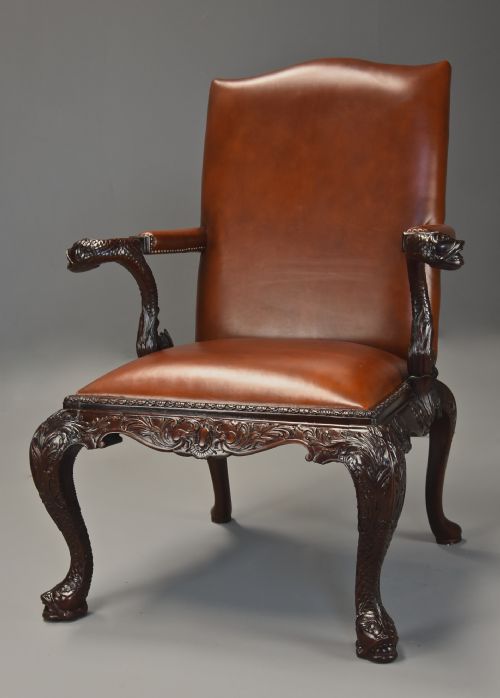


Antique Gentlemans Desk
An antique gentlemans desk brings traditional writing furniture into daily use, offering fitted drawers and durable working surfaces.
Antique Gentlemans Desk
An antique gentlemans desk serves as a dedicated workspace, encompassing forms such as bureaus, writing tables, and pedestal desks.
The selections available range from late Georgian mahogany examples to later Victorian walnut pieces and Georgian style adaptations.
These writing pieces often incorporate fitted interior compartments, leather writing surfaces, and substantial storage drawers for correspondence and documents.
How they were made
Cabinet makers utilised dense hardwoods including mahogany, walnut, burr walnut, and oak to construct the primary frames and carcases.
Writing surfaces were frequently inset with tooled leather panels, while functional hardware such as brass handles, galleries, and locks secured the drawers.
What varies in quality
The distinction in grade rests upon the selection of timber veneers, such as figured burr walnut or rich mahogany grain, matched symmetrically across the desk front.
Carpentry joinery standards, the presence of original brass fixtures, and the intricacy of internal pigeonholes and secret compartments determine the tier of craftsmanship.
Hindley & Sons·Thornton Smith Co·A. Barrett
The Antique Gentlemans Desk Glossary
- Bureau
- A sloping front desk that opens down to form a writing surface above a set of drawers. It typically conceals small compartments and pigeonholes inside.
- Gallery
- A raised ornamental border, often in pierced brass, fitted along the top edge of a desk or writing table to prevent items from sliding off.
- Pedestal desk
- A heavy freestanding writing desk built with two supporting banks of drawers beneath the main work surface.
- Secretaire
- A cabinet or desk containing a pull-out drawer or drop-front panel fitted for writing and storing letters.
Antique Gentlemans Desk: Frequently Asked Questions
What is an antique gentlemans desk?
An antique gentlemans desk is a traditional wooden writing piece designed for private correspondence and document storage. These items typically feature compartments for stationery and integrated drawers.
They appear in various timber finishes like mahogany, walnut, and oak, reflecting the stylistic preferences of Georgian, Regency, and Victorian cabinet makers.
How do I date a desk?
Dating relies on observing the timber species, construction methods, hardware styles, and overall design proportions. Georgian and Regency pieces show different leg profiles and drawer linings compared to later Victorian examples.
Secondary woods inside drawers and the presence of hand-cut dovetailing provide further physical clues to the era of manufacture.
Where should I place it?
These desks suit studies, libraries, or living rooms where they can function as primary writing surfaces or display areas. Freestanding pedestal versions look effective positioned away from walls.
Care should be taken to keep wooden furniture out of direct sunlight and away from heat sources to protect the polished timber and leather inserts.
How do I care for the leather?
Leather inserts require gentle dusting and occasional treatment with appropriate conditioning balms to prevent drying and cracking. Avoid harsh chemical cleaners on the surface.
Keeping the room humidity stable helps preserve both the leather writing panels and the surrounding wood polish.