
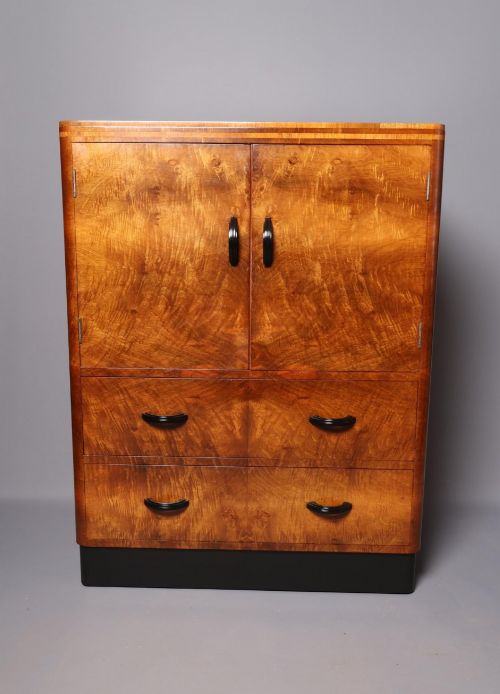


Antique Gentleman Wardrobe
An antique gentleman wardrobe is a capacious fitted storage piece offering hanging space and internal drawers, prized for keeping tailored garments orderly.
What an antique gentleman wardrobe is
An antique gentleman wardrobe provides dedicated storage for formal attire, combining hanging compartments with internal linen drawers or press trays. These substantial pieces organise clothing through bespoke interior configurations rather than simple open cavities.
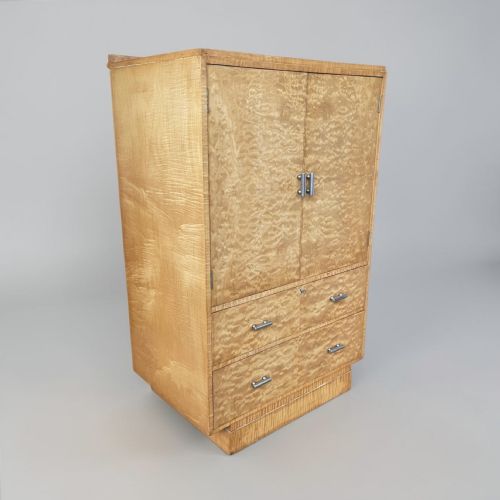
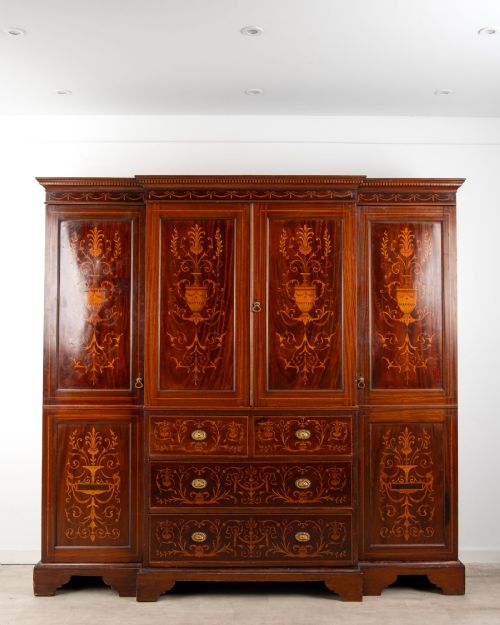
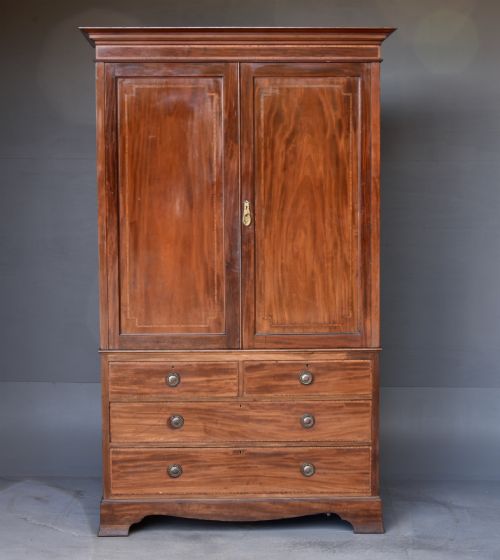
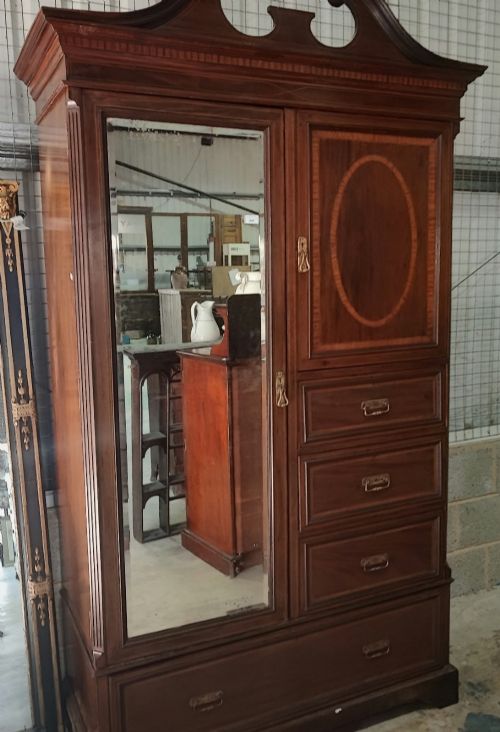
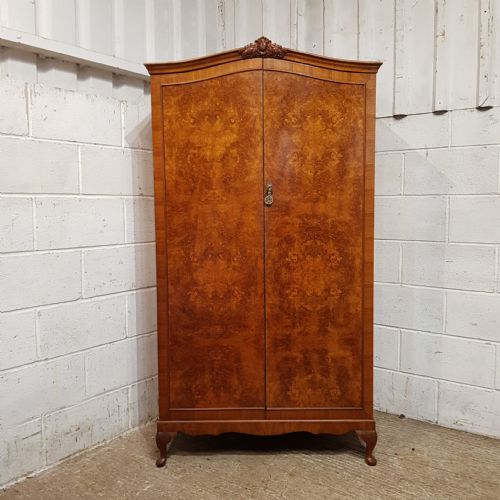
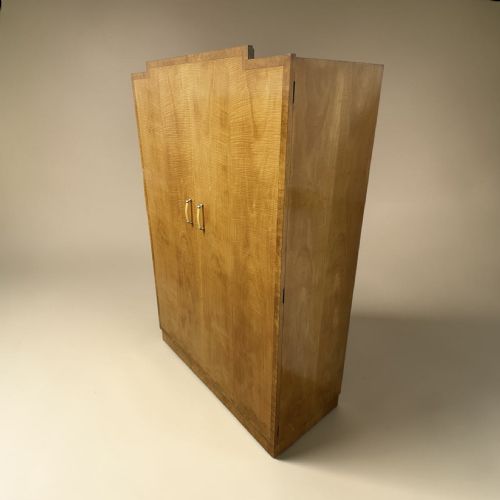
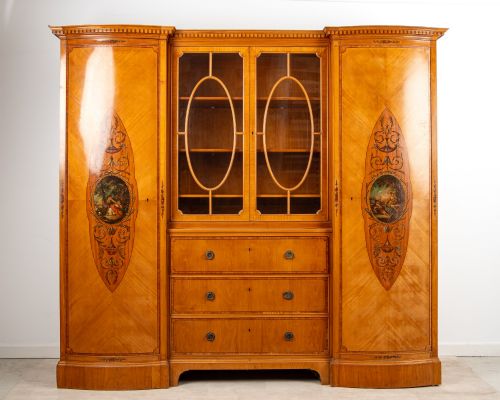
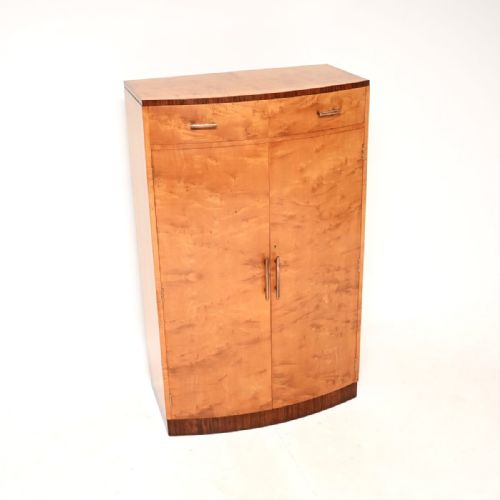
The version you are most likely to encounter on this page is the Edwardian mahogany compactum, often featuring integrated trouser presses and smaller drawers alongside hanging sections. Pieces range from Georgian and William IV mahogany constructions to oak, pine, satinwood, sycamore and burr walnut examples spanning the eighteenth, nineteenth and early twentieth centuries.
What varies in quality
The refinement of timber selection separates standard examples from exceptional pieces, particularly in the figuring of flame mahogany and burr walnut veneers. Superior items display careful grain matching across large panelled doors and drawer fronts.
Interior configuration dictates craftsmanship level, where integrated linen presses, sliding trays and functioning trouser mechanisms demonstrate complex carpentry. Maker attribution through stamps or labels further distinguishes notable workshop output from provincial cabinet work.
Retail Price Guide 2026
Typical UK retail prices for gentleman wardrobe, calculated from the Sellingantiques database of over a million retail prices indexed since 2003. This retail price guide relies exclusively on Sellingantiques data; no external sources or auction records are used, so the figures do not describe the wider market.
Listings feature pieces spanning the 18th century, Victorian era, William IV period, and Edwardian decades, constructed in mahogany, oak, walnut, pine, satinwood and sycamore.
Maple And Co·Whytock And Reid·Heals·Waring And Gillow
The Antique Gentleman Wardrobe Glossary
- Compactum
- A multi-compartment wardrobe combining hanging space, drawers, shelves and sometimes trouser presses within a single carcass. This form maximises storage efficiency for tailored apparel.
- Linen press
- A tall cabinet featuring upper sliding trays enclosed by doors, positioned above a chest of base drawers. These pieces served historically to store folded textiles flat.
- Flame mahogany
- A veneer cut from the fork of a mahogany tree to produce a distinctive flickering flame pattern. Cabinet makers used this decorative grain on principal exterior surfaces.
- Lead light
- Glass panels held together by lead cames to form geometric or decorative window patterns. This technique appears on cabinet doors to reveal contents while providing structure.
- Sycamore
- A light-coloured hardwood utilised by cabinet makers for contrasting interior fittings or select lighter furniture pieces. Its pale tone offers a clean aesthetic inside dark timber carcases.
Frequently Asked Questions
How do I care for a wooden wardrobe?
Maintain stable humidity levels in your room to prevent timber warping and veneer lifting over time. Apply a traditional wax polish occasionally to nourish the wood and preserve the surface finish.
Avoid placing the piece in direct sunlight or near active heat sources which dry out antique hardwoods. Check internal fittings and hinges periodically to ensure doors hang evenly.
What is the difference between a compactum and a wardrobe?
A standard wardrobe focuses primarily on vertical hanging space enclosed by full length doors. A compactum integrates multiple storage formats such as sliding linen trays, shallow drawers, and trouser presses alongside hanging sections.
Compactums offer a comprehensive solution for organising folded garments and accessories within one unified footprint. This multi-functional interior layout distinguishes them from basic hanging cupboards.
How do I date an antique wardrobe?
Examine the secondary woods used inside drawer linings and back panels, such as pine or oak, alongside construction marks and dovetail tightness. Regency and Georgian pieces display hand-cut joinery while later Edwardian examples incorporate machine-assisted techniques.
Maker stamps, brass hardware styles, and specific timber choices like satinwood or burr walnut provide further chronological indicators. Comparing these physical traits against documented period forms helps establish an approximate decade.