



Antique Genre Scene Print
An antique genre scene print captures everyday life from past centuries, offering a window into domestic habits and rural pastimes that collectors cherish.
Antique Genre Scene Print
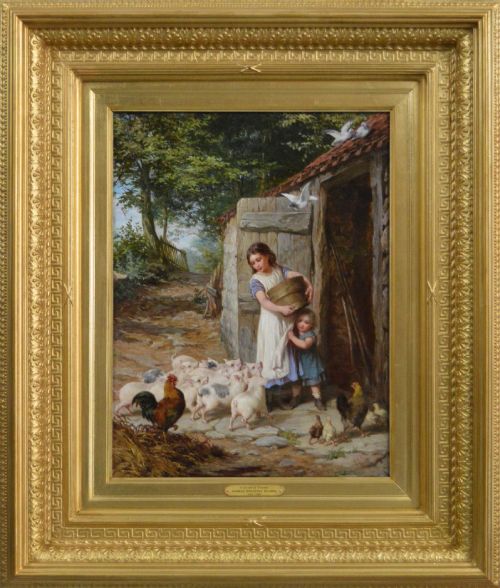
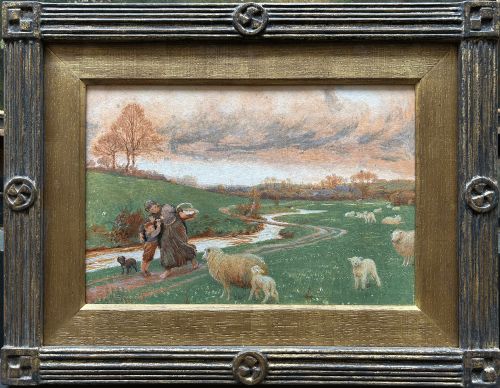
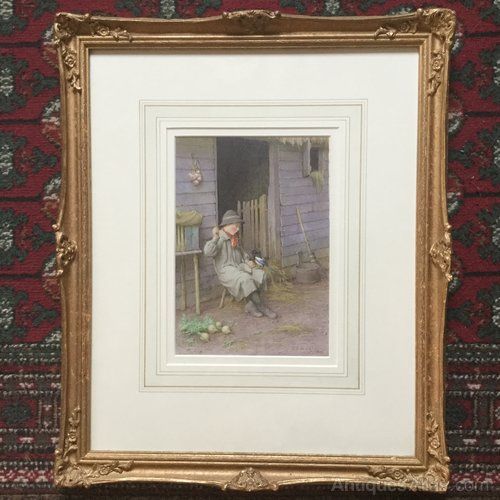
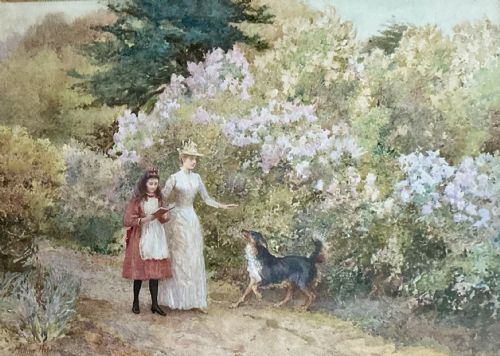
An antique genre scene print depicts ordinary people engaged in daily activities, domestic work, or leisurely pursuits rather than formal portraits or grand historical events. Buyers encounter subjects ranging from rural farmyard scenes and tavern doors to quiet domestic moments involving children or courting couples.
The selections available span several distinct stylistic movements, including Victorian pastoral studies, Georgian engravings, and academic compositions. These works frequently appear framed in period wood or gilt frames, preserving the complete presentation intended by nineteenth-century framers.
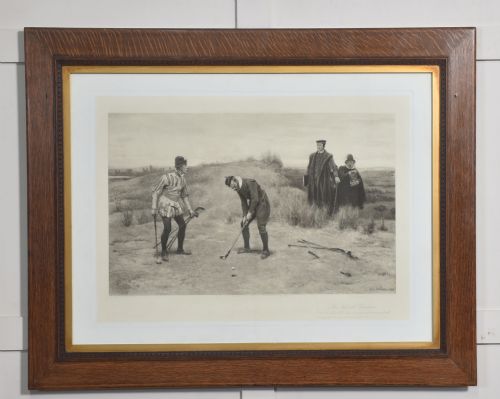
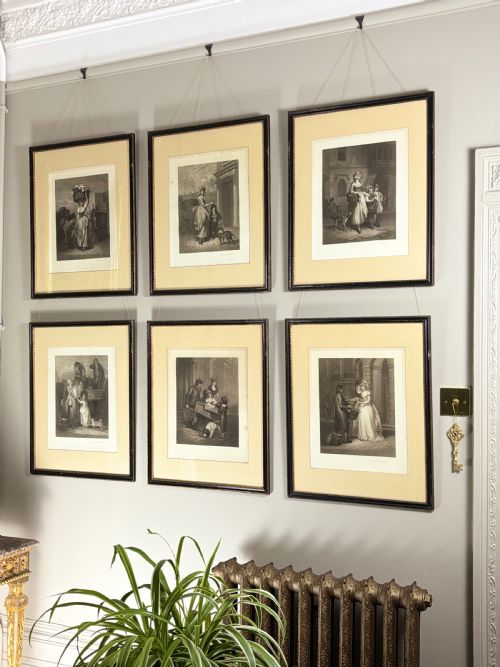
Makers and publishers utilised various printmaking methods to reproduce popular paintings, making domestic art accessible to middle-class homes. Collectors find both individual plates and matched sets, such as the popular Cries of London series or decorative pairs.
Materials and methods
Makers relied primarily on paper for the printed surface, employing techniques such as mezzotint, stipple engraving, lithography, and hand-colouring to achieve tonal depth and rich colour palettes. Engravers worked meticulously on metal plates to capture every nuance of the original painted compositions before transferring the ink to paper.
Specialised pieces like crystoleoms combined photography and glass, where a convex glass pane received a transparent print that was then hand-painted from behind and sealed. These delicate items required fitted wood and gilt frames to protect the fragile layered glass components from damage.
Frames themselves typically utilised wood finished with gold leaf or giltwood accents, reflecting the prevailing taste of the Georgian, Victorian, and Edwardian periods. The combination of high-quality paper, deep impressions from copper plates, and appropriate framing defined the standard production of the era.
Listings feature paper, glass, wood, and gold leaf, spanning the Georgian, Victorian, and Edwardian eras through oil, watercolour, and print mediums.
Assessing quality and craftsmanship
Quality rests upon the crispness of the impression left by the plate and the subtlety of any added hand-colouring, which should enhance rather than obscure the underlying lines. Early impressions taken before the metal plate wore down show sharper details and finer tonal gradations.
The preservation of the paper and the integrity of the original frame heavily influence the standing of any piece. Retaining period frames with original gilding without excessive restoration elevates the overall standard of the artwork significantly.
George Augustus Holmes·Frederick Walker·J C Dollman·Charles Edward Wilson·Thomas G Appleton·Edward Stodart·Arthur Hopkins·E Jackson Stodart·George Morland·W Ward·Carlo Ferranti·F Petitjean·Schweninger·Frank Moss Bennett
The Antique Genre Scene Print Glossary
- Mezzotint
- A printmaking process where the copper plate is roughened to produce dark tones, then scraped to create lighter areas, yielding rich tonal gradations. This technique was frequently employed for reproducing oil paintings.
- Crystoleom
- A convex glass painting created by applying a transparent photograph or print to glass, clearing the paper backing, and painting the reverse side by hand. They became very popular during the Victorian era.
- Stipple engraving
- A method of producing prints by means of dots rather than continuous lines, allowing for delicate flesh tones and subtle shading. Publishers used this widely for decorative domestic prints.
- Giltwood
- Wood carved and covered with a thin layer of gold leaf or gold paint to create a decorative frame finish. Such frames are typical of Victorian and Georgian framing practices.
- Lithography
- A planographic printing process based on the repulsion of oil and water, enabling the reproduction of illustrations and watercolours. Artists utilised this method extensively throughout the nineteenth century.
Antique Genre Scene Print: Frequently Asked Questions
What is a genre scene print?
A genre scene print illustrates ordinary people in everyday situations, such as domestic chores, rural life, or social gatherings. These works focus on common human experiences rather than royalty or mythology.
Publishers reproduced popular oil paintings and watercolours so that households could display affordable art depicting familiar narratives.
How do I care for antique prints?
Protect antique prints by hanging them away from direct sunlight to prevent the paper and any applied watercolours from fading. Maintaining stable indoor humidity levels also prevents the paper from warping and protects the wooden frames.
Avoid touching the paper surface directly and keep framed works away from damp walls to preserve the integrity of the materials.
What is a crystoleom?
A crystoleom is a Victorian picture made by sticking a print onto convex glass, rubbing away the paper pulp, and painting the back by hand. This process creates a luminous, three-dimensional effect.
Because the glass is curved and painted from behind, these pieces require careful handling and their original frames to remain secure.
Are these prints original works?
The listings include both original watercolours or oil paintings and printed reproductions made via mezzotint, engraving, or lithography. Engravings and lithographs were printed in editions after original artworks.
Reading the listing details carefully reveals whether a piece is a unique painted work or an issued print from a plate.