
Antique Gemstone Necklace Drop
An antique gemstone necklace drop brings together centuries of goldsmithing and vibrant stones, offering a suspended focal point that collectors prize for period character.
Antique Gemstone Necklace Drop
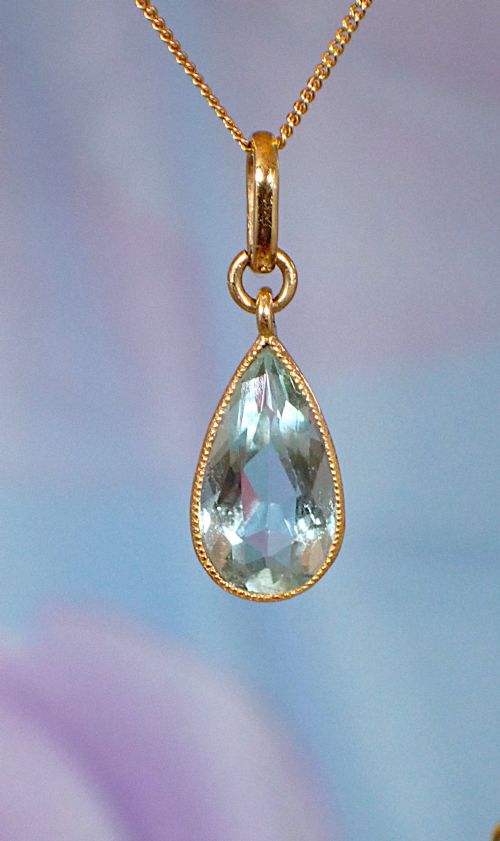
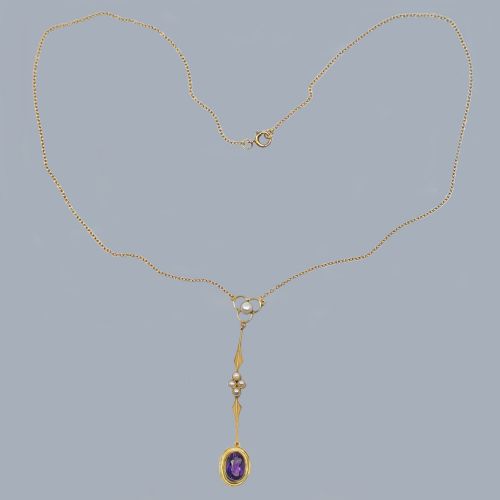
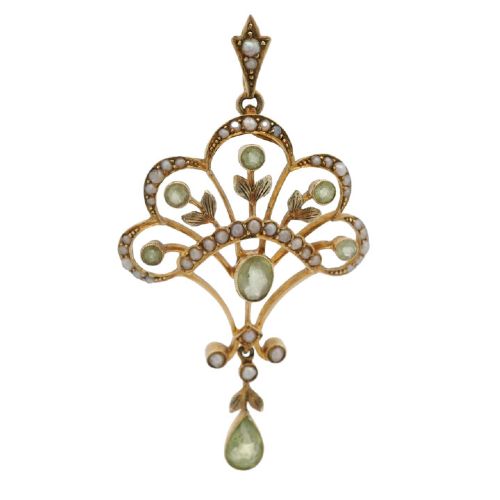
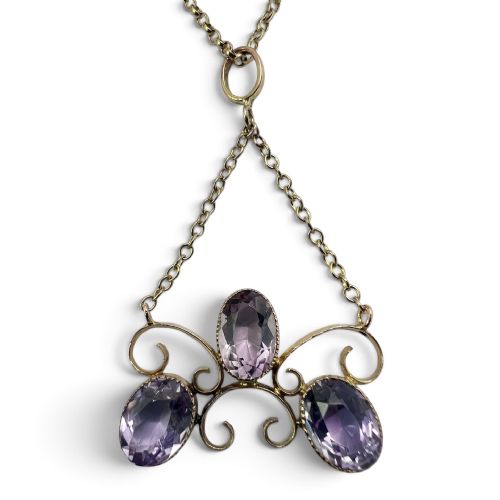
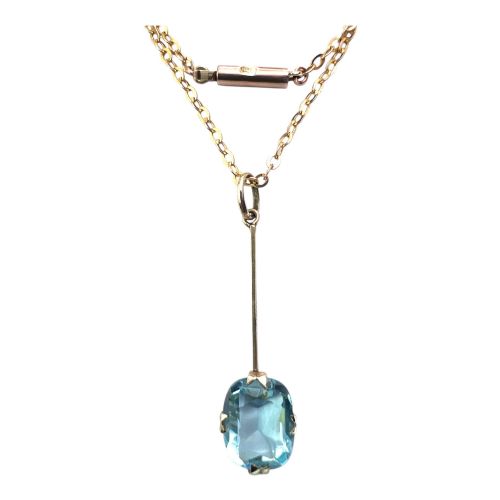
An antique gemstone necklace drop is a pendant or suspended jewel designed to hang from a delicate chain, ribbon, or integrated festoon setting. These pieces primarily date from the Victorian, Edwardian, and Art Deco eras, capturing the aesthetic shifts from ornate romanticism to linear geometrical grace.
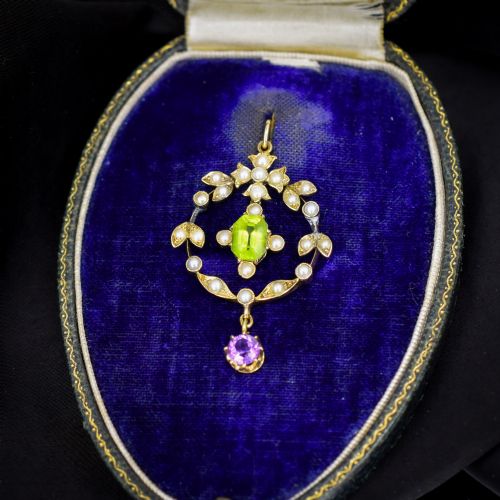
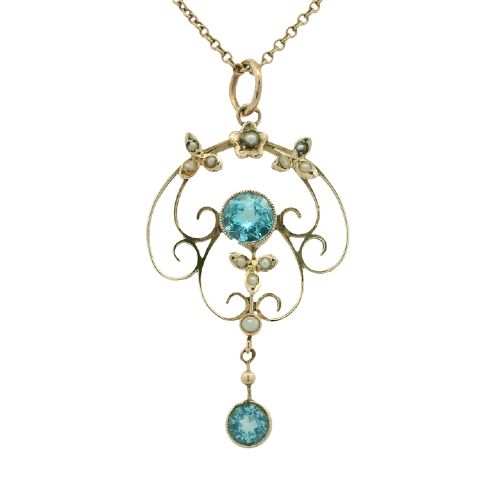
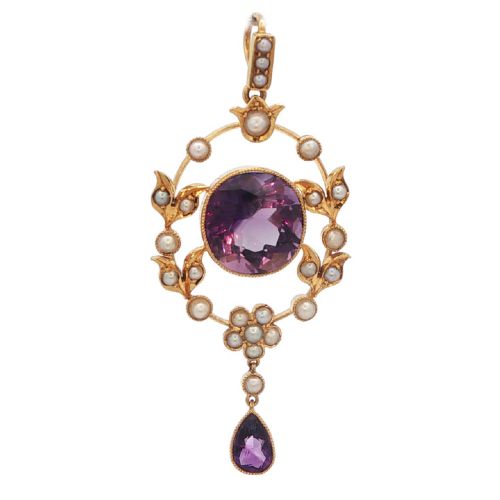
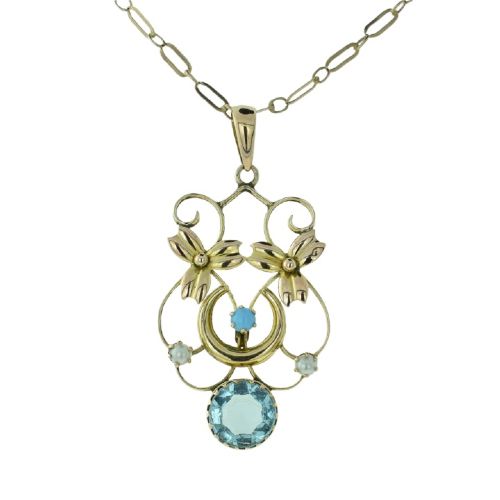
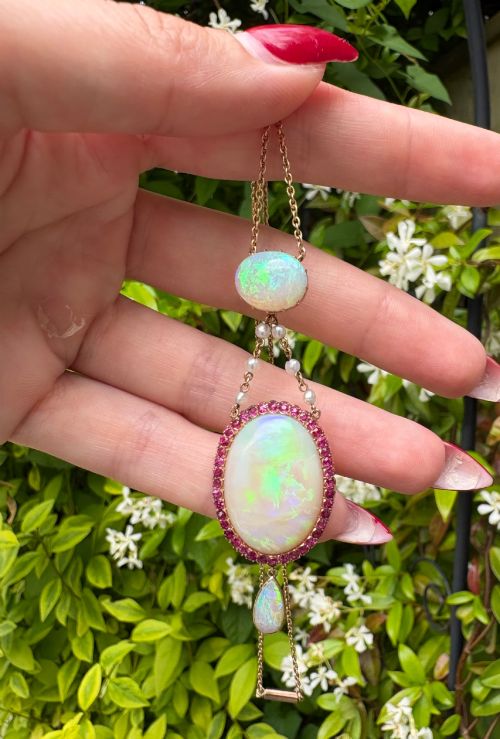
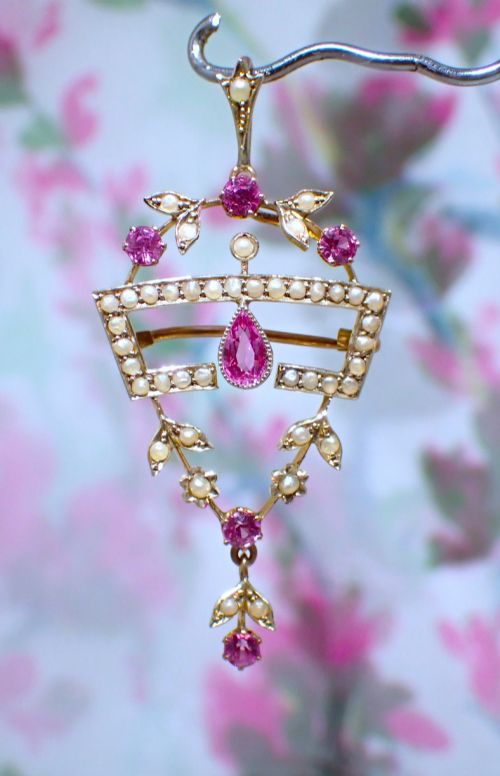
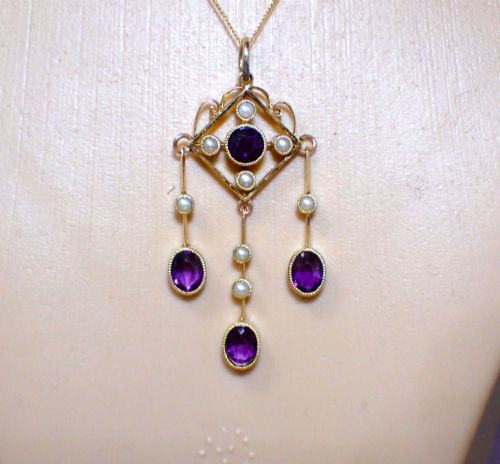
You will most commonly encounter Edwardian lavaliers and Victorian pendants featuring central coloured stones flanked by seed pearls. Designs range from symmetrical drop clusters to flowing Art Nouveau botanicals and structured Arts and Crafts silver work.
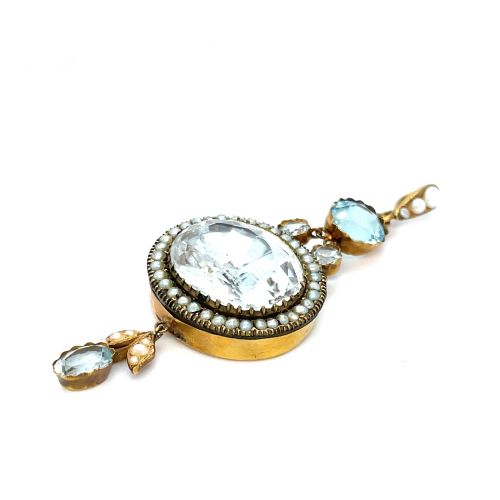
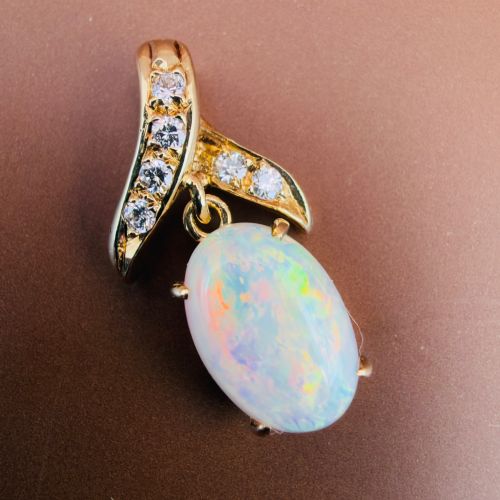
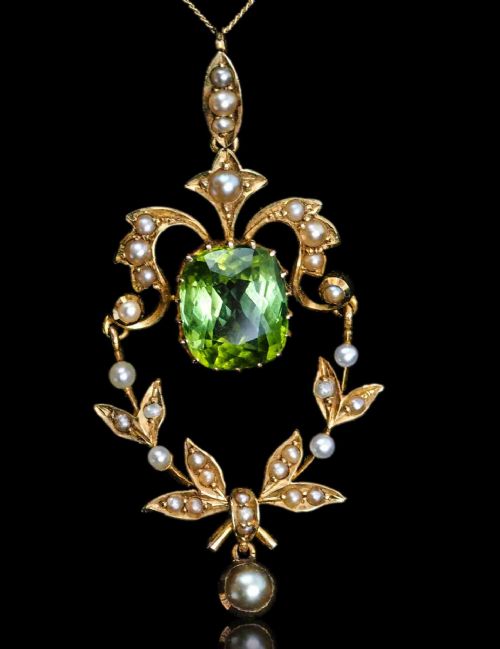
The materials span from rich 15ct and 9ct gold to silver settings holding amethysts, aquamarines, peridots, garnets, and opals. Many incorporate secondary gems like diamonds or rock crystal to enhance the refractive play of light in the primary drop.
Materials and construction methods
Goldsmiths of the nineteenth and early twentieth centuries constructed these drops predominantly using 9ct or 15ct yellow and rose gold, occasionally employing silver for specific Arts and Crafts or Edwardian settings. Stones were typically hand-cut into oval, round, or cabochon shapes before being secured in open or closed-back collet settings.
Seed pearls were meticulously hand-strung or individually pinned and bezel-set to accent the central gemstones in intricate floral, lavaliers, or fringe configurations. Pierced openwork, delicate wire-twisting, and millegrain edging defined the high standard of benchwork during the height of the Edwardian period.
Several Edwardian pieces double as both pendants and brooches, offering versatile Victorian styling for the modern collar.
Factors determining the calibre of a drop
The distinction between standard commercial pieces and finer examples rests on the purity of the gold and the saturation and clarity of the central gemstones. Heavier gauge metalwork and higher carat gold, such as 15ct, indicate a superior commission compared to lighter 9ct equivalents.
Design complexity and the integrity of the original settings dictate overall merit. Pieces retaining original matching chains, undamaged seed pearls, and unblemished foil or open-backed stone settings demonstrate higher preservation and craftsmanship.
Murrle Bennett·Mary Thew·S. Blanckensee & Son
The Antique Gemstone Necklace Drop Glossary
- Lavalier
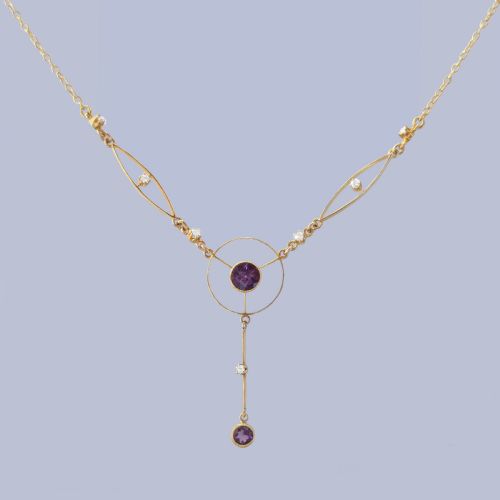
- A pendant featuring a primary gemstone drop suspended from a smaller secondary stone or directly from a delicate chain. This style gained immense popularity during the Edwardian era.
- Seed Pearl
- A tiny, naturally occurring or early cultured saltwater pearl measuring under two millimetres, frequently used in clusters to frame larger coloured stones.
- Foil Back
- A historical technique where a thin sheet of metallic foil is placed behind a gemstone within a closed setting to enhance its colour and reflectivity.
- Cabochon
- A gemstone shaped and polished with a smooth, convex domed surface rather than faceted with flat planes.
- Festoon
- A necklace design featuring draped chains, swags, or suspended drops arranged in a curved, garland-like pattern around the neckline.
- Millegrain
- A decorative jewellery technique involving a border of tiny, raised metal beads along the edges of a setting, characteristic of Edwardian pieces.
Antique Gemstone Necklace Drop: Frequently Asked Questions
What is a lavalier necklace?
A lavalier is a specific type of pendant necklace featuring a prominent gemstone drop hanging from a smaller stone or central link. They were particularly fashionable during the Edwardian period.
These pieces emphasise vertical movement and delicate goldwork, often incorporating seed pearls and amethysts or peridots.
What is the difference between Victorian and Edwardian drops?
Victorian drops tend to be heavier, featuring romantic motifs, foil-backed stones, and garnet or opal clusters in yellow or rose gold. They reflect the sentimental and ornate tastes of the nineteenth century.
Edwardian drops embrace lighter platinum and higher carat gold or silver, utilising aquamarines, amethysts, and diamonds with openwork and millegrain detailing for an airy, lace-like effect.
Can I wear these antique necklaces daily?
Most antique necklace drops can be worn regularly provided you treat them with appropriate care. Because older gold alloys and seed pearls are delicate, avoid wearing them during physical activities or sleeping.
Checking the security of the jump rings and the original chain clasp periodically helps prevent loss during daily wear.