


Antique Garden Table Set
An antique garden table set brings enduring metalwork and stone surfaces outdoors, creating an inviting space for dining and quiet sitting.
Antique Garden Table Set
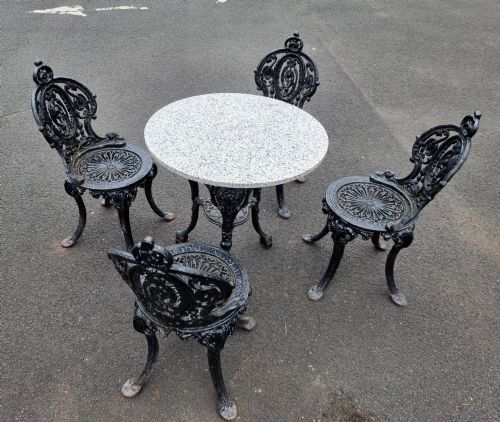
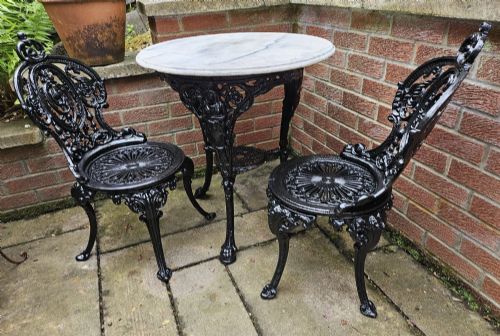
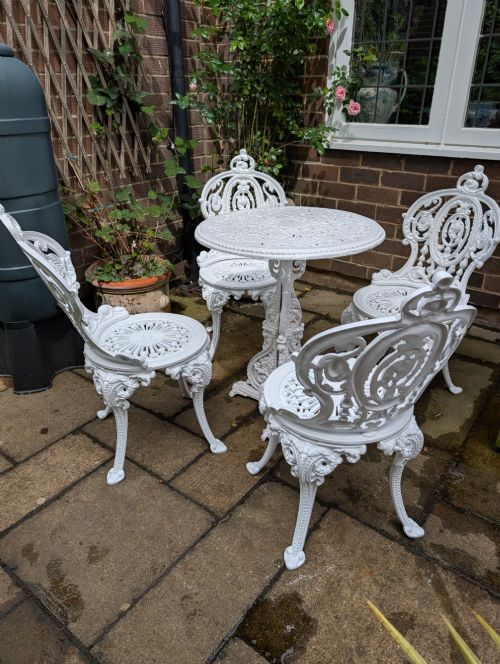
An antique garden table set combines a central table with matching chairs designed specifically for outdoor placement and terrace dining. When searching for an antique garden table set, buyers most commonly encounter robust metal constructions dating from the nineteenth and early twentieth centuries. These groupings frequently comprise a round or rectangular table accompanied by four matching chairs, offering a complete arrangement ready for garden use.
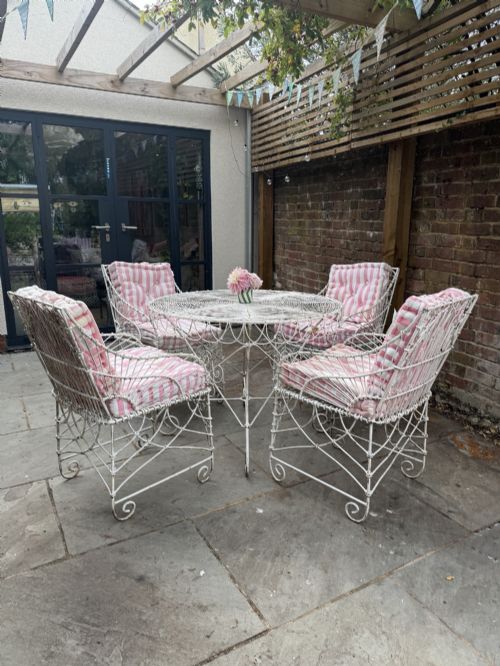
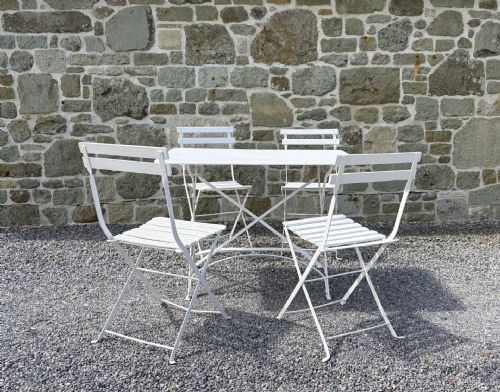
The periods represented in these outdoor groupings span from the late nineteenth century through to the art deco era of the 1920s and 1930s. Styles range from classical Victorian wirework and heavy cast-iron formations to continental influences like French bistro, French chateau, and Mediterranean revival. Object types vary from compact bistro sets and smaller café tables to substantial garden dining sets intended for larger outdoor gatherings.
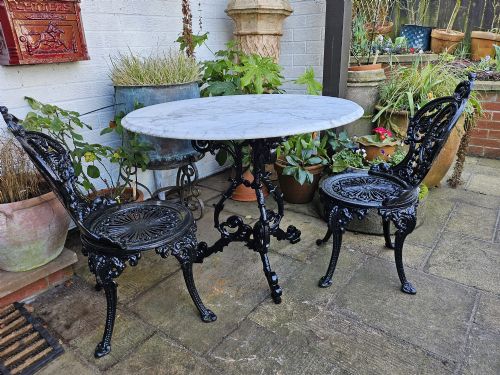
Origins and regional designs introduce distinct characteristics to each antique garden table set found on the market. Pieces from French workshops often emphasise lighter scrollwork or marble tops, whereas English Victorian examples lean towards heavy cast iron and intricate wirework. Buyers select these sets to anchor a terrace or lawn with period character that modern reproductions cannot replicate.
Materials and construction methods
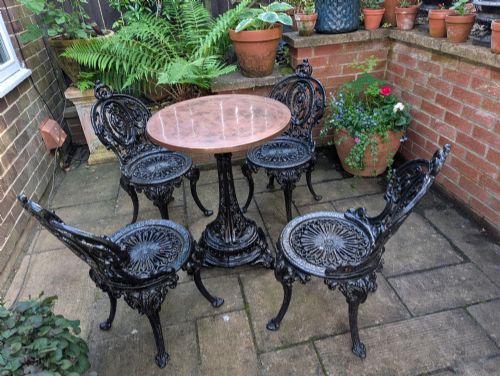
Foundries produced the heavy frameworks of an antique garden table set using cast iron and wrought iron, pouring molten metal into detailed moulds or shaping it manually at the forge. Cast iron allowed makers to achieve ornate Victorian patterns and robust pedestal bases, while wrought iron provided resilient, flexible frames for French bistro configurations. Wirework examples utilised intricate manipulation of metal strands to form light, supportive chair backs and open table structures.
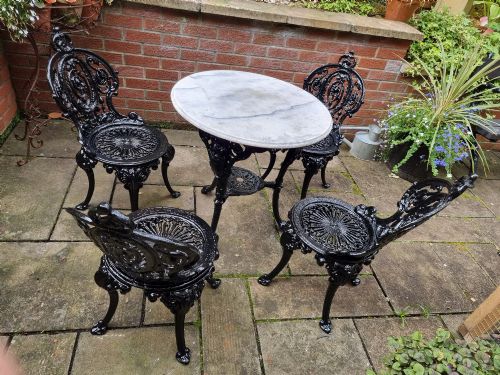
Surface tops frequently introduced contrasting materials such as marble, granite, or copper to balance the industrial weight of the metal bases. Marble and granite slabs provided smooth, weather-resistant surfaces for dining, occasionally paired with painted finishes to protect the underlying iron from oxidation. Fabric elements and protective paint layers completed the construction, ensuring the furniture could withstand seasonal exposure in the garden.
Listings for this phrase include iron and wirework constructions spanning from the 1880s through the 1930s, incorporating marble and granite surfaces.
Assessing quality in period garden sets
The caliber of an antique garden table set depends largely on the crispness of the foundry work and the integrity of the original metal components. Superior examples display sharply defined casting details in the iron scrollwork and robust structural joints that have not suffered from excessive thinning due to rust or over-restoration. The inclusion of uncommon top materials, such as heavy marble or specialised designer frames, elevates a set above standard utilitarian production.
Proportion and matching integrity separate standard garden furniture from exceptional pieces. Sets where the table and chairs share unified design motifs, original matched paint, or specific attributed maker designs demonstrate a higher grade of historical preservation. The overall weight, stability of the framework, and harmonious scaling between the seating and the dining surface define the upper tier of quality.
Christopher Dresser
The Antique Garden Table Set Glossary
- Cast iron
- A strong, heavy alloy poured into moulds to create rigid components with intricate decorative relief. It forms the heavy framework of many Victorian and twentieth-century garden tables.
- Wrought iron
- Iron heated and hammered into shape by hand, known for its fibrous structure and resilience. This material provides the flexible frames for French bistro and chateau seating.
- Wirework
- A technique utilising interwoven metal wires to create open, lightweight garden furniture. It became particularly popular during the Victorian period for lawn and conservatory use.
- Bistro table
- A small, often round table designed for limited spaces and casual outdoor dining. These tables frequently accompany two matching chairs.
- Mosaic cafe table
- A small surface inlaid with small pieces of stone or tile to form decorative patterns. These tables often reflect Mediterranean and Spanish design traditions.
Antique Garden Table Set: Frequently Asked Questions
How do I clean an antique iron set?
Maintenance involves gently removing loose debris and surface dirt using a soft brush and mild soapy water without harsh chemical abrasives. Thorough drying prevents moisture retention in metal joints.
Applying a protective wax or specialised rust inhibitor helps preserve the remaining historical paint finish. Avoid power washing or abrasive scraping that might strip original patination from the iron.
Can these sets stay outside all year?
While originally built for outdoor environments, historical garden furniture benefits from shelter during harsh winter conditions. Moving pieces into a shed or garage protects fragile marble tops and delicate wirework from frost damage.
If left outdoors, covering the ensemble with breathable protective sheeting prevents prolonged moisture accumulation. Raising metal feet off damp ground also reduces the risk of base corrosion.
What is a French bistro set?
A French bistro set comprises a compact table and matching chairs designed for small pavement cafés and domestic terraces. Their lighter wrought-iron frames allow for easy movement and compact storage.
These sets originated to serve urban dining spaces where floor space was limited. Their enduring appeal lies in their practical scale and distinct continental styling.