



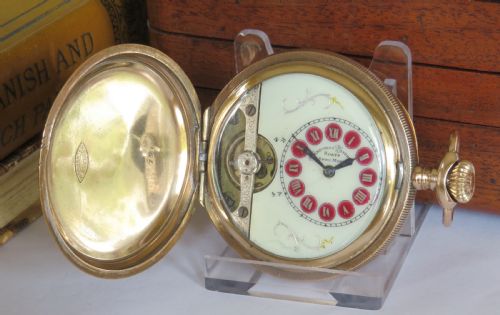

Antique Full Hunter
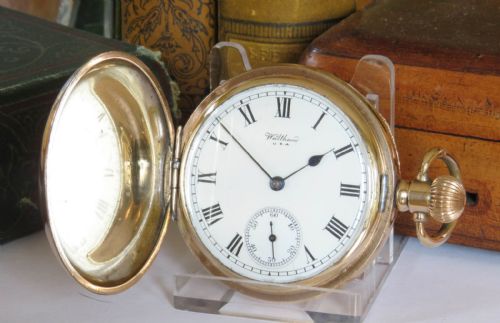
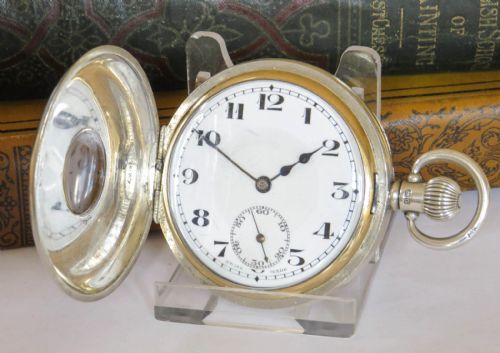
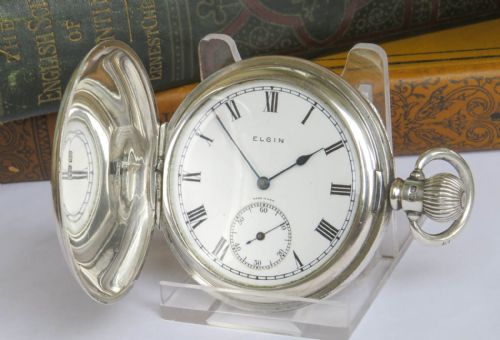
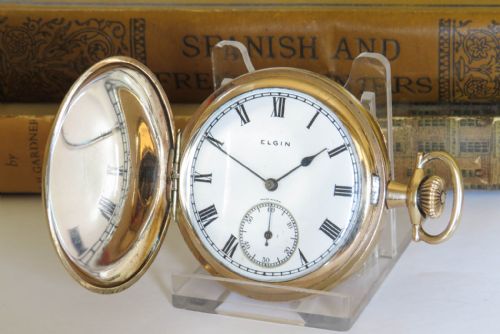
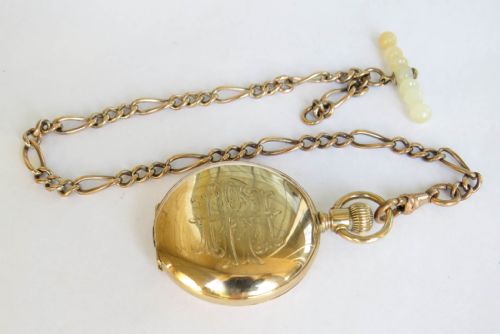
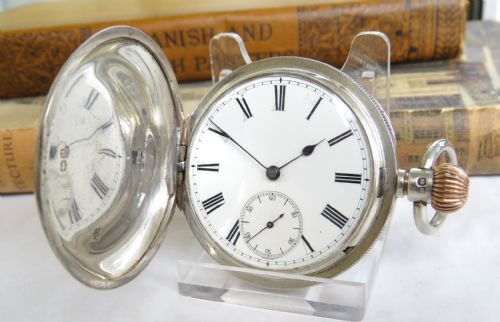
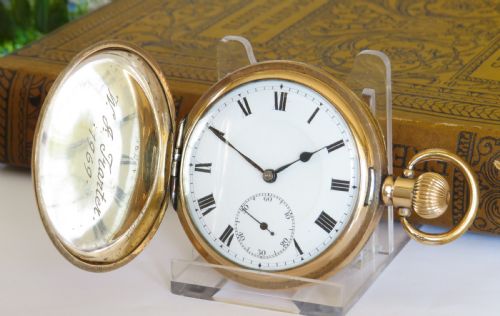
An antique full hunter pocket watch brings a protective metal case to a traditional timepiece, offering a satisfying click of the lid before revealing the dial.
Antique Full Hunter
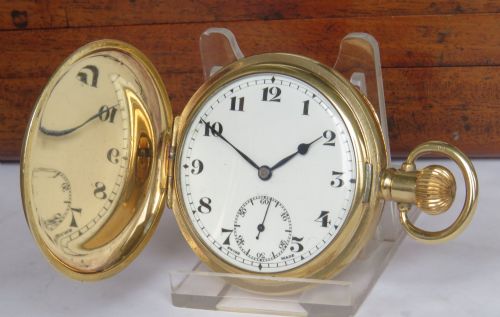
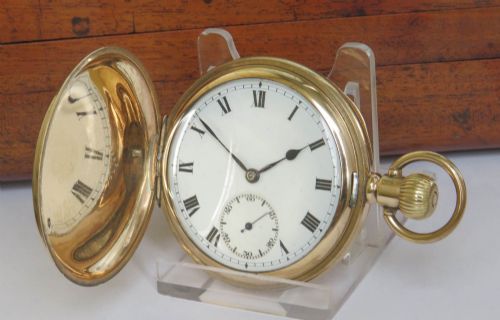
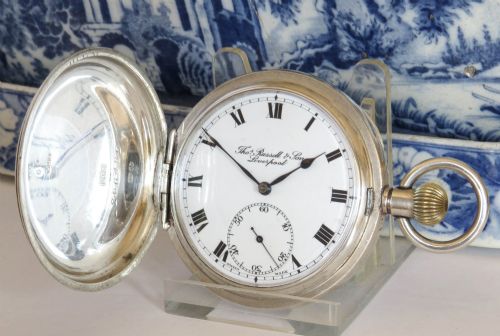
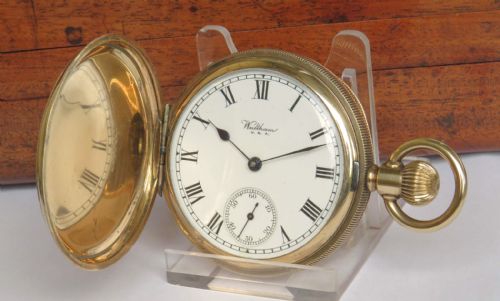
An antique full hunter is a pocket watch enclosed by a spring-loaded metal cover that protects the dial from scratches and dust. The pieces available span the nineteenth century, the Victorian and Edwardian eras, through to the Art Deco period of the 1920s and 1930s.
Makers represented include prominent houses such as Elgin, Waltham, Longines, and Corgémont, alongside specialised English and Swiss workshops. Examples range from simple button-wind gold-plated versions to complex fusee movements and repeating mechanisms housed in solid eighteen-karat or fourteen-karat gold.
The form appears in various regional markets, including pieces made for export such as Victorian Ottoman market watches and Turkish silver editions. Buyers encounter everything from presentation pieces bearing bravery awards to intricately engraved gold models designed for daily carriage.
How they were made
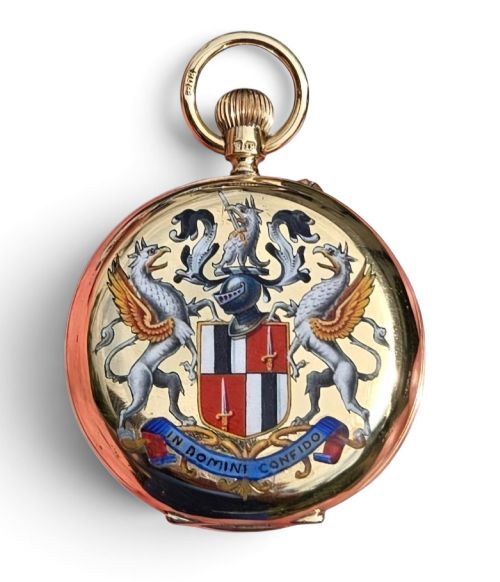
Construction relies heavily on precious metals like solid eighteen-karat gold, fourteen-karat gold, and silver, supplemented by durable gold plate and steel. Many cases feature detailed exterior hand-engraving across the front and back covers.
Internal mechanics utilise traditional techniques such as fusee movements, verge escapements, and button-wind mechanisms. Dials are protected by glass crystals and frequently finished with white enamel alongside contrasting hands and numerals.
Antique Full Hunter Retail Price Guide 2026
Typical asking prices for full hunter among the pieces listed under this phrase on Sellingantiques today, from the lower quarter to the upper quarter. They describe what is for sale here now, not the wider market.
Some watches recorded here carry official bravery awards, turning a simple timekeeper into a tangible piece of personal history.
What varies in quality
Quality differences stem from the complexity of the internal movement, ranging from basic pin-pallet or lever escapements to five-minute repeaters and fusee mechanisms. Finer examples house precision Swiss or American calibres produced by established horological houses.
The choice of casing material also dictates standing, with solid gold cases and intricate hand-engraving sitting above standard gold plate and plain steel. Documented provenance, such as royal descent or specific bravery awards, further elevates individual pieces.
R. Stewart, Glasgow·Elgin·Waltham·Longines·Urania·Limit·Hebdomas Patent·Lonville·Corgémont of Switzerland·J Lyndsey·J Dauer Geneve
The Antique Full Hunter Glossary
- Full hunter
- A pocket watch featuring a spring-hinged metal cover designed to protect the dial from damage. Pressing the crown typically releases the lid.
- Fusee
- A conical pulley device used in older mechanical watches to maintain even tension on the gear train as the mainspring unwinds.
- Verge
- An early type of escapement mechanism that controls the release of power in mechanical clocks and watches. It represents traditional horological construction.
- Repeat
- A complication mechanism that chimes the hours, quarters, or minutes on demand when a slide or button is activated.
- Enamel
- A glassy substance fused to metal through firing, commonly used to create smooth, bright white watch dials with painted numerals.
Antique Full Hunter: Frequently Asked Questions
How do I open a full hunter?
Most full hunter watches open by pressing down on the winding crown at the top of the case, which releases the spring-loaded front cover.
Avoid forcing the lid open by hand, as this places unnecessary strain on the hinge and release mechanism.
What is a fusee movement?
A fusee is a conical gear system connected to the mainspring by a fine chain, designed to equalize the diminishing power of the spring as it runs down.
This traditional method helps older watches maintain consistent timekeeping throughout their winding cycle.
How do I tell an Edwardian watch from a Victorian one?
Victorian pieces often display heavier proportions and ornate, traditional hand-engraving, reflecting nineteenth-century design tastes.
Edwardian and later Art Deco examples tend to feature cleaner geometric lines on the case and sleeker typography on the enamel dials.