

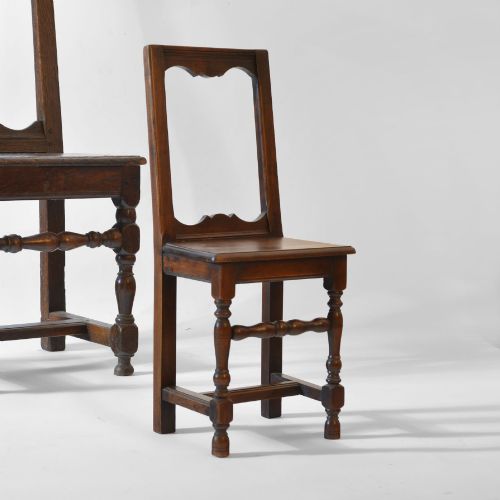
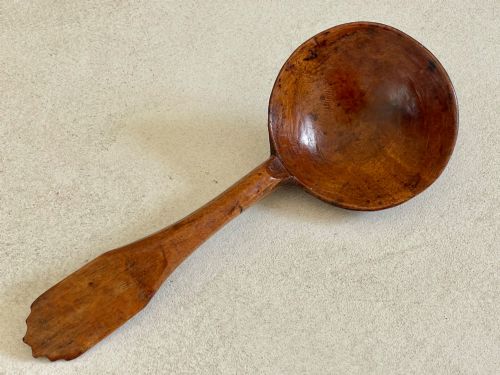
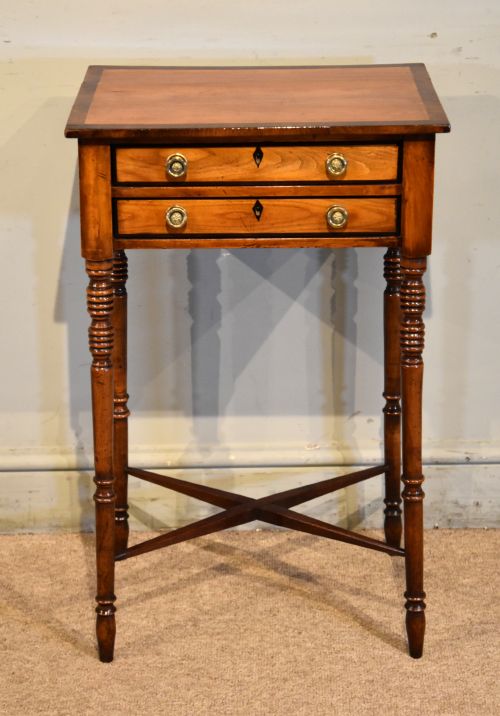
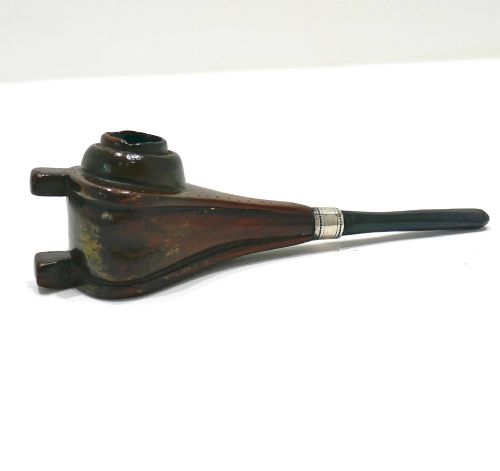
Antique Fruitwood
These pieces in antique fruitwood span dining tables, commodes and tactile treen, prized for their rich warmth and distinctive grain.
Antique Fruitwood
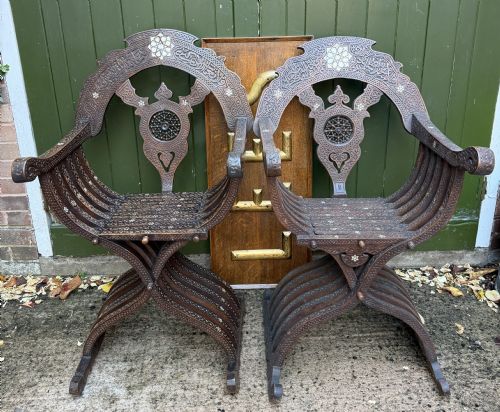
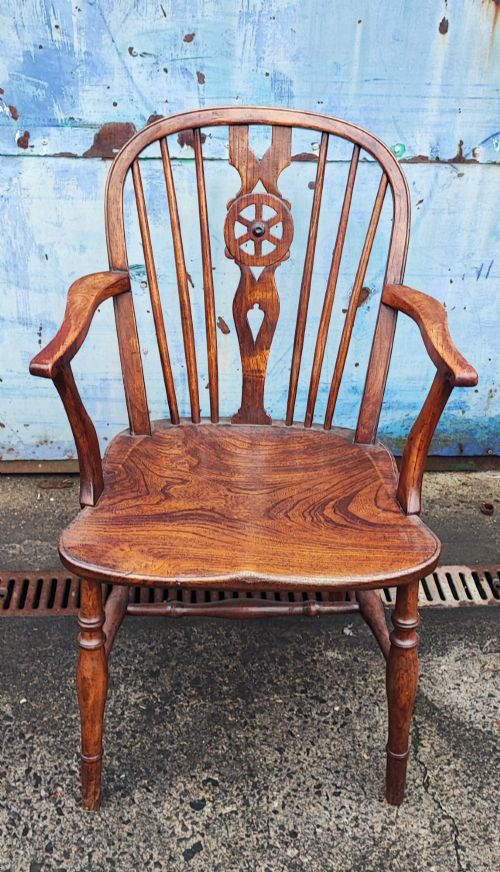
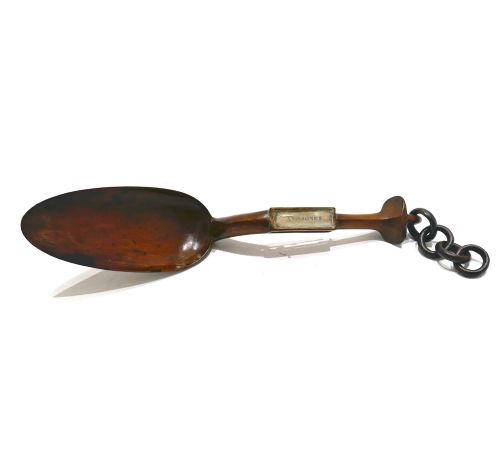
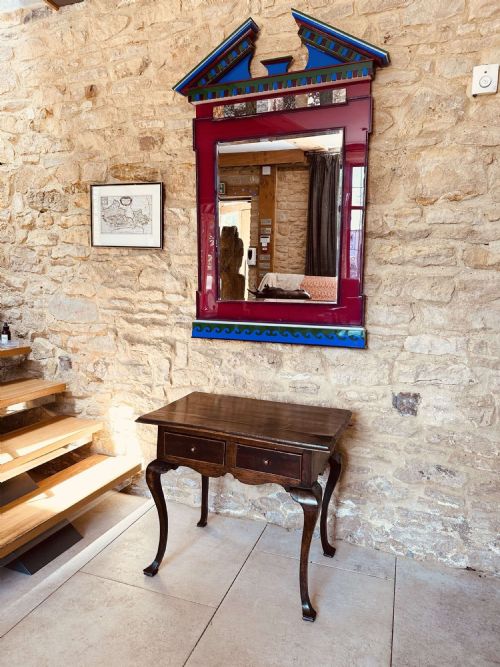
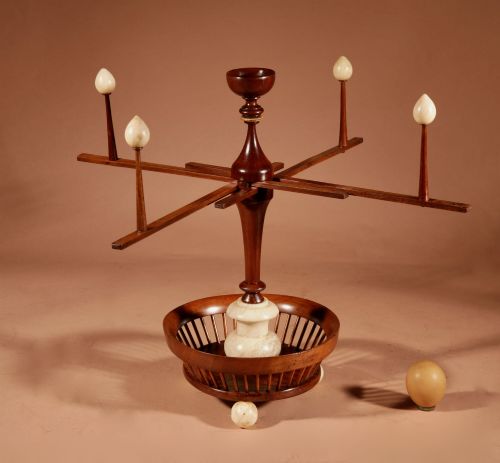
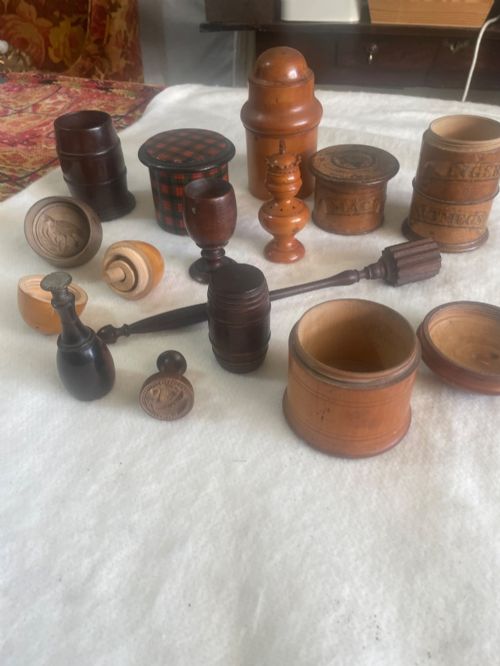
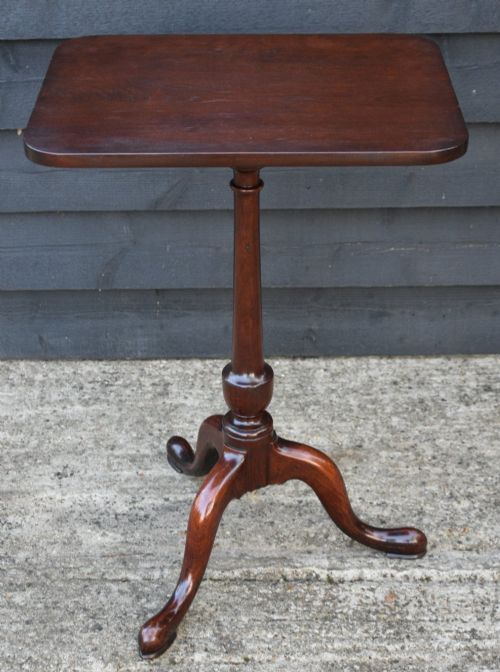
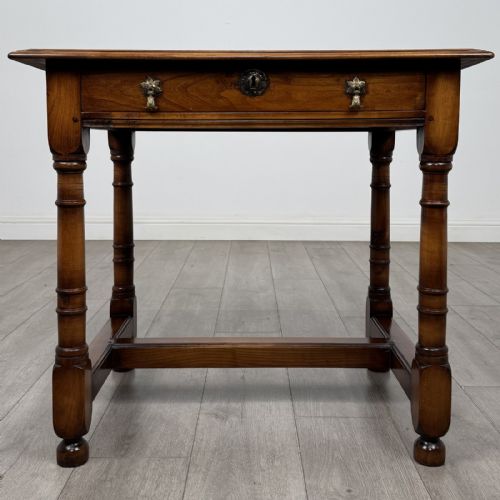
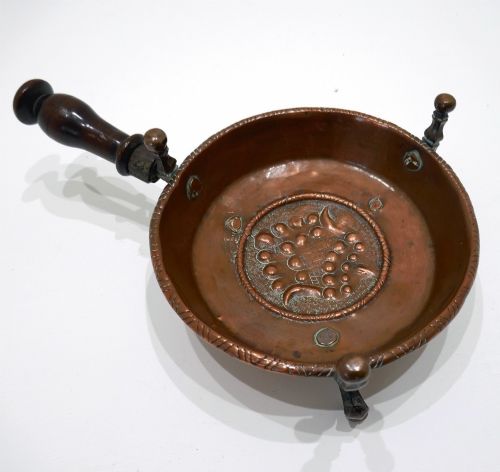
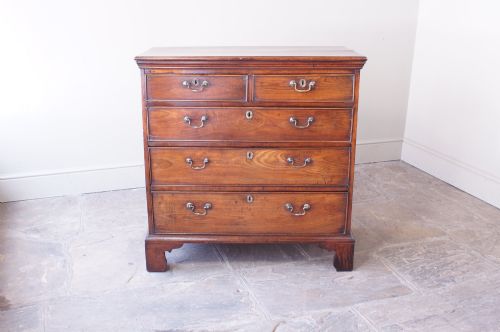
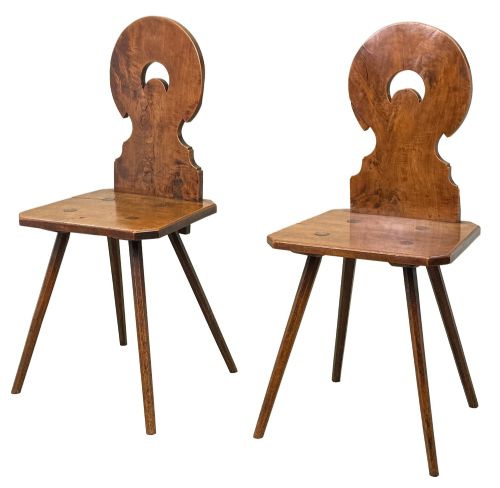
Larger domestic forms dominate the domestic categories, including refectory dining tables, bedside cupboards, chests of drawers and spindle-back Windsor chairs. Alongside these utility pieces sit smaller turned items like spice towers, string barrels, goblets and pocket knives.
Origins span English country workshops and French provincial centres, reaching into the 19th and early 20th centuries. Buyers find substantial farmhouse furniture alongside delicate novelty items intended for daily household use.
How They Were Made
Joiners and turners worked with dense fruit timbers alongside supporting elements of oak, walnut and cedar. These domestic woods accepted hand-carving, punchwork incising and polished finishes well.
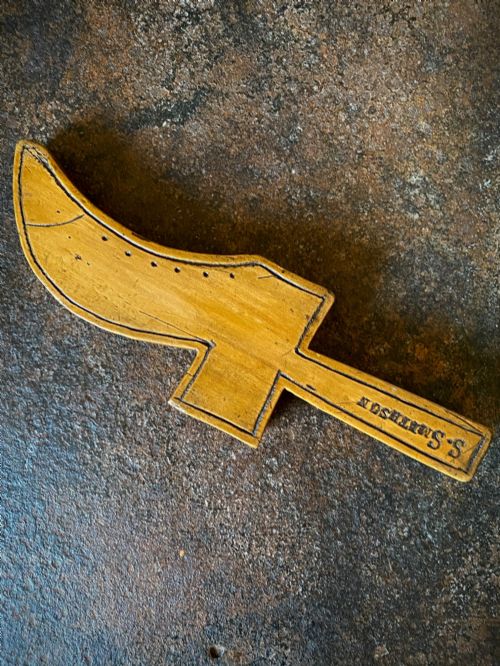
Makers utilised solid planks for large tabletops and commodes, while employing lathe-turning for small treen items, knitting sheaths and goblets. Iron and brass fittings appeared on functional tables, drop-leaf mechanisms and drawers.
Antique Fruitwood Retail Price Guide 2026
Typical asking prices for fruitwood among the pieces listed under this phrase on Sellingantiques today, from the lower quarter to the upper quarter. They describe what is for sale here now, not the wider market.
What Varies in Quality
The standard of timber selection and depth of surface patina dictate the visual success of each piece. Finely figured grain patterns and untouched natural colour separate superior examples from routine utility items.
Structural integrity and the retention of original turned components define the craftsmanship. Items displaying crisp punchwork decoration on treen or precise joinery on provincial desks stand above plain utilitarian stock.
Oliver Morel
The Antique Fruitwood Glossary
- Treen
- Small handmade wooden domestic objects. These functional items include items like lidded cups, ladles and knitting sheaths.
- Refectory table
- A long dining table designed for communal meals. These substantial forms often rest on fruitwood plank tops with sturdy wooden stretchers.
- Commode
- A low chest of drawers or cabinet. French examples frequently combine fruitwood and walnut timbers with generous storage capacity.
- Windsor chair
- A wooden chair built with a solid saddle seat into which separate back and legs are wedged. Fruitwood sticks and bow backs appear regularly in these designs.
- Pomander
- A small container holding aromatic substances. Fruitwood versions are turned on a lathe with lidded covers for domestic use.
Antique Fruitwood: Frequently Asked Questions
What is fruitwood furniture?
Fruitwood refers to timber sourced from fruit-bearing trees such as cherry, apple and pear. Cabinet makers valued these woods for their dense grain and warm tone.
Items range from large French farmhouse dining tables to small English Windsor chairs and turned domestic treen.
How do I care for antique fruitwood?
Keep wooden pieces away from direct heat sources and strong sunlight to prevent the timber from splitting. Regular dusting maintains the natural surface.
Applying appropriate wax polish occasionally helps preserve the historic sheen and depth of colour on the grain.
How do I date an antique table?
Examine the construction methods, tool marks visible beneath the top, and the type of fixings used in the frame. Hand-cut dovetails and pegged joints indicate older periods.
Comparing the timber species and regional style with documented pieces provides further chronological context.
What is treen?
Treen encompasses small functional wooden objects created for the home before the widespread use of plastic. Examples include spice towers, string barrels and knitting sheaths.
These items were turned on a lathe or carved by hand, showing daily wear and rich patination.