


Antique Fruit Tazza
An antique fruit tazza elevates a dining table with a raised pedestal display for fresh produce.
Antique Fruit Tazza
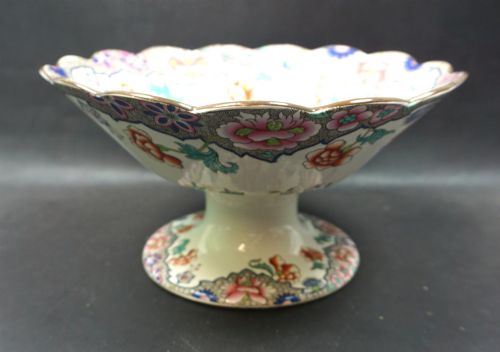
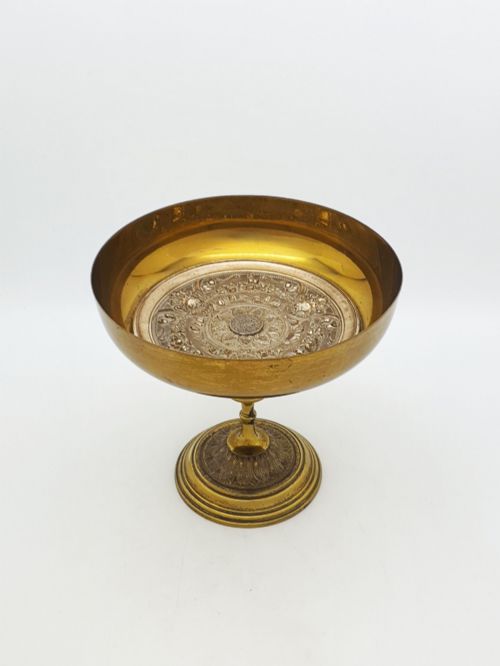
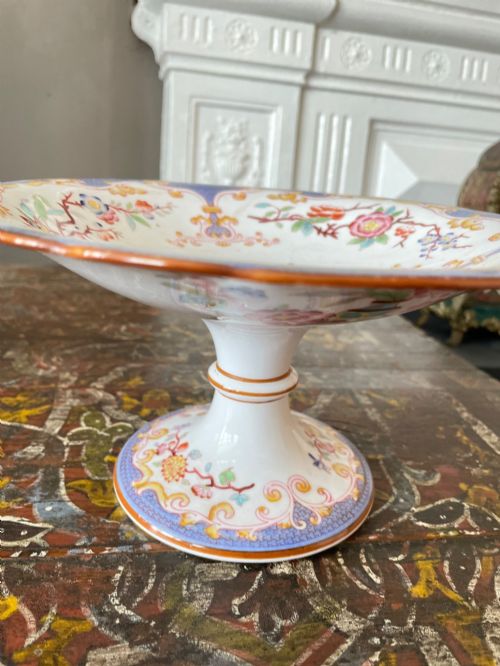
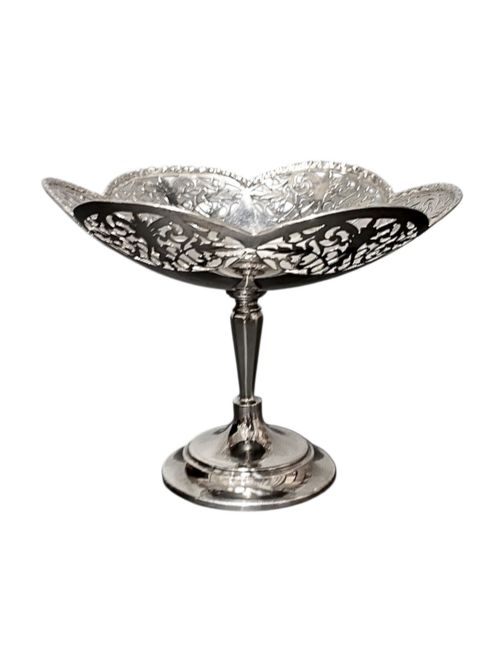
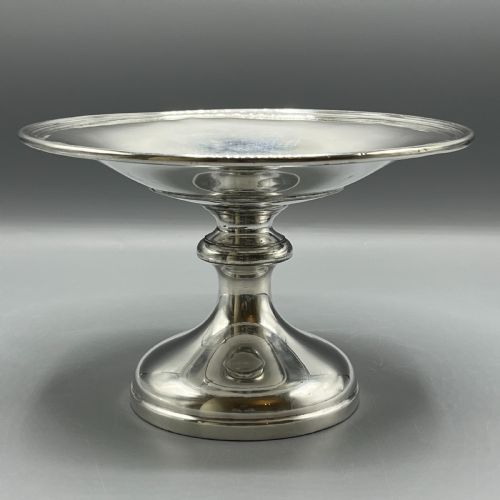
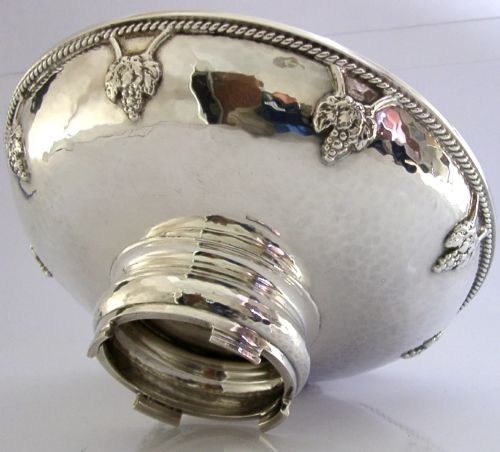
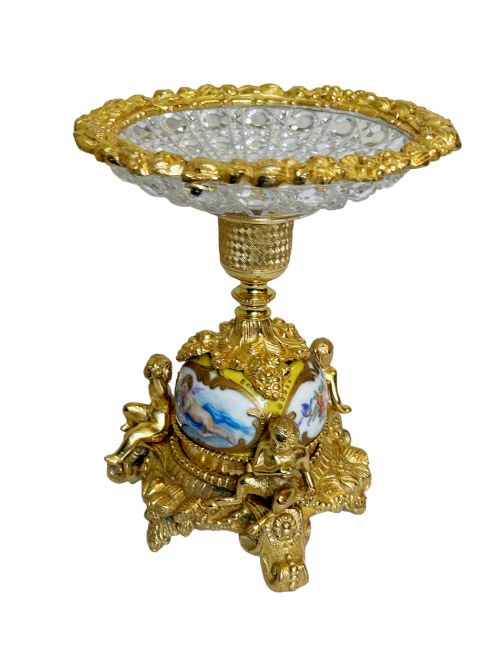
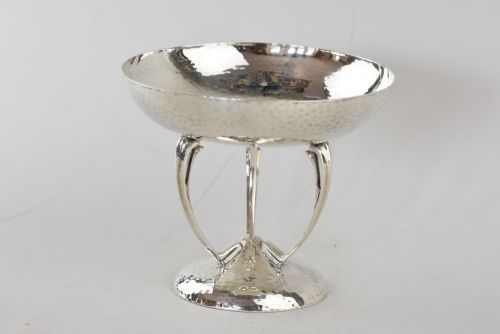
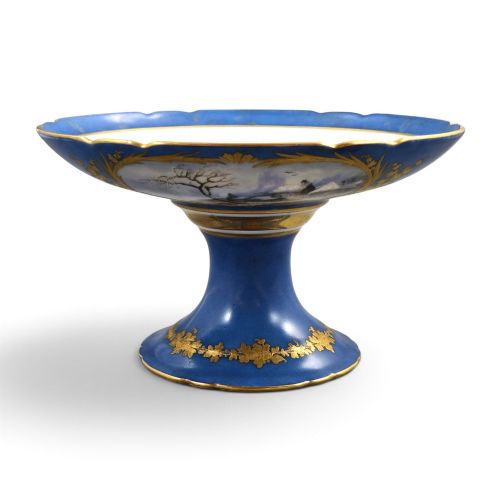
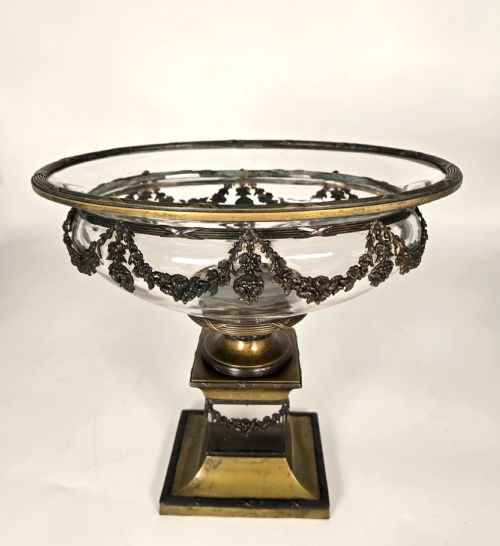
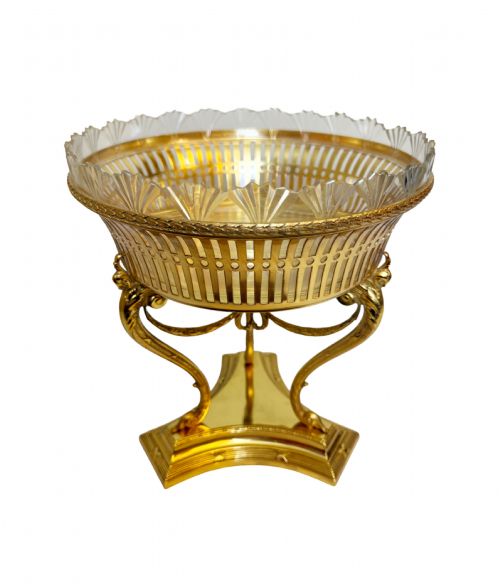
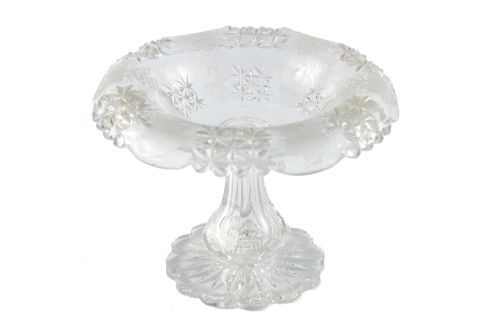
An antique fruit tazza takes the form of a shallow dish or bowl elevated on a central foot or pedestal. The pieces appearing here span from the Georgian period through the Victorian and Edwardian eras into Art Deco, reflecting shifting dining fashions.
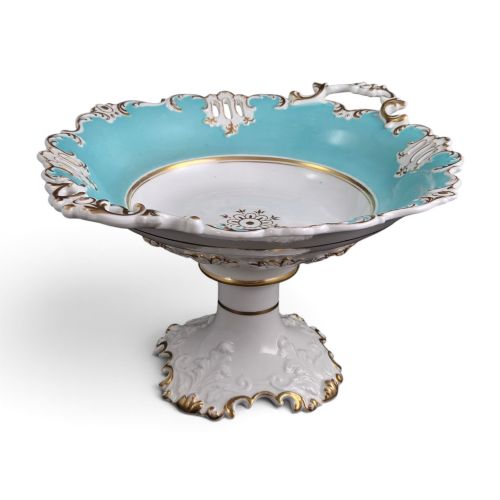
Most examples function as centrepieces or comports designed to present fruit or sweetmeats formally. Porcelain, glass, sterling silver, and gilt bronze dominate the inventory, often shaped with decorative handles, scalloped rims, or cast mounts.
Materials and construction
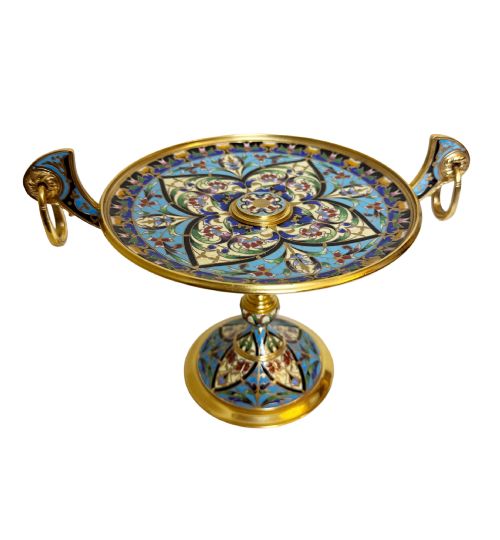
Metals such as sterling silver, gilt bronze, ormolu, and copper undergo casting, hammering, repoussé work, and wirework to form supportive feet and detailed mounts. Enamel and champlevé techniques add coloured surface decoration to the metalwork.
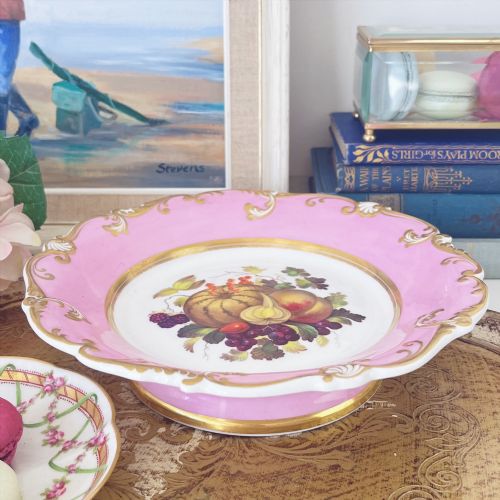
Ceramic bodies utilise bone china, majolica, or porcelain, shaped into plates and bowls before receiving handpainted scenes, transfer printing, or rich coloured glazes. Glass pieces rely on cutting, crystal clarity, or layered coloured overlays.
Antique Fruit Tazza Retail Price Guide 2026
Typical asking prices for fruit tazza among the pieces listed under this phrase on Sellingantiques today, from the lower quarter to the upper quarter. They describe what is for sale here now, not the wider market.
One cheerful wooden fruit bowl incorporates a built-in musical movement, ready to serenade the dining room while holding the dessert apples.
Distinctions in craftsmanship
Quality rests upon the precision of the casting in metal mounts and the crispness of hand-carved or handpainted details on porcelain and wooden vessels. Heavy gauge silver, deep cut crystal, and meticulous enamel work distinguish finer examples.
Proportion and structural harmony between the pedestal foot and the upper bowl dictate the success of the design. Maker attribution, such as work by recognised silversmiths or porcelain factories, further elevates the standing of a piece.
Goldsmiths and Silversmiths Company·Charles Boyton·Walker and Hall·Minton·Coalport·Sèvres·WMF
The Antique Fruit Tazza Glossary
- Tazza
- A shallow bowl or plate mounted on a stem and foot, traditionally used for serving fruit or confections. The form derives from Renaissance Italian plate designs.
- Comport
- A pedestal dish or stand used for presenting fruit on the dining table. It functions interchangeably with the term tazza in many nineteenth-century inventories.
- Ormolu
- Gilt bronze, typically referring to finely chased and cast bronze furniture mounts and decorative objects finished with a gold wash. French makers utilised this technique extensively during the nineteenth century.
- Champlevé
- An enamelling technique where troughs or cells are carved into a metal surface and filled with vitreous enamel before firing. This method creates colourful patterned designs across bronze frames.
- Repoussé
- A metalworking technique where the artisan hammers a design from the reverse side to raise relief ornamentation on the front. It appears frequently on silver and base metal bowls.
Antique Fruit Tazza: Frequently Asked Questions
What distinguishes a tazza from a standard fruit bowl?
A tazza is elevated on a distinct central foot or pedestal base, whereas a standard fruit bowl sits flat on a surface. This vertical lift was designed to command attention at the centre of a dining table.
The raised form also allowed servants to layer other dishes beneath or around the presentation, making efficient use of crowded nineteenth-century dining arrangements.
How were these pedestal dishes used historically?
These vessels held fresh fruit, sweetmeats, or ornamental arrangements to adorn the dining table during formal dessert courses. They served as decorative focal points rather than working kitchenware.
Wealthy households deployed matching pairs or sets of centrepieces along the length of long tables to project status and hospitality during banquets.
How do I care for silver and bronze tazzas?
Silver pieces require occasional gentle polishing with a soft cloth and proprietary metal cleaner to prevent tarnish build-up while preserving the underlying details. Avoid abrasive pastes that wear away fine hallmarks or thin plating.
Gilt bronze and ormolu need only dusting with a dry microfibre cloth, as moisture and harsh chemicals can damage the delicate gold wash applied to the metal.
Can glass and porcelain pieces hold real fruit?
Cut glass, crystal, and ceramic comports can safely hold dry or firm fresh fruit such as apples and citrus for display. Acidic juices left for extended periods should be avoided on unglazed or antique surfaces to prevent staining.
Lined interiors or the use of protective doilies historically helped guard delicate painted porcelain glazes from direct contact with natural fruit acids.