



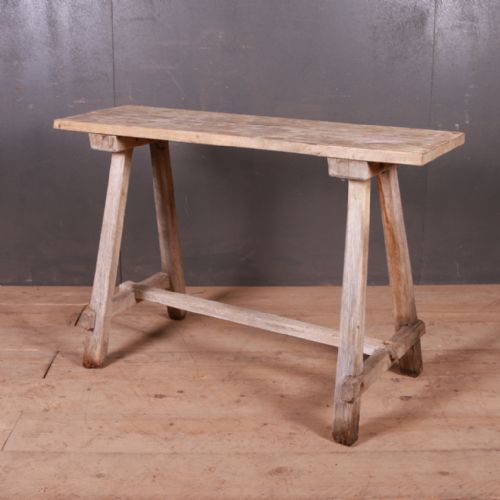


Antique French Workbench
An antique french workbench brings industrial heft and honest timber into a modern room, offering a wide surface born of daily labour.
Antique French Workbench
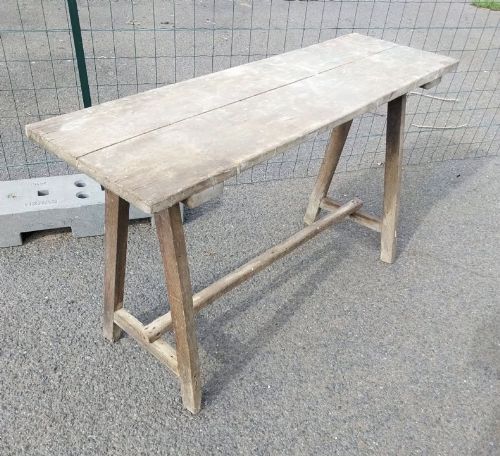
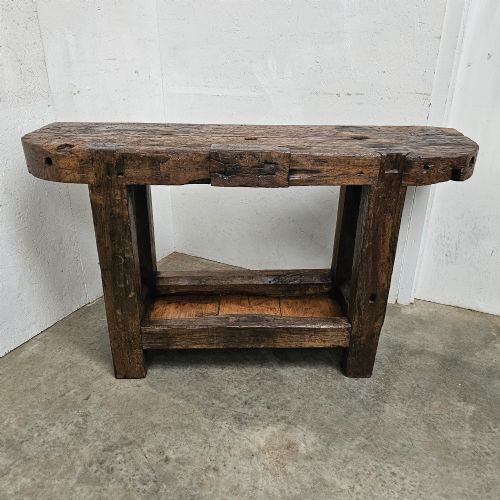
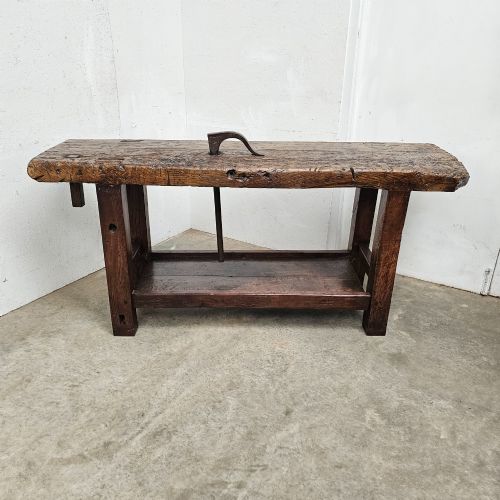
An antique french workbench is a utilitarian surface built for makers, artisans and tradespeople across the nineteenth century. These pieces combine heavy wooden tops with robust frames, frequently retaining original vices, clamping bars or tool wells.
The selections here span regional workshops and country houses, bringing together forms identified with French Country, rustic farmhouse and industrial styles. Buyers encounter everything from substantial oak joiners' benches to smaller elm and pine variants.
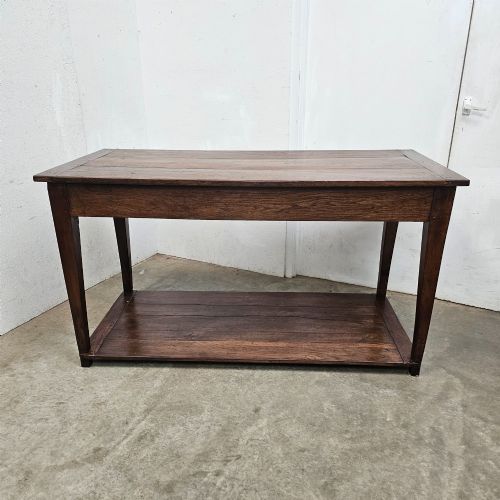
Beyond traditional workbenches, the listings encompass related forms such as drapers tables, watch makers tables and cobblers benches. These variations provide deep timber boards and patinated surfaces suited to contemporary interiors.
Materials and construction
Construction relies on hardwearing domestic hardwoods and softwoods including oak, elm, beech, sycamore, pine and poplar. These timbers were selected for density and resilience, able to withstand heavy daily pressure in a working shop.
Metal components add crucial structural integrity, with forged iron utilised for vices, screws, brackets and bracing. Joinery is typically straightforward and robust, designed to remain rigid under intense manual labour.
Antique French Workbench Retail Price Guide 2026
Typical asking prices for french workbench among the pieces listed under this phrase on Sellingantiques today, from the lower quarter to the upper quarter. They describe what is for sale here now, not the wider market.
The inventory includes specialised forms like cobblers benches, watch makers tables and drapers tables.
Quality and character
Quality rests in the depth of patina accumulated across decades of workshop use, showing authentic marks, gouges and wear rather than cosmetic distress. Original mechanical elements like wooden vices and clamping bars retain higher value when fully intact.
Proportion and timber selection also divide examples, with dense oak and figured elm offering superior presence compared to simpler pine or poplar structures. Untouched surface finishes preserved through scrubbing or natural ageing elevate a piece above later alterations.
The Antique French Workbench Glossary
- Clamping bar
- A sliding wooden beam integrated into the workbench top to secure boards during planing or sawing. This mechanism usually operates with a wooden screw or wedge.
- Trestle table
- A table structure supported by two or more trestles connected by a horizontal stretcher. Many workbenches and related utility tables adopt this stable configuration.
- Tool well
- A recessed channel running along the edge or rear of the workbench surface. It kept chisels, pencils and small implements from rolling off while working.
- Scrubbed finish
- A surface treatment resulting from repeated washing and scouring with soap and water over generations. This process strips old grease and reveals the pale grain of the timber.
Antique French Workbench: Frequently Asked Questions
How do I clean an antique workbench top?
Maintenance requires only a soft brush to remove dust and a dry or slightly damp cloth for general wiping. Avoid harsh chemical stripping agents that destroy the historic wax and oil patina.
Applying a clear beeswax periodically helps nourish dry timber without altering the natural surface colour. This preserves the historical marks left by generations of manual labour.
Can I use a workbench as a kitchen island?
These sturdy tables function well in domestic kitchens thanks to their deep timber boards and generous working heights. The thick wooden tops withstand food preparation while offering substantial under-bench storage space.
Sealing the wood with a food-safe oil protects the surface from moisture and stains without creating an artificial gloss. Owners should use chopping boards to preserve the historic patina of the primary surface.
Are the vices on these benches still operational?
Many wooden and iron vices remain functional, though some are seized or secured in a fixed position for decorative stability. The moving parts rely on wooden or metal threads that require gentle handling and occasional lubrication.
Buyers intending to use the mechanism actively should inspect the thread alignment and jaw parallelism. Most examples serve primarily as characterful design statements rather than heavy-duty workshop tools.
What is the difference between a workbench and a drapers table?
A workbench was built for heavy carpentry and crafting, featuring thick tops, vices and tool wells designed to absorb physical impact. A drapers table typically offers a cleaner, wider surface originally used for measuring and cutting textiles in mercery shops.
Drapers tables often feature lower tier shelving for storing bolts of cloth rather than clamping apparatus. Both share a utilitarian heritage but serve different domestic functions in modern settings.