
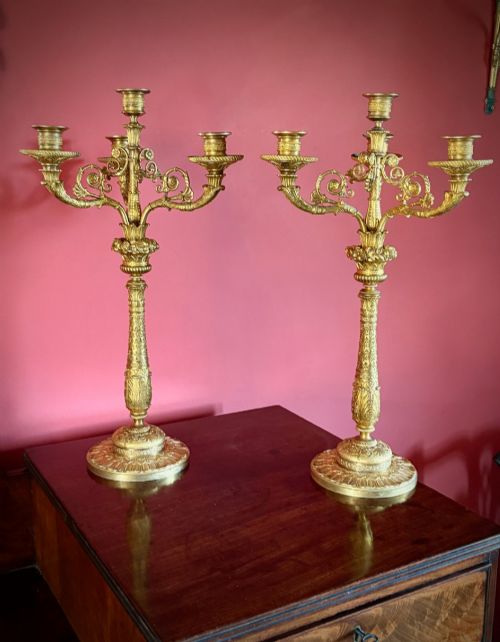
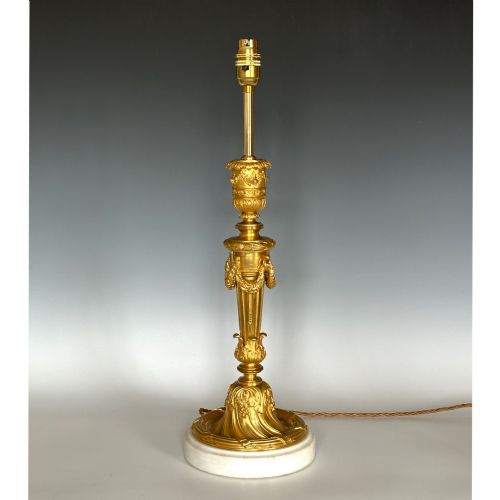
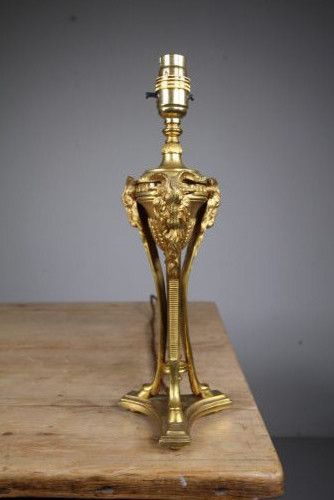
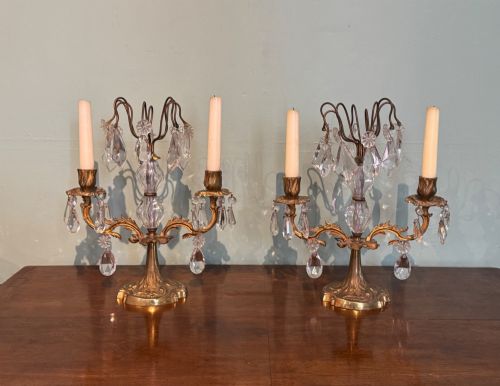
Antique French Table Candlesticks
Antique French table candlesticks bring sculptural metalwork and glowing illumination to interiors, uniting period craft with decorative utility.
Antique French Table Candlesticks
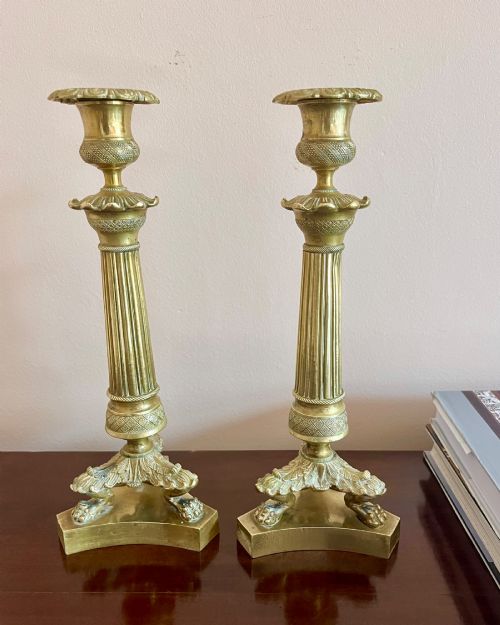
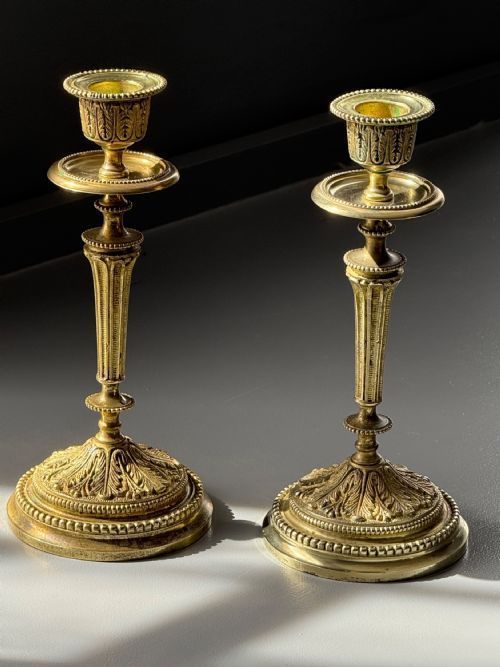
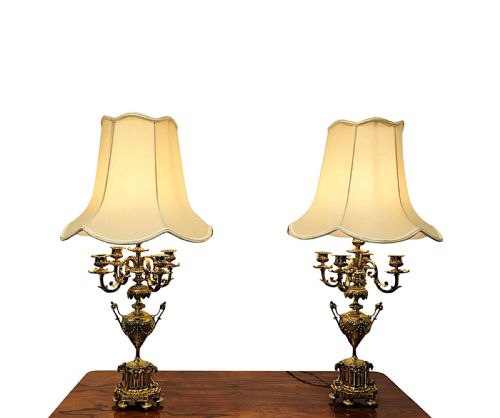
These items encompass lighting fixtures designed to elevate candles or serve as electrified table lamps on surfaces throughout the home. When exploring antique French table candlesticks, buyers encounter matched pairs fashioned in brass, bronze, and gilt metals.
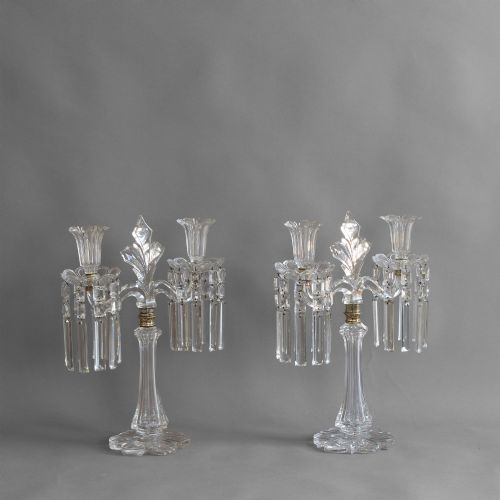
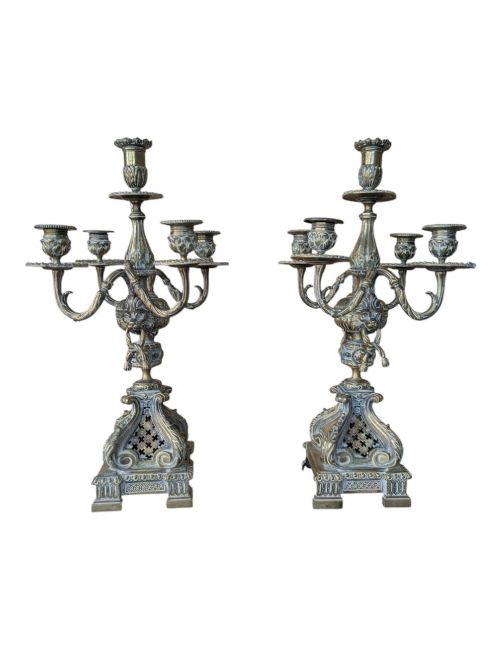
Originating largely across the nineteenth century, the items range from simple brass supports to elaborate multi-branch candelabra incorporating marble bases and crystal lustres.
Materials and construction methods
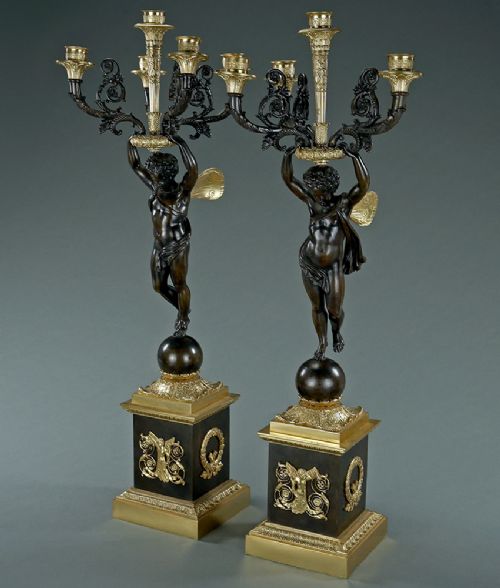
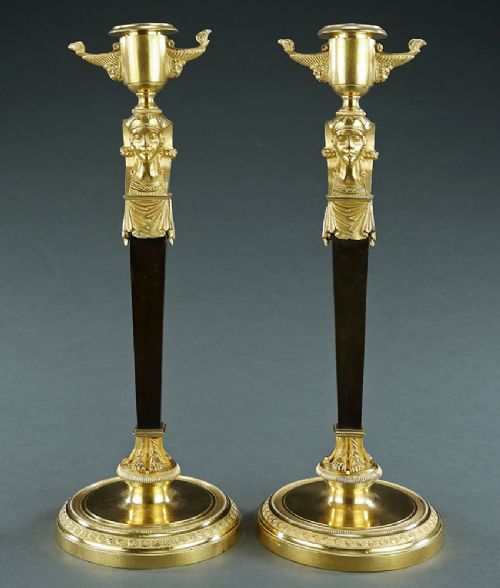
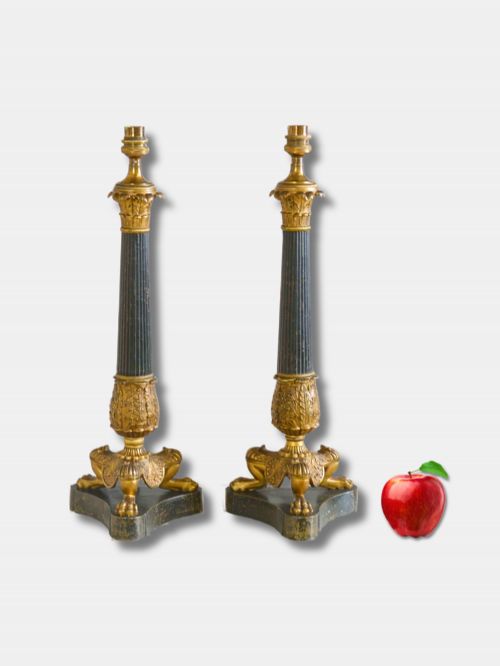
Foundry work relied on casting bronze and brass, utilising mercury gilding or ormolu techniques to impart a durable golden surface layer. Artisans combined patinated dark bronze with polished gilt highlights to create strong visual contrast.
Mounts frequently integrate white or coloured marble plinths, turned timber, and hand-cut glass drops known as lustres. Detail work involved chasing the cast metal surfaces by hand to sharpen acanthus leaves, figures, and classical motifs.
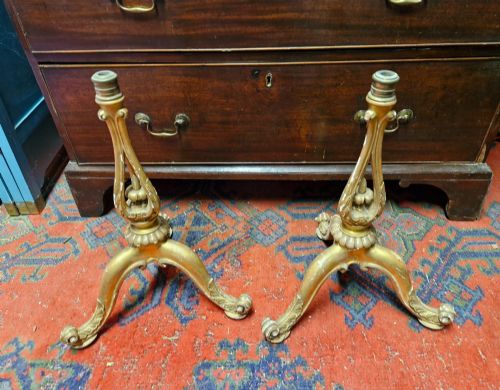
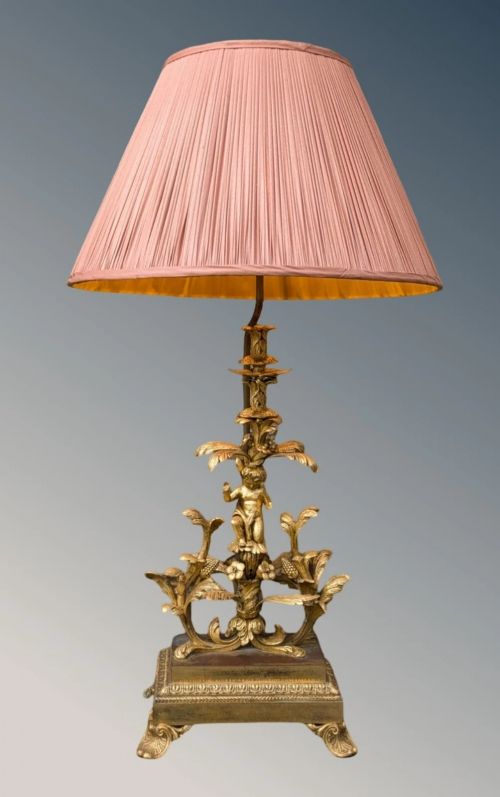
Materials span patinated bronze, carved giltwood, and fabric shades alongside traditional brass and ormolu column bases.
Assessing quality and craftsmanship
The integration of secondary elements like champlevé enamel, fire-gilt ormolu, and solid marble bases distinguishes masterworks from standard production pieces. Original patination and intact mercury gilding preserve the visual depth intended by the period maker.
The Antique French Table Candlesticks Glossary
- Ormolu
- A technique of applying finely ground high-carat gold amalgam to a bronze object, creating a rich golden finish through heat treatment.
- Candelabra
- A branched candlestick holding multiple candles or light bulbs from a single central stem.
- Patinated Bronze
- Bronze treated with chemical solutions to produce a darkened surface finish, often paired with bright gilt elements.
- Champlevé
- An enamelling technique where troughs are dug into a metal surface and filled with vitreous enamel before firing.
- Lustre
- A glass pendant or hanging prism attached to a lighting fixture to refract candle or lamp light.
Antique French Table Candlesticks: Frequently Asked Questions
How do I identify French Empire candlesticks?
French Empire pieces typically feature strict classical proportions, military motifs, sphinxes, or lion paw feet cast in bronze and ormolu. They reflect the design influence of the early nineteenth century.
These items often incorporate dark patinated bronze bodies contrasted against bright fire-gilt mounts and column structures.
Can converted candlesticks be safely used as lamps?
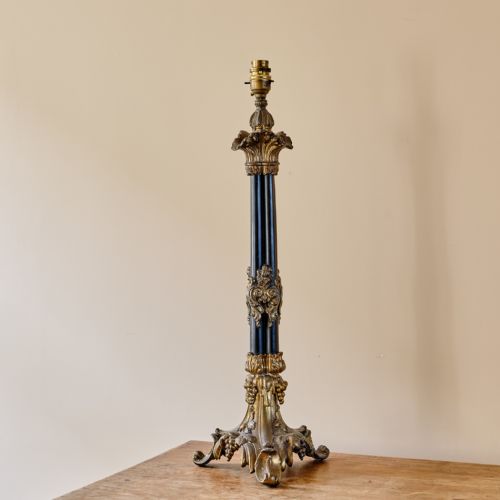
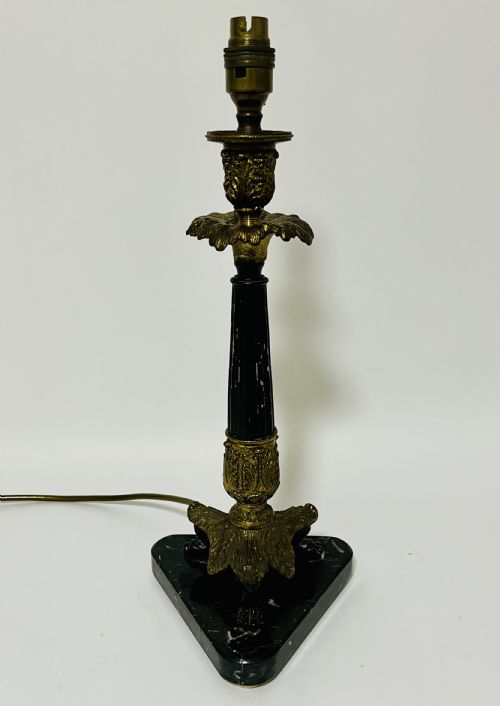
Many period pieces have been adapted to hold electrical fittings while retaining their original brass or bronze stems. Professional rewiring ensures modern safety standards.
Buyers should inspect the cord exit points to confirm that historic metal components suffered no destructive drilling during conversion.
What is the difference between a candlestick and a candelabra?
A candlestick supports a single candle on a vertical shaft, whereas a candelabra branches out to hold multiple candles simultaneously. Both forms appear frequently in nineteenth-century French metalwork.
Multi-branch candelabra often feature removable top sections or centre finials for versatile arrangement.
How should I clean antique ormolu and brass?
Dusting with a soft, dry cloth is usually sufficient for maintaining fragile gilt bronze and ormolu surfaces. Moisture and abrasive commercial cleaners can strip thin historic gilding.
Preserving the natural age patina protects the visual character and long-term surface stability of the metal.