

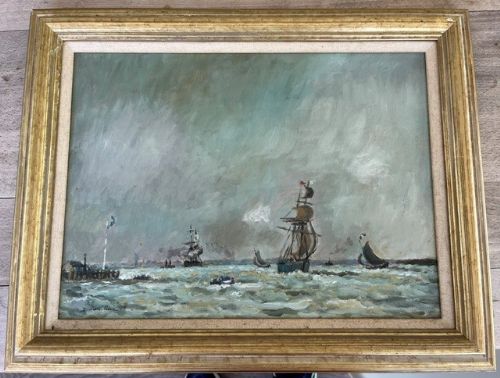


Antique French Seascape
An antique french seascape captures the changing moods of the coast through the distinct brushwork of continental marine artists.
Antique French Seascape
An antique french seascape encompasses painted coastal views, harbour scenes, and open marine studies originating from nineteenth and twentieth-century France. The selection most frequently encounters visitors with mid-nineteenth to mid-twentieth-century oil paintings on canvas and panel, alongside delicate watercolours on paper.
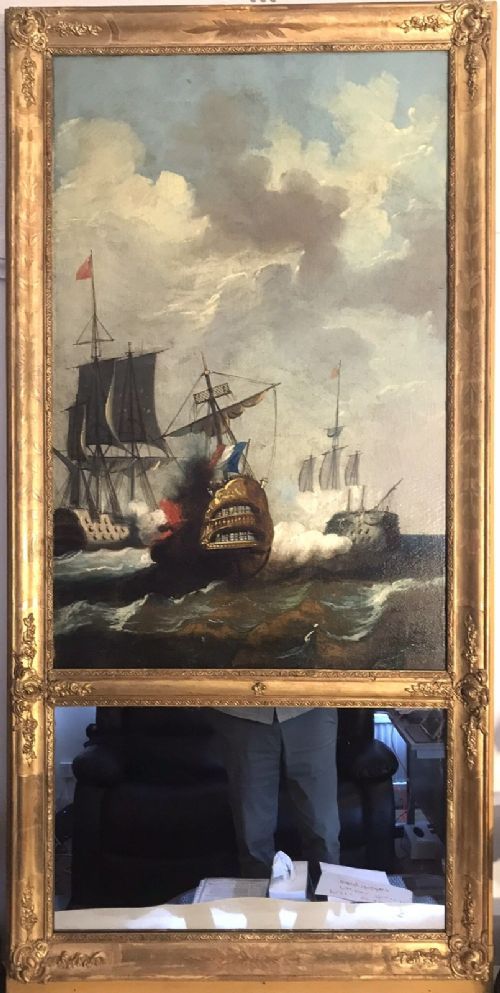
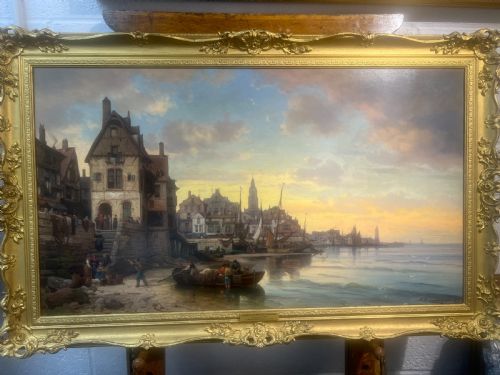
Makers and artists range from regional painters working along the Normandy and Brittany coastlines to established figures capturing the bright light of the Côte d'Azur and the Mediterranean. Formats stretch from intimate framed watercolours to grand oils housed in period giltwood frames, and occasionally integrated into decorative objects like trumeau mirrors.
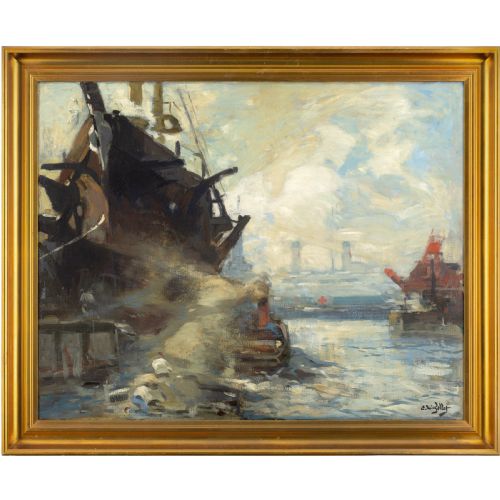
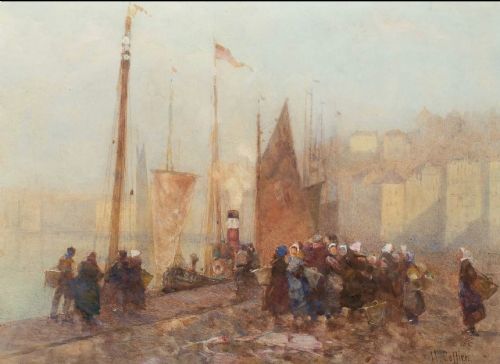
Works appear across various aesthetic movements, moving from nineteenth-century academic maritime recordings through impressionist depictions of light to post-impressionist interpretations of ports and fishing boats. Each piece documents a specific stretch of French coastline, from northern estuaries to southern harbours.
How They Were Made
Painters utilised oil on canvas, wood panel, or board, applying pigments to build up textured surfaces that rendered the movement of waves and clouds. Watercolours on paper offered a lighter medium for capturing swift coastal sketches and atmospheric effects along the shore.
Frames play an integral structural and aesthetic role, frequently constructed from carved wood with gilt or painted finishes such as giltwood. Trumeau mirrors incorporate these maritime canvases directly into decorative architectural woodwork designed for period interiors.
Listed works span from the 1850s to the 1950s, employing oil on canvas, wood, and watercolour on paper.
What Varies in Quality
Execution of light and atmospheric depth distinguishes exceptional canvases from standard regional studies, particularly in how artists manage marine reflections and coastal weather. The handling of brushwork reveals the painter's capability, moving from rigid academic recording to expressive impressionist strokes.
Original framing contributes significantly to the integrity of a piece, with period giltwood settings preserving the historical context of the artwork. The clarity of artist signatures, documented provenance, and the stability of the canvas or panel further determine the standing of individual works.
Eugène-Louis Gillot·Hector Caffieri·Charles Euphraisie Kuwasseg·Paul Delvaux·Louis Suire·Gustave Vidal·Jean-Baptiste Olive·William Lee Hankey·Charles Malfroy·Roger de la Corbiere·Marie-Edouard Adam·Edward Henry Holder·Owen Bowen·Yves Brayer·Henri Cadiou·Leopold Pascal
The Antique French Seascape Glossary
- Trumeau mirror
- A decorative wall mirror featuring an oil painting set into the upper wooden panel above the glass plate. These architectural elements originated in eighteenth-century French interiors and persisted into later periods.
- Giltwood
- Wood that has been coated with a thin layer of gold leaf or gilt powder. This finish appears frequently on antique frames designed to complement and elevate oil paintings.
- Post-Impressionism
- An art movement extending roughly from the late nineteenth century that rejected impressionism's naturalism in favour of bolder colours and distinct forms. Artists working in this style emphasised symbolic content and heavier brushwork.
- Panel painting
- A painting executed on a flat piece of wood rather than stretched canvas. Wooden supports provide a rigid foundation that often survives centuries with minimal distortion.
- Provenance
- The documented history of ownership of an art piece, tracing its origin back to the creator or initial sale. Clear records help confirm authenticity and attribution.
Antique French Seascape: Frequently Asked Questions
Where were these coastal scenes painted?
The works record locations across northern and southern France, including Normandy estuaries, Brittany fishing ports, and Mediterranean harbours along the Côte d'Azur. Artists set up their easels directly on beaches, cliffs, and jetties to capture local maritime activity.
Specific regions like the Gulf of Morbihan, Cannes, and Honfleur appear repeatedly in the titles and inscriptions left by the painters. These geographical markers connect individual canvases to distinct coastal communities.
How do I date an antique marine painting?
Dating relies on stylistic clues, artist active dates, canvas stamps, and framing materials. Impressionist and post-impressionist brush techniques often point toward the late nineteenth or early twentieth centuries.
Signatures, exhibition labels on the reverse, and biographical details of the artist narrow the timeframe further. Physical inspection of the stretcher frames and canvas weave provides additional chronological context.
Are these works original paintings?
The selection consists primarily of original hand-painted works in oil and watercolour rather than mechanical reproductions. Artists applied pigments directly to canvas, wood panels, or paper sheets.
Brush texture, pigment layering, and variations in the paint surface confirm the direct hand of the artist. Each piece represents a unique encounter between the painter and the coastal landscape.
How should I hang a framed coastal artwork?
Selecting a wall with stable humidity and away from direct sunlight protects both the canvas and the historical frame. Proper picture-hanging hooks matched to the weight of the giltwood frame ensure secure installation.
Allowing adequate breathing space around the piece lets the composition command the room. Maintaining consistent indoor temperatures prevents warping in the wooden panels and stretchers.