



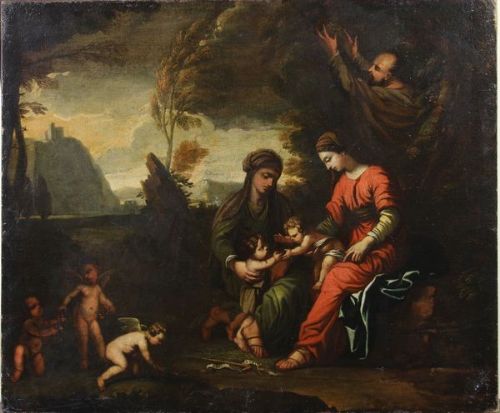


Antique French Oil Study
An antique french oil study captures a passing moment with swift brushwork, offering a direct window into nineteenth and twentieth-century French artistic life.
Antique French Oil Study
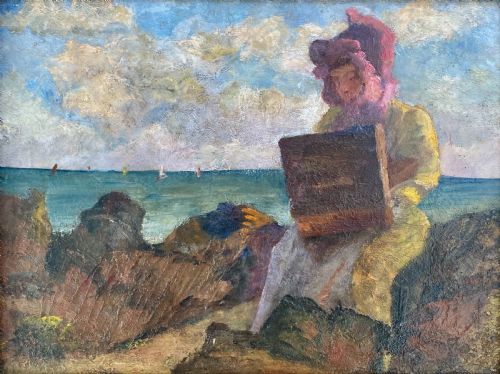
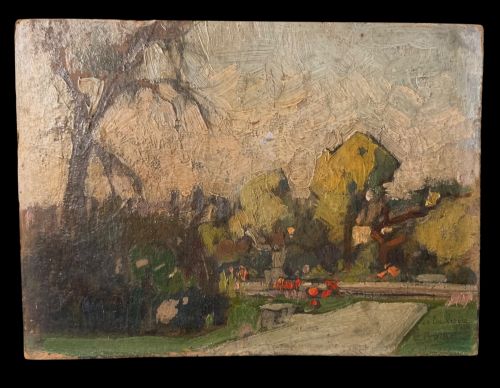
An antique french oil study encompasses preliminary works, plein air paintings, and small-scale compositions produced across the nineteenth and twentieth centuries. These pieces record landscapes, portraits, figures, and still lifes created by artists working in France or within French stylistic traditions.
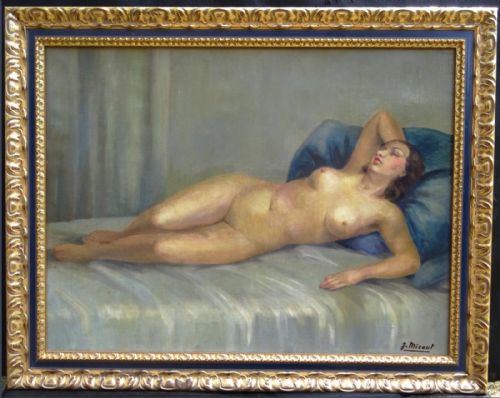
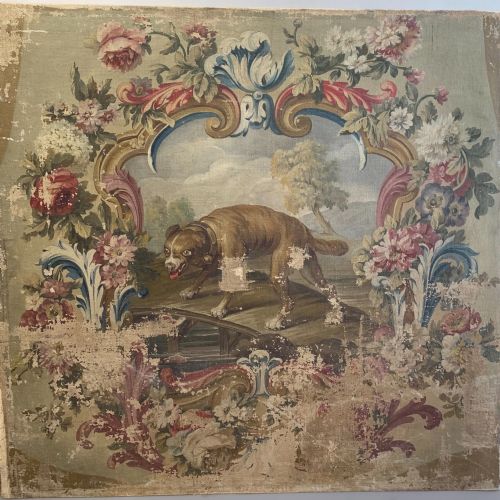
The selections available here range from nineteenth-century academic cartoons to impressionist coastal scenes and art deco figure studies. Works span several decades, reflecting the shifting approaches of artists recording light, form, and atmosphere.
Most examples appear framed, often in gilt wood, preserving the intimate scale characteristic of preparatory studies and smaller finished canvases intended for immediate capture of a subject.
Materials and construction
Painters applied oil paint across various grounds, utilising canvas, wood panel, paper, and board as the foundational support. These materials determined the texture and permanence of the work.
Artists employed fluid brushwork for plein air and impressionist pieces, building up layers of oil paint to render light and movement quickly. Heavier applications appear in later expressionist and fauve works, whilst earlier academic studies utilise controlled, precise lines.
Antique French Oil Study Retail Price Guide 2026
Typical asking prices for french oil study among the pieces listed under this phrase on Sellingantiques today, from the lower quarter to the upper quarter. They describe what is for sale here now, not the wider market.
The selection includes various artistic movements such as impressionism, post-impressionism, art deco, and french botanical illustration.
Assessing quality and execution
Quality rests upon the sureness of the brushwork and the artist's ability to capture light and form within a limited format. Finer studies demonstrate confident handling of pigment and a coherent sense of space.
The relationship between the subject and the support influences the overall success of the piece, with well-preserved panels and canvases retaining their original vibrancy and structural integrity.
Eugene Bullio·Honore Cavaroc·Edmond Defonte·Gaston Bouy·Pierre-Joseph Redouté
The Antique French Oil Study Glossary
- Plein air
- Painting outdoors to capture natural light and atmospheric conditions directly. This method produced many of the spontaneous landscape studies seen in this period.
- Oil study
- A preliminary painting executed to explore composition, colour, or lighting before executing a larger finished work. Many artists exhibited these studies in their own right.
- Gilt wood
- Wood decorated with gold leaf or gold paint, commonly used for traditional picture frames. It adds reflective warmth around the edge of the canvas.
- Panel
- A rigid wooden support used by artists instead of canvas. Panels provide a smooth, stable surface for detailed or rapid brushwork.
Antique French Oil Study: Frequently Asked Questions
What is an oil study?
An oil study is a preparatory painting created to test colours, lighting, and composition before beginning a larger, principal artwork.
Artists also painted them for their own practice or as finished cabinet pictures capturing a transient scene.
How do I date these paintings?
Dating relies on stylistic evidence, artist signatures, framing, and the physical characteristics of the canvas or wood panel support.
Nineteenth-century works often show academic or impressionist tendencies, while twentieth-century examples display modernist influences such as fauvism or art deco.
Where were these studies painted?
Many works originated in France, spanning urban settings like Paris gardens, coastal towns in the south, and rural river valleys.
Artists painted both inside studios and outdoors on location to record changing natural light.
How should I display an oil study?
Display these works away from direct sunlight and excessive humidity to protect the oil paint and canvas or panel support.
Their intimate scale suits smaller wall spaces, studies, or groupings with other period artwork.