


Antique French Love Seat
An antique french love seat offers intimate seating for two, combining continental elegance with compact proportions.
Antique French Love Seat
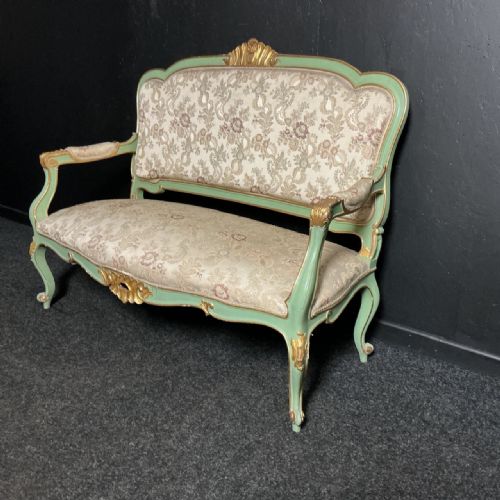
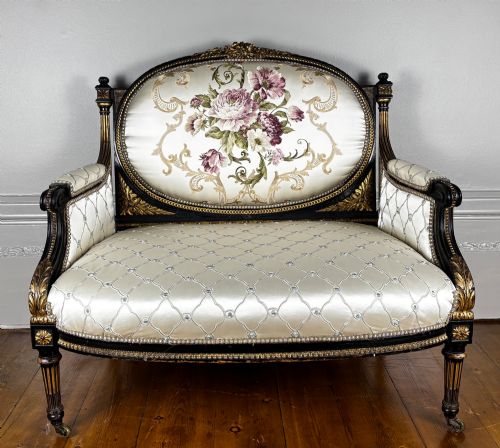
When searching for an antique french love seat, buyers encounter a variety of intimate two-seater forms including settees, boudoir seats, and small sofas. These pieces originate predominantly from the nineteenth century, alongside examples from the eighteenth and twentieth centuries, spanning styles such as Louis XV Revival, Louis XVI, and French Rococo.
The selection ranges from carved walnut and giltwood frames to painted and ebonised woodwork, upholstered in velvet, silk, tapestry, and fabric, or fitted with cane panels. Formats vary from bedroom and hall seats to garden benches and specific tête-à-tête configurations designed for close conversation.
Buyers are most likely to meet nineteenth-century walnut and fruitwood examples featuring carved woodwork and traditional upholstery trims. These seats serve equally well as decorative accents in reception rooms or functional seating in bedrooms.
What varies in quality
The distinction between tiers rests upon the crispness of the wood carving and the integrity of the frame construction. Superior examples display deeply sculpted detail and robust joinery rather than shallow ornamentation and loose joints.
The grade of the upholstery materials and the fidelity of the period style further separate standard pieces from exceptional ones. Original textiles and period-appropriate gilding elevate the standing of a piece.
Some nineteenth-century seats are designed in an S-curve so two people can chat face-to-face without craning their necks.
The Antique French Love Seat Glossary
- Giltwood
- Wood covered with a thin layer of gold leaf or gesso. This finish appears frequently on formal nineteenth-century frames.
- Canape
- A French term for an upholstered sofa or settee with an exposed wooden frame. These pieces often feature carved rails and cabriole legs.
- Tête-à-tête
- A specialist seat configuration designed for two people to sit facing each other in an S-shape. This form facilitates conversation.
- Directoire
- A transitional style bridging Louis XVI and Empire periods, characterised by neoclassical restraint. Pieces from this era show cleaner lines and simpler geometry.
Antique French Love Seat: Frequently Asked Questions
Where should I put a love seat?
These compact seats suit bedrooms, dressing rooms, and smaller reception spaces where standard three-seater sofas overwhelm the floor plan. They also function effectively in hallways or at the foot of a bed.
Position the piece away from direct sunlight to protect delicate silk, velvet, or tapestry upholstery from fading over time.
Are these seats comfortable?
Comfort depends entirely on the internal padding and springing system used during the upholstery process. Many period examples provide firm, upright support suited to formal sitting rather than lounging.
Buyers intending daily use should examine the depth of the seat and the height of the backrest relative to their own proportions.
How do I care for antique upholstery?
Protect delicate textiles such as silk and velvet by avoiding abrasive cleaning methods and professional steam treatments that use harsh chemicals. Vacuum gently using a soft brush attachment to remove surface dust.
Keep upholstered pieces away from radiators and damp environments to preserve the underlying wooden frame and natural stuffing materials.
What is the difference between a settee and a love seat?
While both terms describe seating for multiple people, a love seat specifically designates a compact two-seater format. Settees can accommodate three or more occupants depending on their length.
In historical French furniture, smaller canapés and specialised tête-à-tête designs overlap with the modern definition of a love seat.