


Antique French Landscape Canvas
Selecting an antique french landscape canvas brings the light of Normandy rivers, Provence olive groves, and Parisian parks directly onto a wall.
Antique French Landscape Canvas
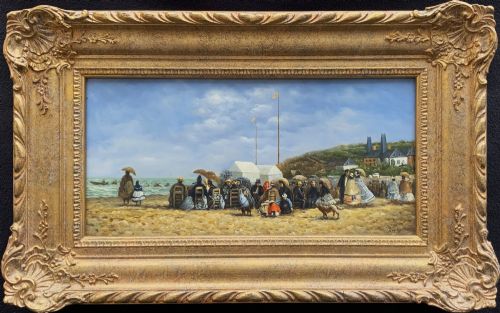
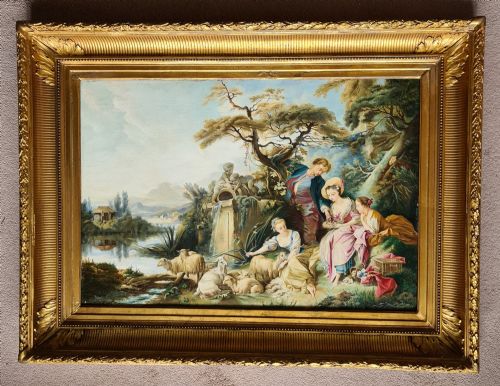
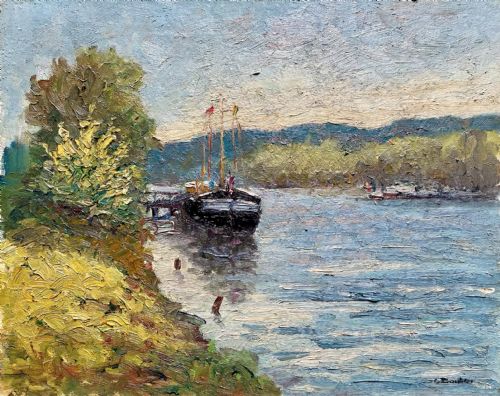
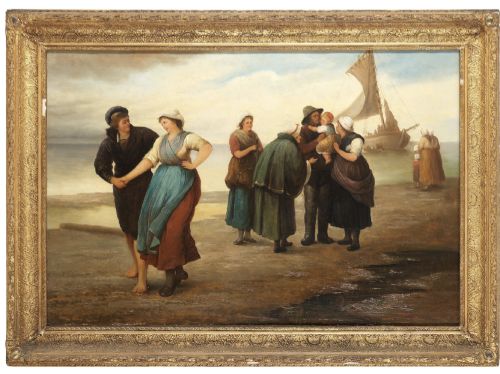
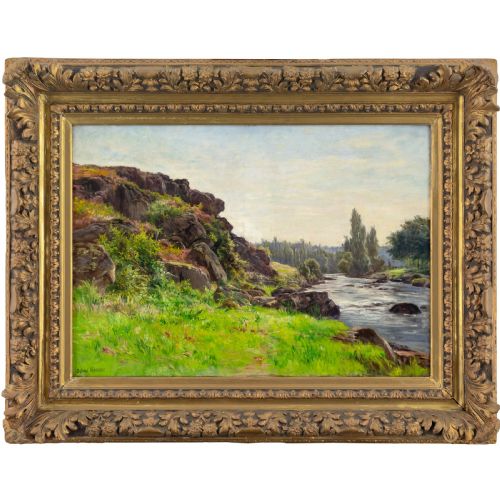
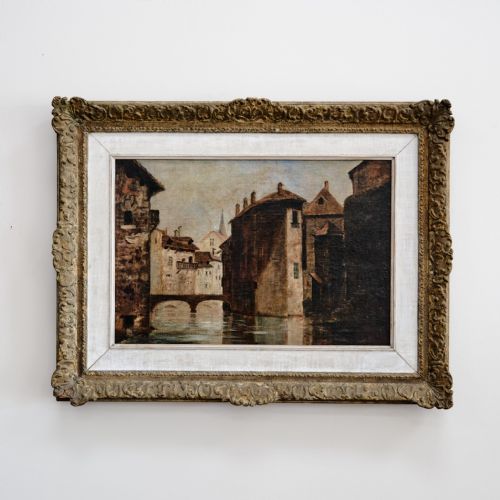
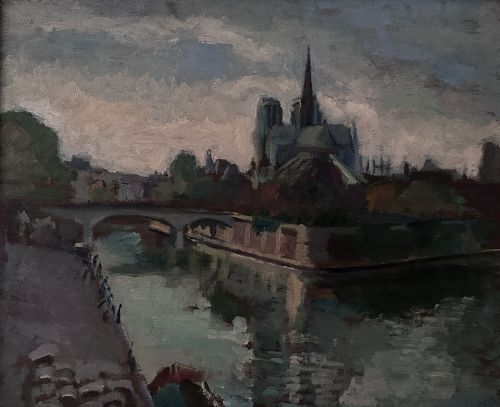
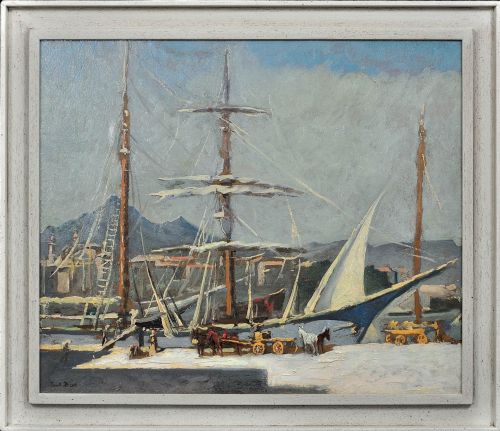
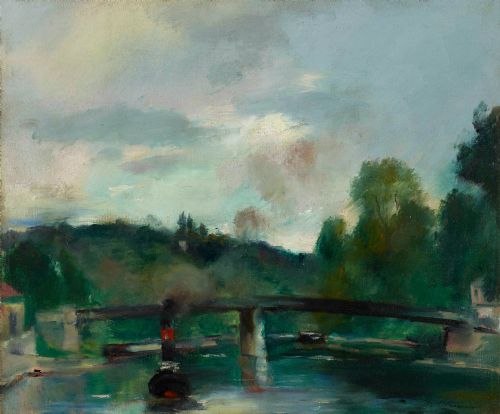
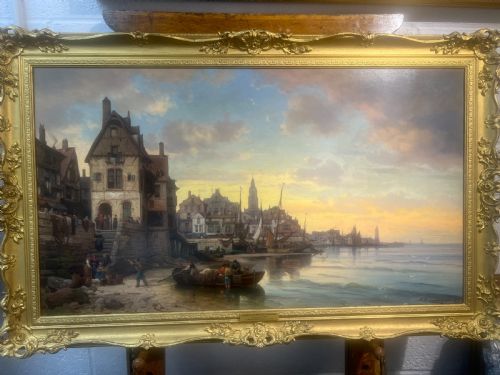
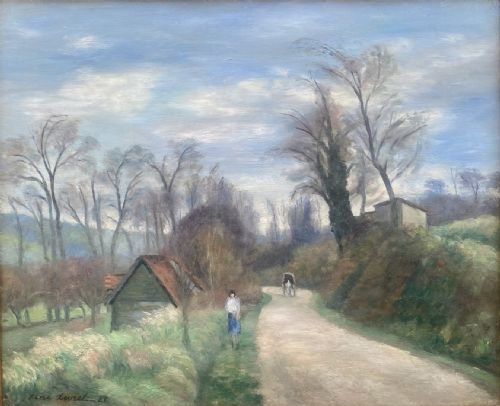
An antique french landscape canvas comprises oil paintings executed on woven fabric supports originating from France across the nineteenth and twentieth centuries. These works record rural vistas, river valleys, coastal scenes, and park settings through various artistic movements including the Barbizon School, Impressionism, and Post-Impressionism.
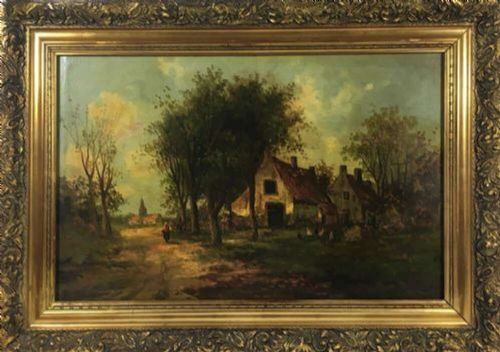
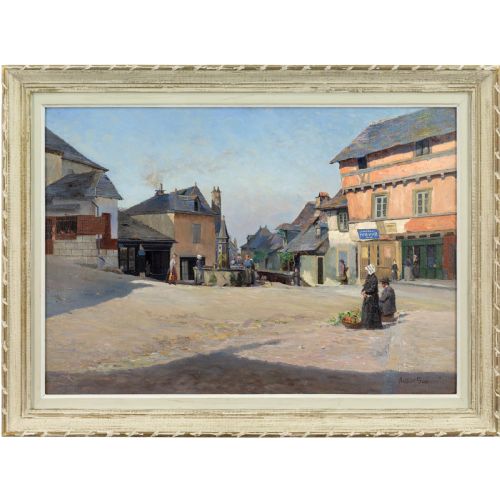
Buyers encounter pastoral farmyards, forest clearings, and urban waterways dating from the eighteen-hundreds up to the mid-twentieth century. Many pieces carry signatures from provincial artists or recognised names associated with specific regions like Brittany, Normandy, and the Côte d'Azur.
The subjects range from tranquil riverbanks and working horses to sunlit cliffs and quiet village squares. Canvases frequently arrive within their original period frames constructed from carved wood and gesso with gilt finishes.
Materials and Construction
Artists painted using oil colours applied to prepared woven canvas stretched over wooden frames. The ground layer typically consisted of gesso applied to the fabric surface before the application of paint.
Framing involved moulded wood decorated with applied gesso ornament and finished with gold leaf or metallic gilt paint. These surrounds protected the edges of the canvas and provided structural rigidity to the picture.
Regional views concentrate heavily on Normandy rivers, Brittany coasts, and Parisian parks captured by French artists.
Assessing Quality and Execution
Superior examples demonstrate confident brushwork and a sophisticated handling of natural light that defines the atmosphere of the scene. The relationship between the painted composition and the depth of the canvas surface reveals the skill of the artist.
The integrity of the original support material and the preservation of the pigment layer determine the condition grade. Higher quality pieces retain their original stretchers and contemporary gilt wood frames that complement the period of the artwork.
Gabriel Mathieu·Arthur Gué·Henri Ottmann·Charles Euphraisie Kuasseg·Rene Levrel·Paul Désiré Trouillebert·Paul Ehrenberg·Honore Cavaroc·Charles Clair·Henri Jaques Delpy·Raymond Moritz·Alexandre Le Bihan·Louis Suire·Gustave Vidal·Jean-Baptiste Olive·Raimond Louis Lecourt·André Prévot-Valéri·Claude Jousset·William Grant Murray·Victor Lhomme
The Antique French Landscape Canvas Glossary
- Barbizon School
- A nineteenth-century French movement focused on realistic landscape painting en plein air. Practitioners painted directly from nature in the forests and fields around Fontainebleau.
- Gesso
- A plaster-like mixture applied to wood or canvas to prepare a smooth surface for painting or gilding. This material forms the raised decorative mouldings on antique frames.
- Post-Impressionism
- An artistic development following impressionism where painters explored emotional depth and structural form through bolder brushstrokes and distinct palettes. This style embraces both rural scenes and urban vistas.
- Stretcher
- The wooden frame framework that holds a canvas taut behind a painting. Original stretchers help confirm the age and history of the artwork.
Antique French Landscape Canvas: Frequently Asked Questions
How do I identify a Barbizon school landscape?
Barbizon works typically display earthy tones, naturalistic forest or river settings, and a focus on atmospheric weather conditions rather than grand historical narratives. Painters in this tradition worked closely from direct observation of the French countryside.
The brushwork remains relatively tight compared to later impressionist canvases, emphasising realistic textures of soil, bark, and water.
Are these paintings signed by the artist?
Many surviving canvases bear legible signatures or monograms, often placed in the lower corners of the composition. Some historical works remain unsigned or feature indistinct signatures from regional painters whose identities stay unrecorded.
Signatures can sometimes be researched against nineteenth and twentieth-century French artist directories and exhibition records.
Should the canvas remain in its original frame?
Original gilt wood and gesso frames provide historical context and aesthetic harmony that matches the era of the painting. Keeping the artwork with its period surround preserves its complete presentation.
Buyers often look for frames that show matching patina and construction methods consistent with the date of the canvas.
What subjects are most common in these scenes?
River valleys, coastal cliffs, pastoral farmyards, and forest interiors dominate the visual record. Artists frequently captured specific regions like Normandy, Brittany, and the banks of the Seine.
These locations reflect the favored painting grounds of French artists working outdoors during the nineteenth and early twentieth centuries.