



Antique French Hallway Furniture
Antique French hallway furniture encompasses console tables, benches, and umbrella stands designed to furnish grand or rustic entryways with continental elegance.
Antique French Hallway Furniture
Antique French hallway furniture serves the threshold of the home, combining practical utility with distinct period design. When searching for antique French hallway furniture, buyers encounter forms ranging from imposing marble-topped console tables to long oak benches and cast iron umbrella stands.
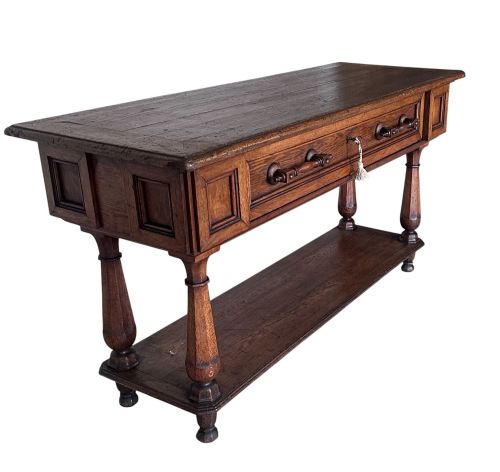
The selection leans heavily toward nineteenth-century craftsmanship, drawing on stylistic vocabularies such as French Provincial, Louis XVI, and French Empire. Pieces originate from various eras, stretching from seventeenth-century serving tables to early twentieth-century Art Deco and Art Nouveau hall stands.
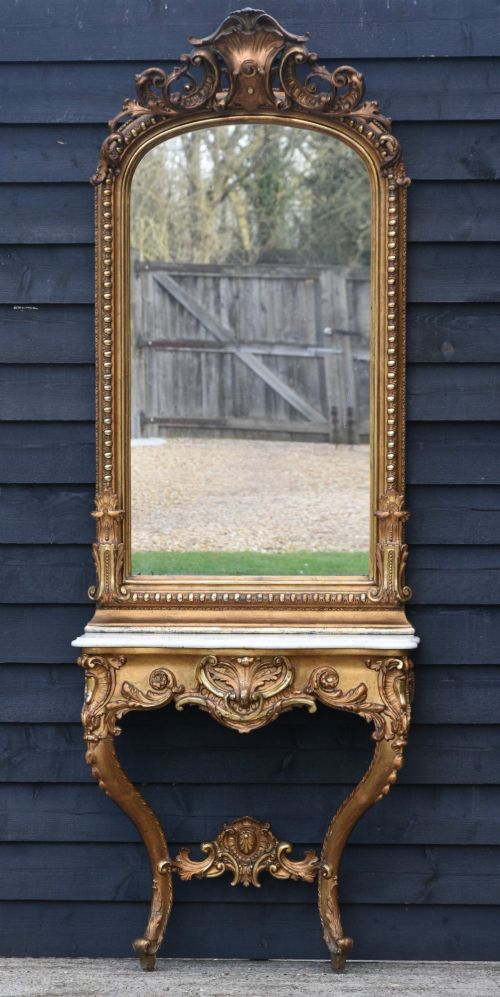
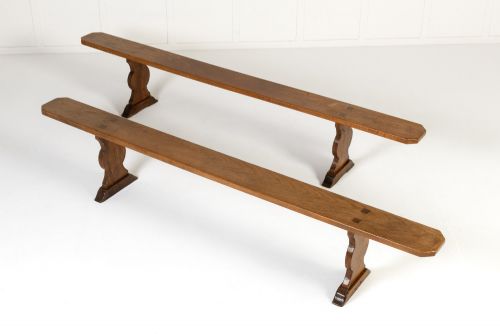
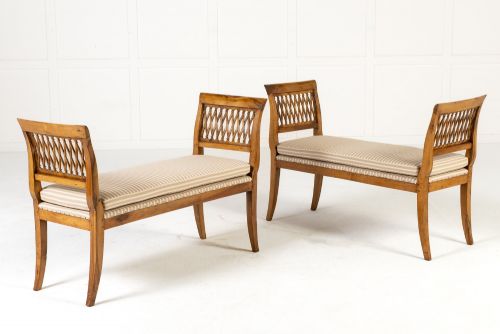
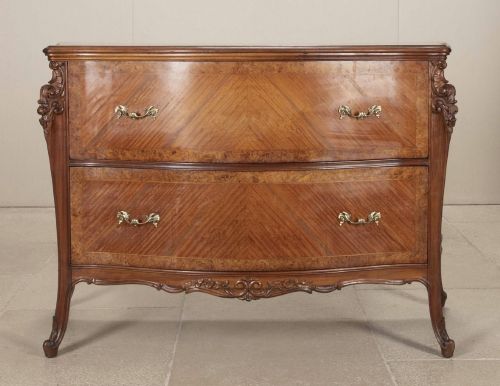
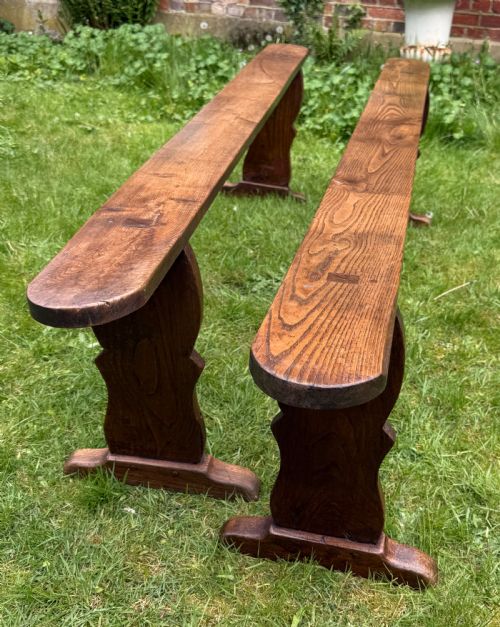
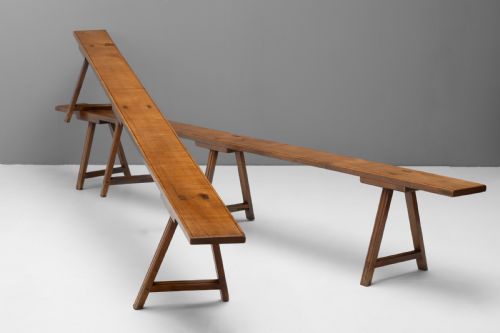
Console tables paired with pier mirrors dominate the category, offering a focal point for an entrance hall. Benches and window seats in cherry wood, walnut, and oak provide seating, while specialised items like laundry tables and commodes adapt to transitional spaces.
Materials and Construction
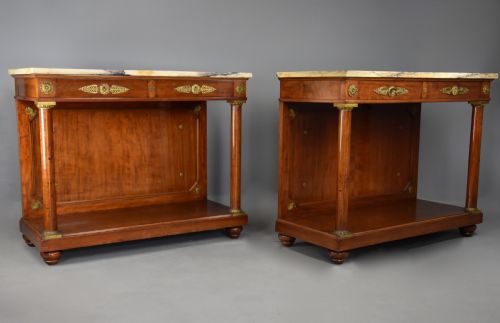
Cabinetmakers utilised dense hardwoods including oak, mahogany, walnut, and cherry to build structural frames, often applying burr walnut or satinwood veneers for visual depth. Marble tops feature prominently on console tables, providing a durable and cool surface that contrasts with gilded or polished wooden bases.
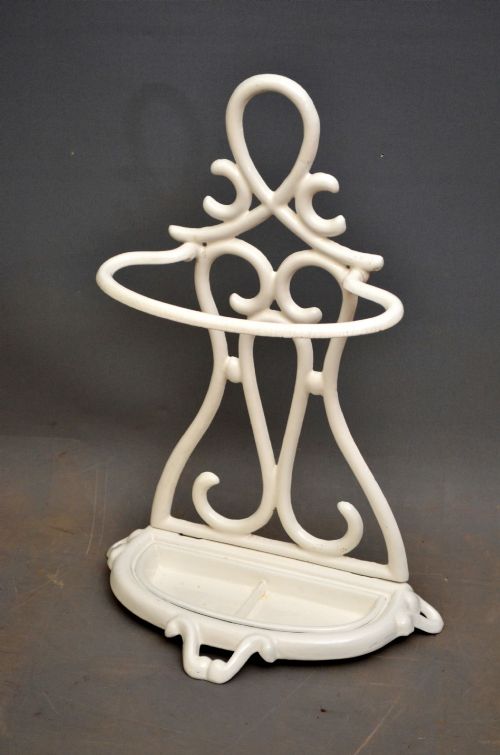
Decorative elements rely on traditional carving, parcel gilding, and ormolu mounts to articulate stylistic periods like Rococo and Empire. Ironwork appears in utilitarian forms, such as cast iron and white enamel finishes on umbrella stands or wrought iron on Art Deco stands.
Materials span natural marble, glass, oak, giltwood, mahogany, ormolu, brass, and walnut across multiple eras.
Evaluating Quality
The distinction between tiers rests upon the execution of the carving, the selection of timber veneers, and the integration of matching elements like pier mirrors. Finer console tables display crisply chased ormolu mounts and heavy, well-figured marble slabs fitted precisely to the wooden frame.
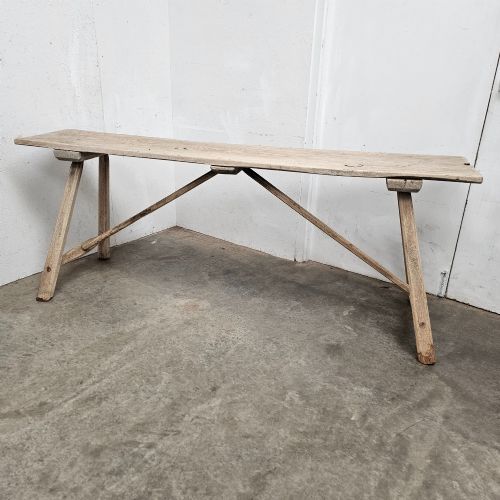
Provenance and maker attribution elevate certain pieces, particularly when stamps confirm Parisian workshop origin. Conversely, simpler regional interpretations in scrubbed pine or plain oak derive their merit from honest surface patination and structural integrity rather than elaborate ornamentation.
Krieger Paris
The Antique French Hallway Furniture Glossary
- Console Table
- A table designed to be fixed against a wall, frequently supported by front legs or brackets while relying on the wall for balance. These often feature decorative aprons and marble tops suited for narrow spaces.
- Pier Mirror
- A tall mirror specifically proportioned to hang on the wall space between two windows, or directly above a console table in a hallway. They frequently match the carved or gilded frame of the table below.
- Ormolu
- Gilded bronze or brass mounts applied to furniture for decorative contrast. The technique involves mercury amalgamation, producing a rich metallic lustre characteristic of Empire and Rococo pieces.
- Commode
- A low chest of drawers, often standing on relatively tall legs in French designs. They provide enclosed storage within an entrance hall or landing.
- Trumeau
- A decorative wall panel incorporating a painted scene or mirror, often integrated into the architectural woodwork above a mantelpiece or console table.
Antique French Hallway Furniture: Frequently Asked Questions
What is a console table used for?
Console tables provide a narrow surface in entrance halls for holding keys, correspondence, or decorative objects without blocking movement. They frequently anchor a space when paired with a matching wall mirror.
Historically, these tables served as decorative statements to impress visitors immediately upon entering a residence. Their shallow depth makes them practical for hallways where floor space is limited.
Are marble tops original to these tables?
Marble tops on nineteenth-century console tables are typically original, cut specifically to fit the recessed wooden frame of the base. They provided a practical, water-resistant surface for visiting cards and floral arrangements.
When examining a piece, look for consistent ageing between the marble slab and the wooden structure underneath. Replacement marble usually lacks the precise edge profiling found on period examples.
Where should I place a hallway bench?
Hallway benches suit entryways, corridors, or spacious landings where a place to sit while removing footwear is beneficial. Longer benches can also serve dining or living spaces depending on their proportions.
Ensure the clearance allows doors to open fully and people to pass comfortably. Upholstered versions add softness to timber-heavy hallways.