




Antique French Glass Decanters
These antique French glass decanters combine brilliant cut crystal, precious metal mounts, and fitted liqueur boxes to grace any dining table.
Antique French Glass Decanters
Antique French glass decanters span from the eighteenth century through the art deco era, encompassing standalone bottles, carafes, and fitted tantalus sets. When exploring these pieces, you encounter everything from simple cider jugs to elaborate liqueur suites housed in velvet-lined boxes.
The nineteenth century yields a high proportion of the examples available, particularly Napoleon III and Baccarat productions featuring ornate ormolu mounts and clear crystal. Alongside these, earlier eighteenth-century bottles and later twentieth-century Lalique and Daum works appear in diverse forms.
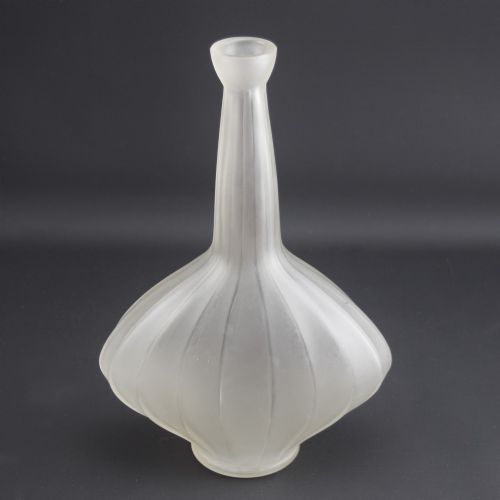
Makers and houses such as Baccarat, René Lalique, and Daum shape the selection, offering distinctive styles from rococo revival curves to crisp geometric lines. Collectors find these items functioning as spirit vessels, table carafes, and decorative centrepieces.
Materials and Techniques
Glassmakers shaped these vessels using free-blowing and mould-blowing techniques, frequently employing heavy crystal for brilliance and weight. Artisans then added engraved decoration, latticinio threads, or enamel painting directly onto the surface.
Antique French Glass Decanters Retail Price Guide 2026
Typical asking prices for french glass decanters among the pieces listed under this phrase on Sellingantiques today, from the lower quarter to the upper quarter. They describe what is for sale here now, not the wider market.
The selection includes functional cider decanters, spirit barrels, and complex tantalus sets alongside delicate art deco glassware.
Judging Quality
Quality rests upon the clarity and weight of the glass, the crispness of any wheel-engraved or moulded details, and the integrity of the metal mounts. Heavy crystal with precise cutting stands apart from lighter, simpler pressed glass.
The presence of original stoppers matched exactly to the neck adds significant value, as does the completeness of fitted boxes with working locks and keys. Finer pieces display refined chasing on the ormolu and flawless gilding that survives without excessive rubbing.
Baccarat·Rene Lalique·Daum·Orfèvrerie Produx Saint Hilaire
The Antique French Glass Decanters Glossary
- Cave a liqueur
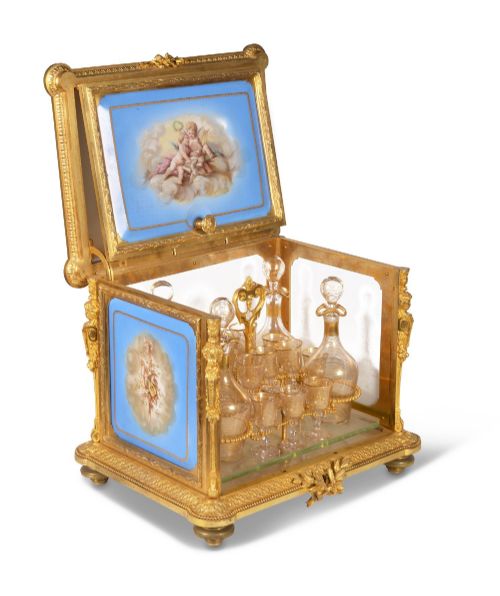
- A fitted box or cabinet containing a set of liqueur decanters and matching small glasses, often lined with velvet or silk. These portable cellars were popular for entertaining in the nineteenth century.
- Tantalus
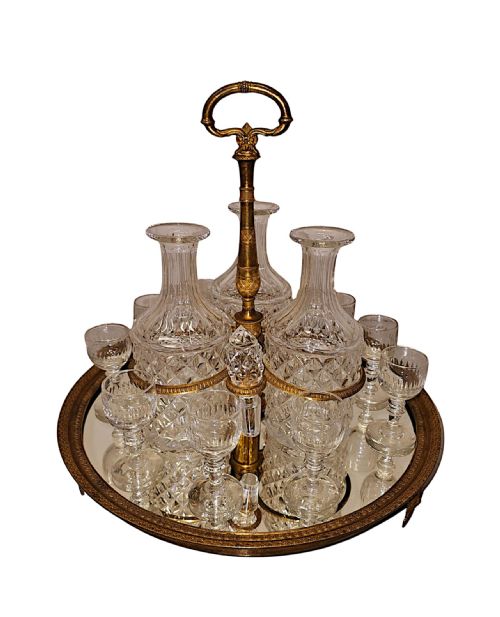
- A locking wooden or metal frame that holds decanters securely while displaying their contents, traditionally designed to prevent servants or guests from helping themselves to spirits. The mechanism locks the stoppers in place until a key is turned.
- Latticinio
- A decorative glass technique involving opaque white or coloured glass threads embedded within clear glass in net or spiral patterns. It creates a delicate, web-like appearance inside the vessel wall.
- Ormolu
- Gilded bronze used for mounts, handles, and decorative feet on nineteenth-century French decanters and tantalus sets. The finish provides a rich gold-coloured metallic accent against the crystal.
- Ewer
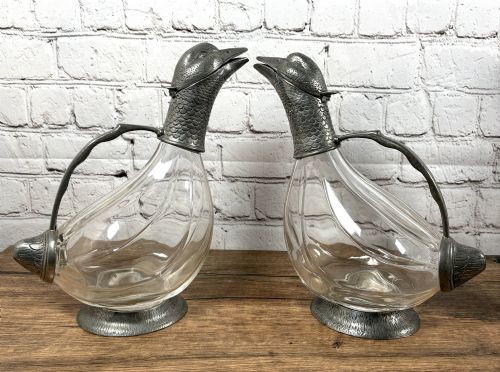
- A large jug with a wide spout and looped handle, frequently mounted in silver or gilt bronze for serving water, cider, or wine at the table.
Antique French Glass Decanters: Frequently Asked Questions
What is a cave a liqueur?
A cave a liqueur is a portable wooden box fitted with a set of glass decanters and small glasses. They were designed to sit on a side table for after-dinner drinks.
Many examples feature decorative parquetry or brass inlay, housing matching crystal bottles secured within velvet-lined compartments.
How do I identify a Baccarat decanter?
Baccarat decanters often display heavy, brilliant-cut crystal with exceptional clarity and weight. Some pieces carry acid-etched factory marks, though older nineteenth-century examples relied on distinct cutting styles and numbered stoppers.
Look for matching numbers cut into the base of the decanter and the bottom of the corresponding stopper to confirm they are original to one another.
What is a tantalus set?
A tantalus is a locking frame that holds decanters upright while exposing the liquid inside. The locking bar prevents the stoppers from being removed without a key.
Originating in the Victorian era, these sets allowed hosts to display fine spirits while restricting access.
Can these antique decanters still hold wine?
Most antique decanters can hold wine or spirits, provided the interior is clean and free from old sediment residue. Care should be taken with pieces featuring gilt decoration or fragile ormolu mounts.
Hand washing in lukewarm water is essential, as thermal shock can crack aged crystal.
How are nineteenth-century decanters different?
Nineteenth-century decanters frequently incorporate elaborate metal mounts, including ormolu collars, handles, and fitted stands. The glass itself tends to be heavier cut crystal.
By contrast, earlier eighteenth-century bottles often have simpler, blown-glass profiles without metal mounts.