
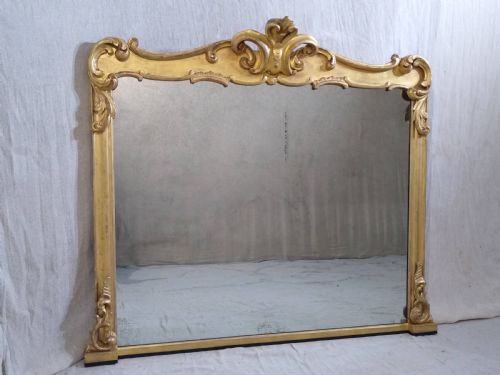
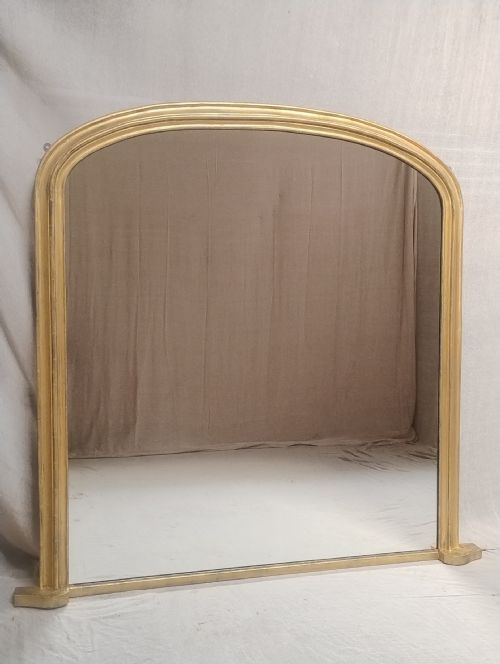
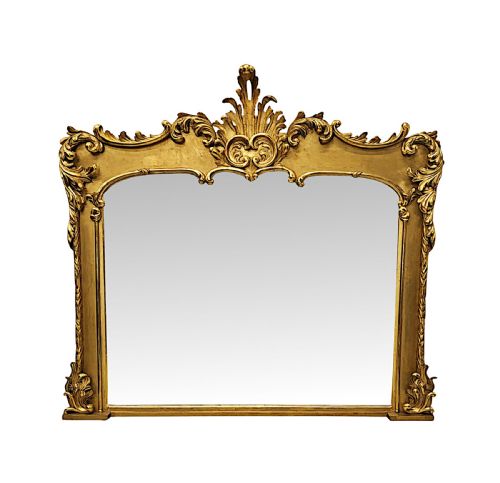


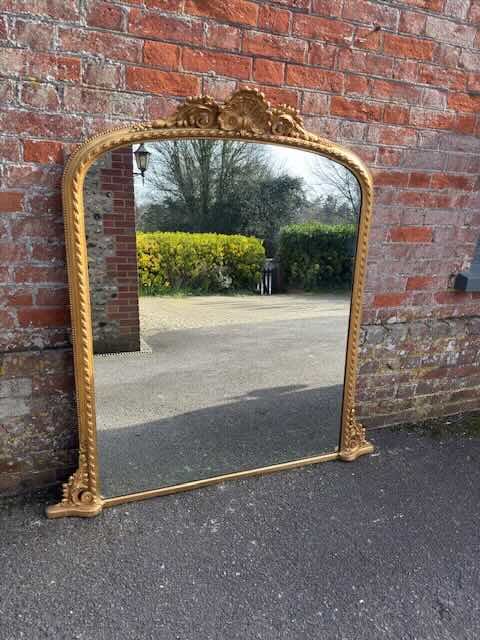

Antique French Chimney Mirror
An antique french chimney mirror brings scale and reflected light to a room, functioning primarily as an overmantel mirror designed to sit above a fireplace.
Antique French Chimney Mirror
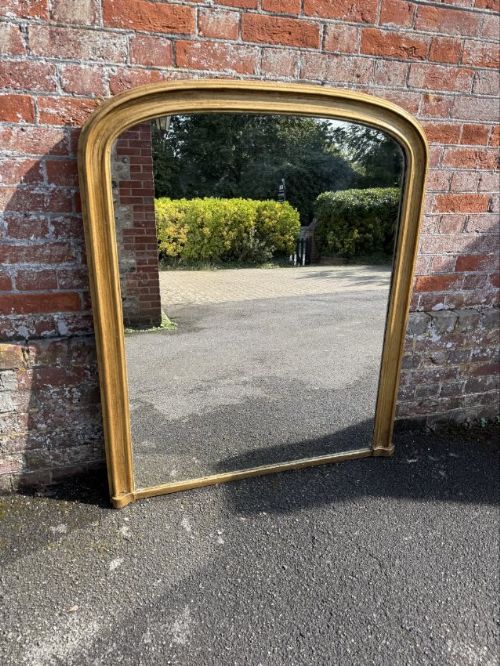
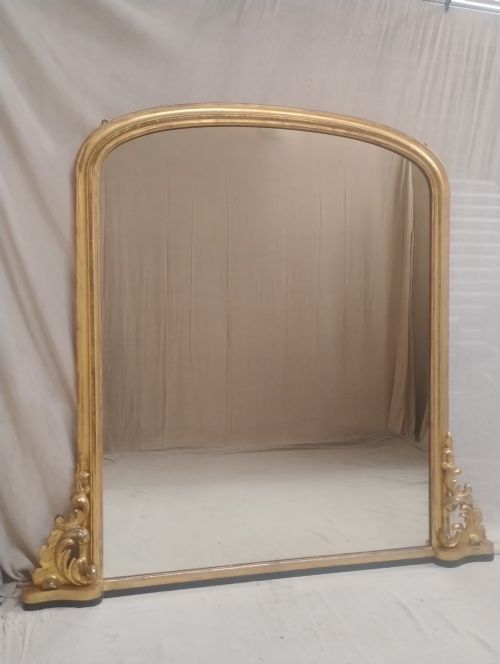
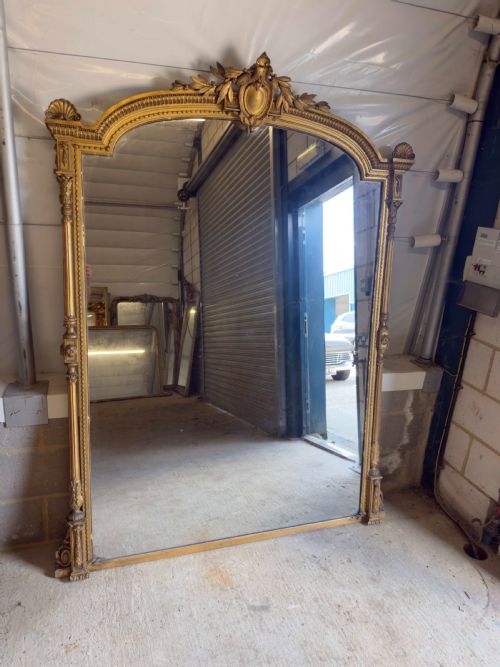
When searching for an antique french chimney mirror, buyers encounter substantial wall and overmantel pieces originating mainly from the nineteenth century, including specific Victorian interpretations and French styles like Louis Philippe and Rococo Revival. These items typically present large arched or shaped tops intended to dominate the chimney breast, reflecting domestic interior spaces.
The selection ranges from mid nineteenth century giltwood and gesso examples dated around 1850, 1860, 1870, and 1880 down to eighteenth century pieces and later 1920 variants. Alongside traditional gold leaf applications, variations feature white painted frames, black ebonised finishes with cream details, and architectural ribbed column framing.
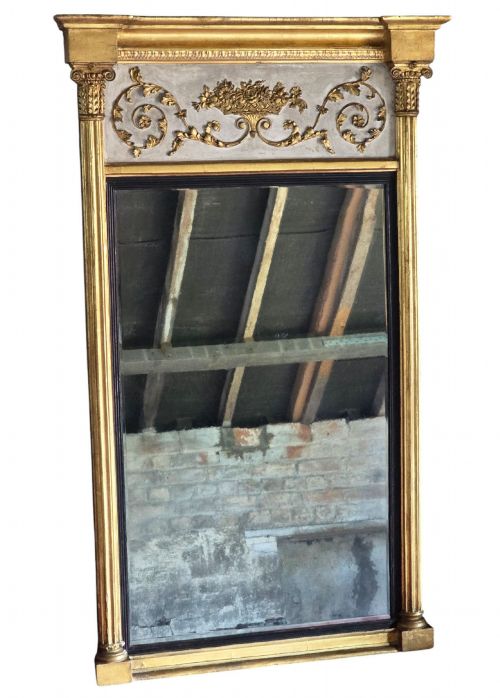
Formats span standard wall mirrors, pier mirrors, and massive country house overmantels. Certain pieces integrate painted panels in the manner of a trumeau, while others display floral embossed detail or rope twist motifs around the glass.
How they were made
Carved wood and gesso form the structural base for the majority of these gilt frames, utilising composition ornament moulded and applied over timber substrates. Artisans then applied gold leaf or paint finishes directly onto the prepared gesso surfaces.
Mirror glass sits within these heavy frames, occasionally accompanied by etched detailing on the glass surface itself. Frames incorporate joinery suited to supporting substantial glass weight while sustaining elaborate decorative mouldings such as rococo scrolls or classical columns.
Materials recorded across the current inventory include glass, gesso, giltwood, wood, gold leaf, mirror glass, paint, and composition.
What varies in quality
The depth and definition of the carved wood and gesso ornamentation dictate the visual distinction of the frame, separating sharply detailed moulding from softer, shallower casts. Superior examples maintain crisp floral embossing, clean architectural lines, and intact gilt or painted surfaces without heavy obscuring overpaint.
The original integrity of the mirror glass and the structural soundness of the heavy timber carcass determine overall preservation. Higher grade pieces demonstrate careful joint construction and original mercury or silvered glass plates that retain their characteristic depth of reflection.
The Antique French Chimney Mirror Glossary
- Gesso
- A plaster-like mixture applied to wood frames to create a smooth surface for gilding or painting. It accepts fine carving and moulding details readily.
- Giltwood
- Timber that has been coated with gold leaf or gold paint. This technique provides the bright, reflective finish common on formal period frames.
- Overmantel mirror
- A large mirror specifically proportioned to hang on the wall directly above a fireplace mantelpiece. They often feature arched or shaped tops to match architectural chimney breasts.
- Trumeau mirror
- A decorative wall mirror incorporating a painted panel or artwork directly above the glass plate. Originating in interior architecture, they function as unified wall decorations.
- Composition
- A moulded mixture of whiting, resin, glue, and oil pressed into ornamental shapes while pliable. Makers used it to produce rapid decorative reliefs on gesso frames.
Antique French Chimney Mirror: Frequently Asked Questions
How do I hang a heavy overmantel mirror?
Due to the substantial weight of carved wood and gesso frames combined with thick mirror glass, these pieces require professional wall anchoring directly into structural studs or masonry.
Hardware must be rated to support heavy loads safely to prevent the mirror from pulling away from the wall above a fireplace.
What is the difference between an overmantel and a pier mirror?
An overmantel mirror is specifically shaped to sit horizontally or vertically above a fireplace mantelpiece, designed to occupy the central focal point of a chimney breast.
A pier mirror is typically designed to hang in the narrow wall space, or pier, between two windows.
Are these mirrors made from solid gold?
No, the gold appearance comes from thin gold leaf applied over a prepared gesso and wood base. Some pieces utilise gold paint rather than traditional leaf.
The underlying structure consists of wood and composition moulding materials.
How do I clean antique mirror glass?
Use a soft, dry microfiber cloth to gently remove dust from the glass and the delicate gilt or painted frame surfaces. Avoid spraying liquid cleaner directly onto the glass, as moisture can seep behind the plate and damage the silvering or the gesso beneath.