


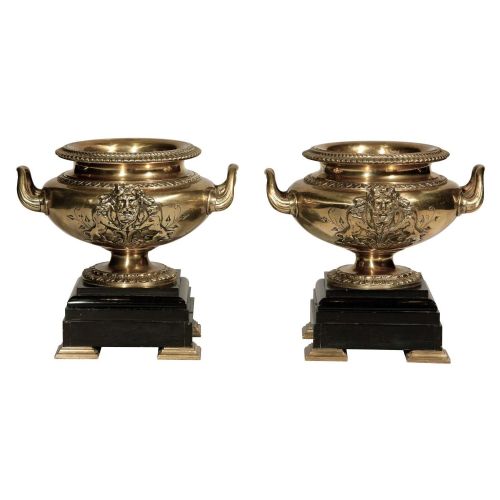


Antique French Cassolettes
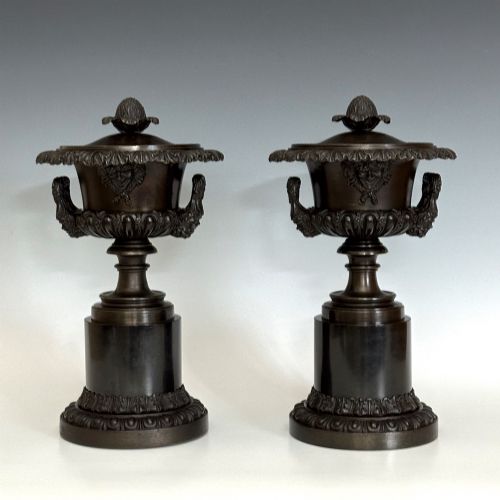
These antique french cassolettes are reversible decorative vessels that double as perfume burners, sought after for their classical symmetry and rich materials.
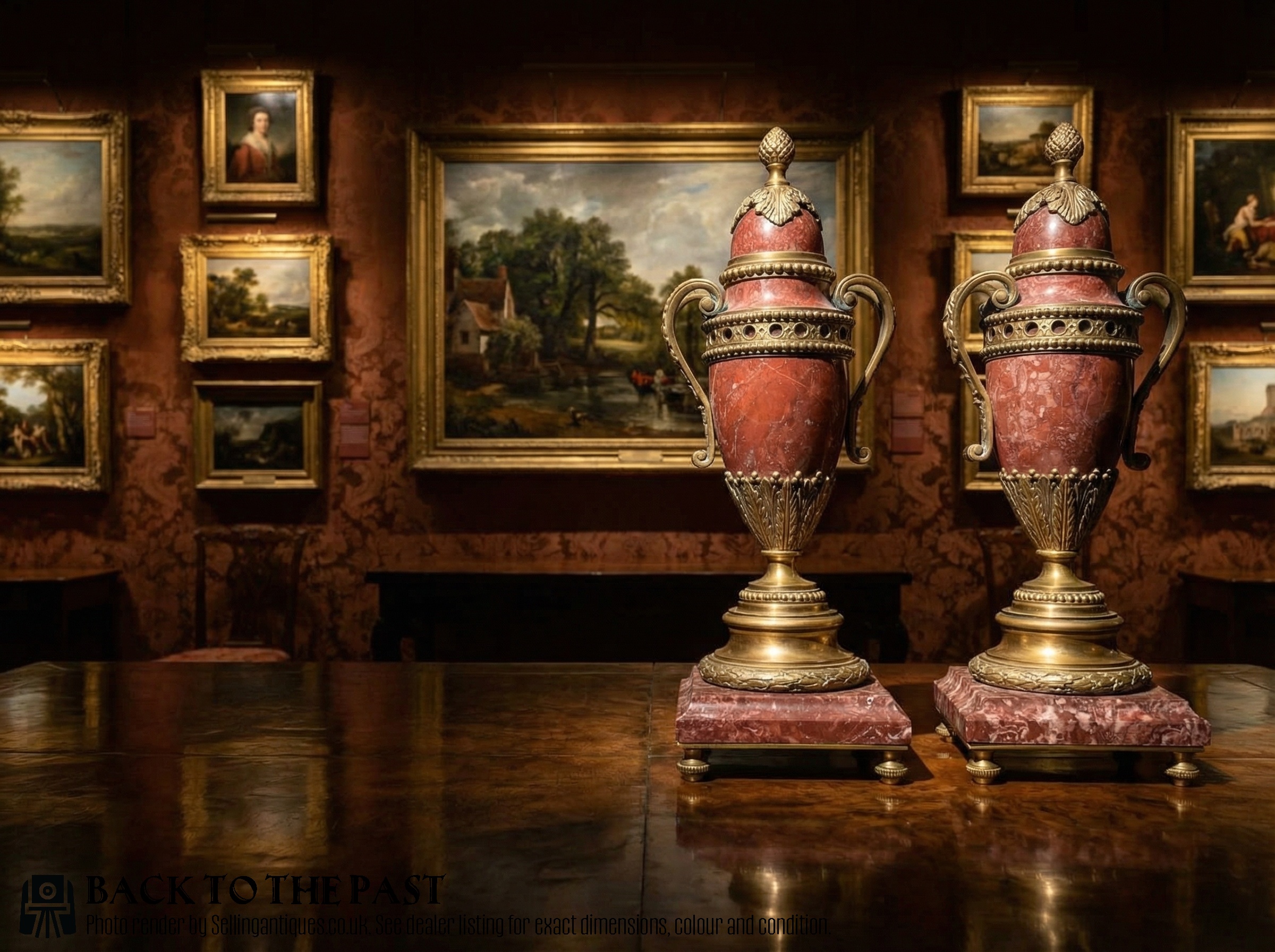
Antique French Cassolettes
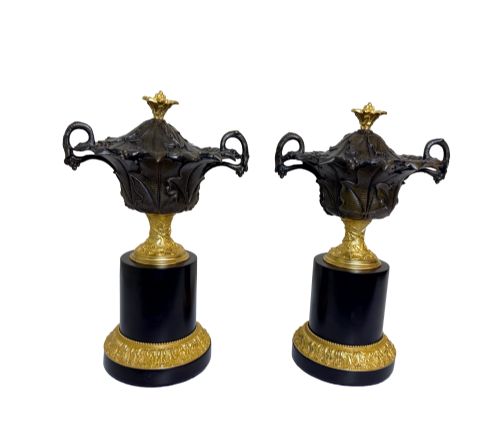
When you search for antique french cassolettes, you encounter decorative urns and vases designed with reversible lids that transform from standard urns into perfume burners. The examples seen here belong largely to the nineteenth century, spanning periods from eighteen sixty to nineteen hundred, with Victorian pieces also appearing.
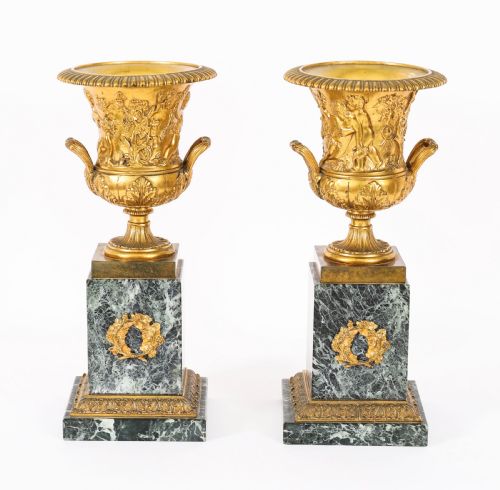
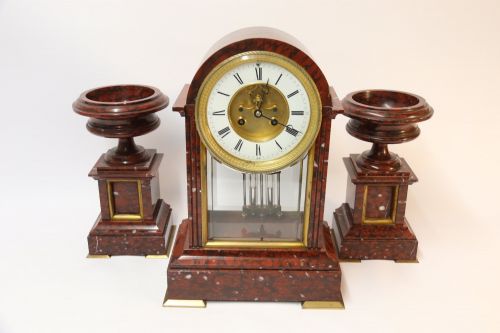
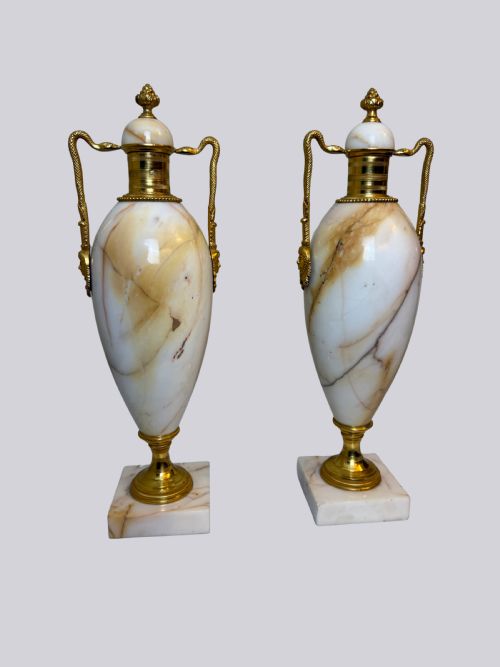
The dominant forms draw upon French Empire, Louis XVI style, and Neoclassical vocabularies, often presented as matched pairs. Many incorporate marble plinths, onyx bases, or porcelain bodies alongside their metal mounts, functioning as decorative centerpieces or clock garniture components.
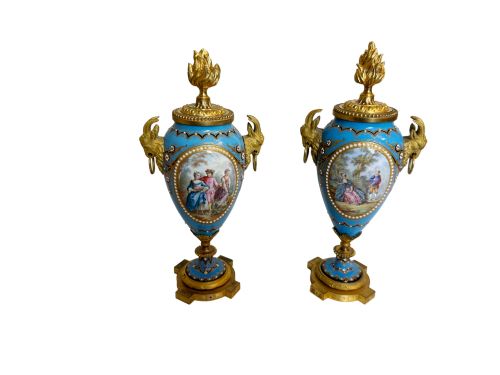
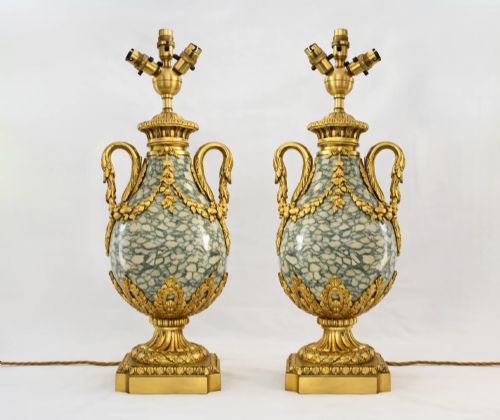
The selection ranges from straightforward bronze and marble amphorae to elaborate champleve enamel and Sevres porcelain designs. Buyers frequently find them adapted as table lamps or paired with matching candelabra within complete garniture sets.
How they were made
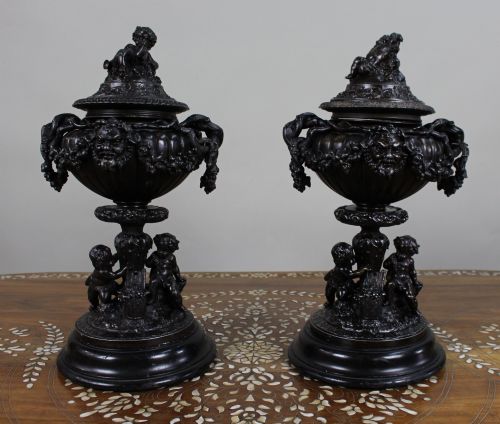
The construction relies on the union of cast metals and carved stone, principally gilt bronze, ormolu, and patinated bronze mounted upon marble, onyx, or quartz bodies. Artisans utilised precision casting for mounts and decorative handles, often incorporating classical motifs such as Bacchic masks and putti.
Surface ornamentation involved fire-gilding, champleve enamelling, and hand-painting on porcelain surfaces like Sevres. Stonework was turned and polished to create contrasting plinths and bodies in white, green, rouge, and turquoise marbles.
The reversible lids of cassolettes required exact engineering so that one side presented a solid decorative finial while the reverse revealed a pierced burner for aromatics.
Materials span gilt bronze, marble, ormolu, onyx, porcelain, and champleve enamel.
What varies in quality
The selection and matching of the stone bodies also separate grades of work, with superior items utilising unblemished, richly veined marbles or flawless onyx paired harmoniously with the metalwork. The integration of complex decorative techniques like champleve enamel or hand-painted porcelain elevates an object further.
Samuel Marti·Auguste Cain
The Antique French Cassolettes Glossary
- Cassolette
- A decorative vessel with a reversible lid that serves as a vase on one side and a perfume burner on the other. This dual function defines the primary category.
- Ormolu
- Finely chopped high-karat gold disolved in mercury and applied to a bronze base, which is then heated to leave a golden coating. It provides the bright metallic finish seen on many mounts.
- Garniture
- A set of matching decorative objects, typically comprising a clock flanked by two urns, cassolettes, or candelabra for mantelpiece display. These sets unify a room scheme.
- Champleve
- An enamelling technique where troughs are dug into the metal surface and filled with vitreous enamel before firing. It creates vibrant patterns of colour across bronze bodies.
- Grand Tour
- The cultural journey undertaken by wealthy Europeans to study classical antiquities, inspiring the production of souvenir bronzes and marble urns. These pieces reflect that classical revival taste.
Antique French Cassolettes: Frequently Asked Questions
What is a cassolette?
A cassolette is a decorative vessel featuring a reversible lid that transforms the object from an ornamental urn into a perfume burner.
Historically, they were used to diffuse scented oils or resins in domestic interiors while doubling as sculptural mantelpiece decoration.
How do I style them?
These pieces suit placement on mantelpieces, sideboards, or console tables, often arranged as a symmetrical pair flanking a clock or mirror.
Ensure they sit on stable, level surfaces where their marble bases and bronze mounts remain secure from accidental knocks.
Are they all French?
The pieces matching this style are predominantly of French origin, reflecting the aesthetic movements popular in Paris during the nineteenth century.
Many draw on earlier Louis XVI and Empire designs produced during later revival periods like Napoleon III.
What materials are used?
They combine cast metals such as gilt bronze, ormolu, and patinated bronze with carved natural stones like marble, onyx, and quartz.
Some examples also incorporate porcelain bodies, champleve enamel, or silvered elements to enhance the decorative scheme.