

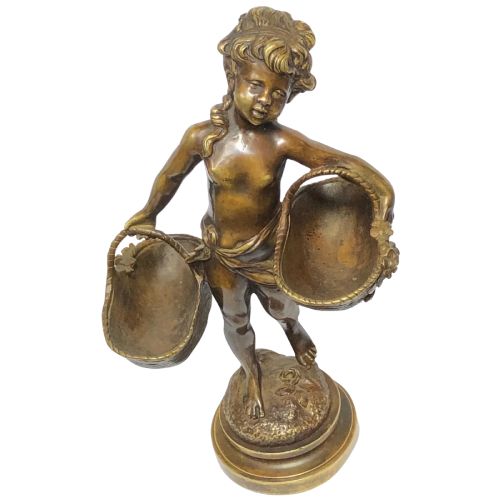
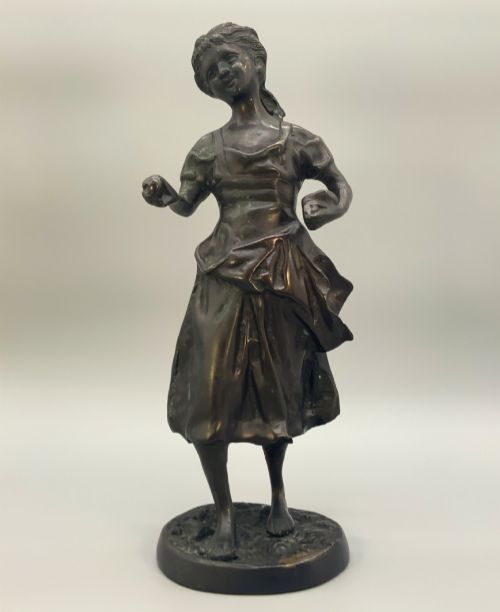


Antique French Bronze Girl
An antique french bronze girl brings nineteenth and twentieth century foundry work into the room, cast in patinated, gilt, or silvered metal.
Antique French Bronze Girl
When you search for an antique french bronze girl, you encounter sculptural figures and statuettes spanning the nineteenth century through the art deco era. These pieces range from classical maidens and peasant figures to dynamic dancers and modernist studies.
The selections on this page appear in various forms, including cabinet bronzes, bust studies, table lamps, and figures mounted on marble or onyx bases. Artists working in France during these periods captured young female subjects in both realistic and stylised poses.
How they were made
These figures are produced using the lost-wax method or sand casting, resulting in solid metal forms that capture intricate drapery and facial expressions. Founders applied patination in shades of brown and green, or added silvering and gilding to the finished surfaces.
Many sculptures incorporate mixed media, pairing the cast metal with carved marble, onyx, or wooden plinths. Certain works integrate functional elements such as lighting fixtures or lamp fittings directly into the bronze design.
Antique French Bronze Girl Retail Price Guide 2026
Typical asking prices for french bronze girl among the pieces listed under this phrase on Sellingantiques today, from the lower quarter to the upper quarter. They describe what is for sale here now, not the wider market.
Listings feature works from the nineteenth century through the nineteen-thirties, executed in bronze, patinated bronze, gilt bronze, silvered bronze, spelter, marble, onyx, and wood.
What varies in quality
Quality rests in the crispness of the chasing and the subtlety of the surface patina, which reveal the skill applied after the cast leaves the sand or wax mould. Finer examples retain delicate details in the hair, fingers, and garments without soft edges.
The integration of the figure with its base also distinguishes the work, as superior pieces feature tightly fitted marble or onyx mounts and clear artist signatures or foundry marks.
Moreau Family·C J R Colinet·H. Chiparus·Pierre Laurel·Alexandre Kelety·Emmanuel Villanis·J Camus·Geo Maxim·Guillot·Math. Moreau·Leon Pilet·Charles Octave Levy
The Antique French Bronze Girl Glossary
- Patinated bronze
- Bronze that has been chemically treated to produce a specific surface colour, ranging from deep brown to metallic green. This treatment protects the metal and defines the sculptural details.
- Lost-wax casting
- A process where a molten metal is poured into a mould created by melting a wax model. This technique allows for high precision and complex undercut forms.
- Art Deco
- A design style popular in the nineteen-twenties and nineteen-thirties characterised by streamlined geometric forms and stylised depictions of figures. It appears frequently in figures from this period.
- Art Nouveau
- An international style of art and architecture prominent around nineteen hundred, inspired by natural forms and curved organic lines. Figures from this movement often feature flowing hair and botanical motifs.
- Spelter
- An alloy of zinc and other metals frequently used as a less expensive alternative to bronze. It takes patination well but is softer and lighter than true bronze.
Antique French Bronze Girl: Frequently Asked Questions
How do I clean a bronze figure?
Dust the surface gently with a soft, dry brush to prevent the accumulation of grit in the crevices. Avoid using water, soap, or commercial metal polishes, which can strip the original patination.
Apply a very thin coat of microcrystalline wax if the metal appears dry, then buff it lightly with a clean cloth. This protects the bronze from atmospheric moisture and handling oils.
Are these figures solid bronze?
Most pieces are cast from bronze, though some figures utilise related alloys such as spelter. Foundry workers poured the molten metal into moulds, creating either solid or hollow forms depending on the size of the sculpture.
Examine the underside or base to check the weight and metal colour where the patina is worn. Heavier pieces with a reddish-brown interior typically indicate true bronze.
How do I date an art deco bronze?
Art deco pieces display geometric styling, streamlined clothing, and dynamic poses characteristic of the nineteen-twenties and nineteen-thirties. The bases often incorporate coloured marbles or onyx typical of this period.
Look for signature engravings on the base or body of the sculpture. Comparing the style of dress and the foundry mark helps narrow the production decade.
Why are some figures mounted on marble?
Foundries mounted figures on marble or onyx plinths to provide stability and a finished aesthetic. This practice became widespread during the nineteenth century and continued through the art deco era.
The stone base also adds visual contrast to the dark patinated metal. These mounts are typically original to the casting.