



Antique French Alabaster Statue
An antique french alabaster statue brings a soft translucence to a room, capturing classical and turn-of-the-century subjects with a warmth carved stone achieves.
Antique French Alabaster Statue
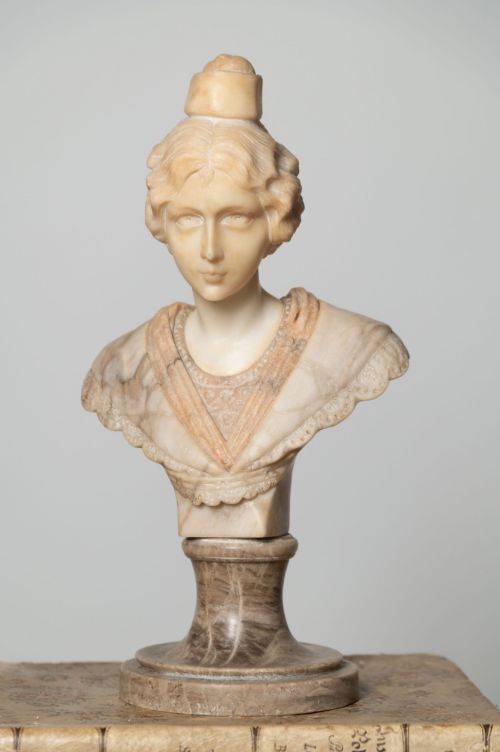
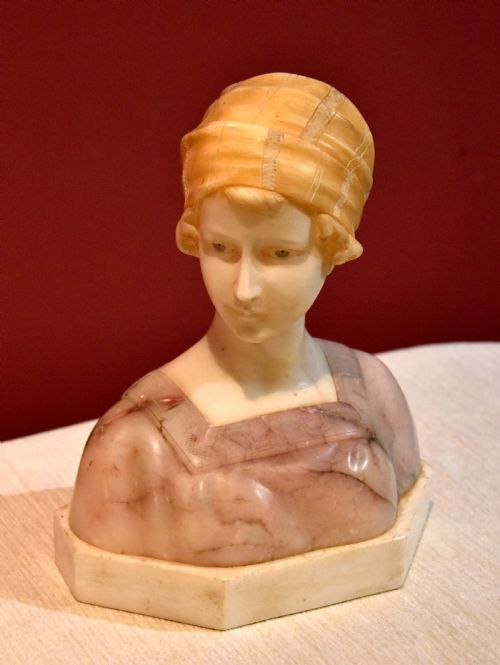
An antique french alabaster statue represents sculptural work centered around female figures, mythological subjects like Hestia, and romantic pairs. These pieces appear primarily as standalone sculptures, busts, table lamps, and bookends.
The objects on this page date from the late nineteenth century through to the early twentieth century, spanning periods such as Art Nouveau, Art Deco, Neoclassical, and the Belle Epoque. Sculptures depicting reclining nudes, young lovers, and figures holding instruments dominate the selection.
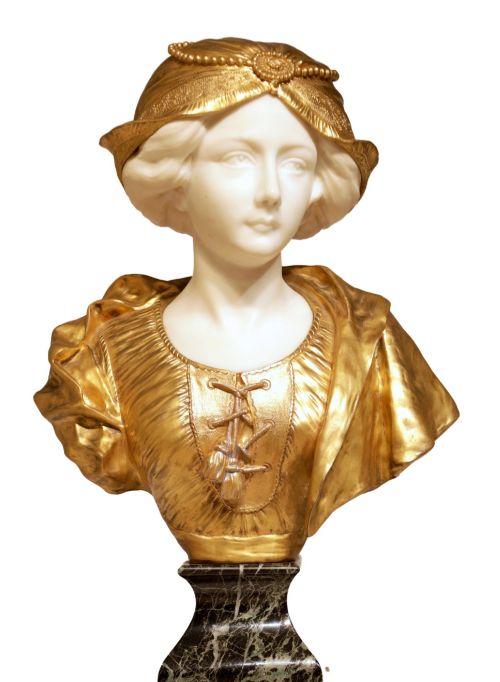
Originating from French workshops, these works frequently combine carved alabaster with contrasting materials such as marble bases and metal additions. They range in scale from intimate portrait busts to larger figural compositions.
Materials and Construction
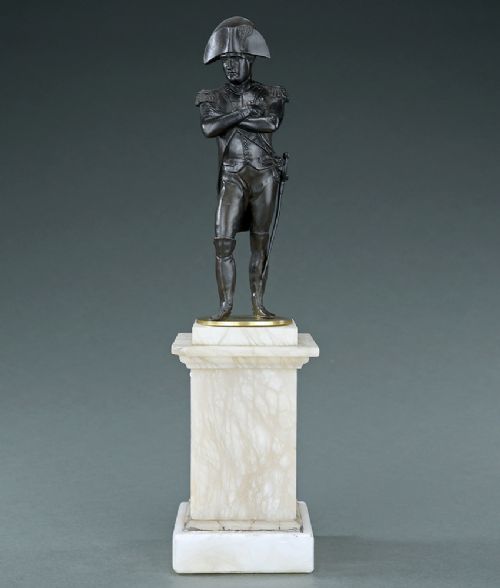
Makers carved these figures from soft alabaster, a material chosen for its fine grain and ability to diffuse light across a polished surface. This stone is often paired with marble for stable bases or combined with cast bronze, gilt bronze, and spelter for distinct garments, wings, or structural elements.
Artisans employed traditional carving chisels and abrasive polishing agents to achieve the smooth, matte or softly glowing skin tones characteristic of the period. Mixed media assemblies frequently integrated wood and glass components to complete lamp bases or decorative mounts.
Antique French Alabaster Statue Retail Price Guide 2026
Typical asking prices for french alabaster statue among the pieces listed under this phrase on Sellingantiques today, from the lower quarter to the upper quarter. They describe what is for sale here now, not the wider market.
Listings feature works spanning the nineteenth and early twentieth centuries, predominantly utilising carved alabaster, marble, and bronze.
Distinctions in Execution
The finest examples display a high degree of anatomical precision and delicate facial expression, whereas lesser pieces rely on simpler, heavier carving with less textural contrast in the hair and drapery. Natural variations in the stone introduce subtle veining that enhances a superior piece if handled with sculptural sensitivity.
Signed works attributed to known sculptors or foundries demonstrate superior chisel work and more complex multi-material assemblies involving bronze or marble. The integration of functional elements, such as lamp fittings or bookend weight distribution, also separates standard decorative objects from masterworks.
Affortunato Gory·Auguste Henri Carli·George Van Der Straeten·Emile Guillemin
The Antique French Alabaster Statue Glossary
- Alabaster
- A fine-grained, translucent stone prized for sculpture because it mimics the appearance of human skin. It scratches easily and dissolves in water.
- Spelter
- A zinc alloy commonly used as a cost-effective alternative to bronze in decorative figures. It is often painted with a bronze finish to imitate solid metal casting.
- Art Nouveau
- A decorative style characterised by fluid, organic lines and floral motifs popular around the turn of the twentieth century. Sculptures from this movement often feature flowing hair and natural drapery.
- Patina
- The surface sheen and coloration developed through age, handling, or chemical treatment on metal and stone. It provides a visual record of the piece's history.
- Bust
- A sculpted representation of a person's head, shoulders, and chest. These pieces focus expression and detail on the upper anatomy.
Antique French Alabaster Statue: Frequently Asked Questions
Where should I place a lamp?
Position table lamps on sturdy side tables or desks where the translucent qualities of the stone can catch and diffuse ambient light. Ensure the bulb wattage remains low to prevent excessive heat exposure to the carved alabaster body.
Keep the fixture away from high-traffic edges where cords might pull or accidental bumps could cause damage. A stable surface protects both the stone and any integrated marble bases.
Are these sculptures signed?
Many sculptures feature incised signatures or foundry marks on the base, stone body, or metal cast elements. Signatures help attribute the work to specific artists active during the nineteenth and early twentieth centuries.
Unsigned pieces remain common and are attributed by style, material execution, and period characteristics. Both signed and unsigned works reflect the sculptural standards of French workshops.
How do I date an alabaster figure?
Examine the stylistic cues, such as the flowing organic lines of Art Nouveau or the rigid symmetry of Neoclassical and Empire revivals. Clothing styles, hairstyles, and accompanying motifs like lyres or wheatsheaves offer further chronological indicators.
Look at the accompanying materials, such as the type of marble used for the base or the presence of turn-of-the-century electrical fittings on lamp conversions. These combined elements point toward specific decades between 1880 and 1930.