
Antique Freestanding Desk
An antique freestanding desk finishes a room by standing proudly in the centre rather than hiding against a wall.

Antique Freestanding Desk
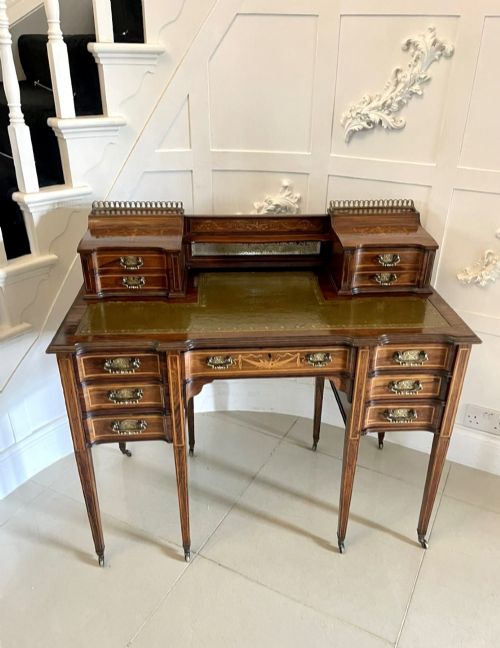
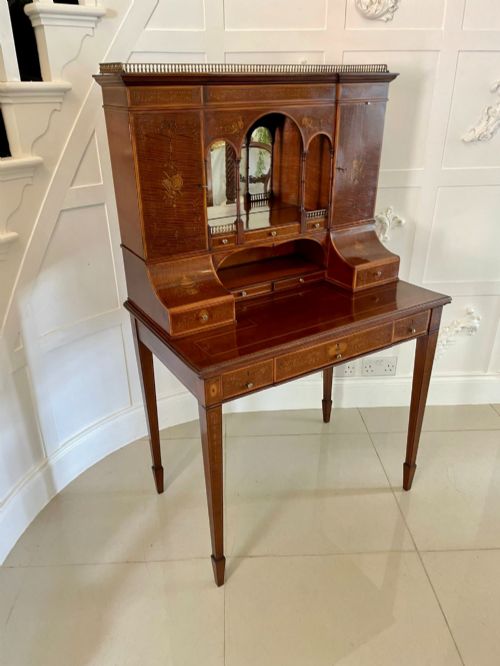
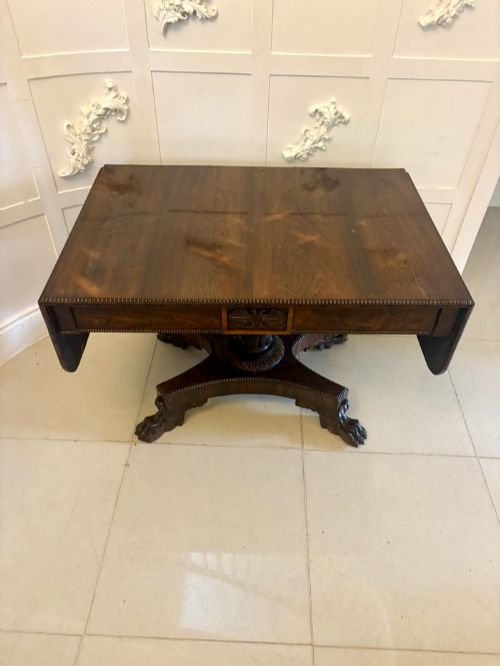
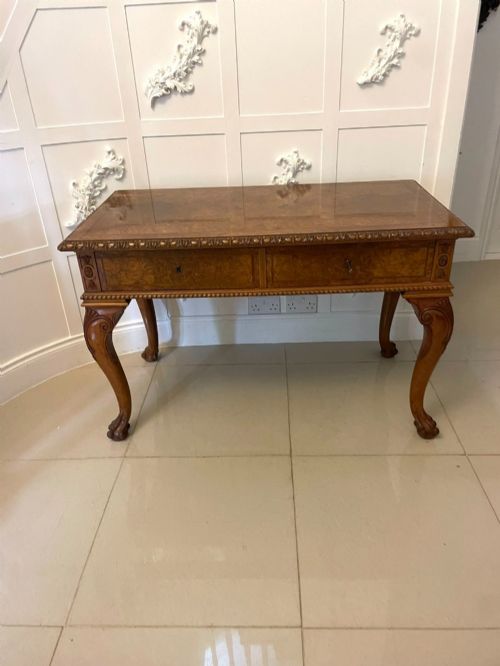
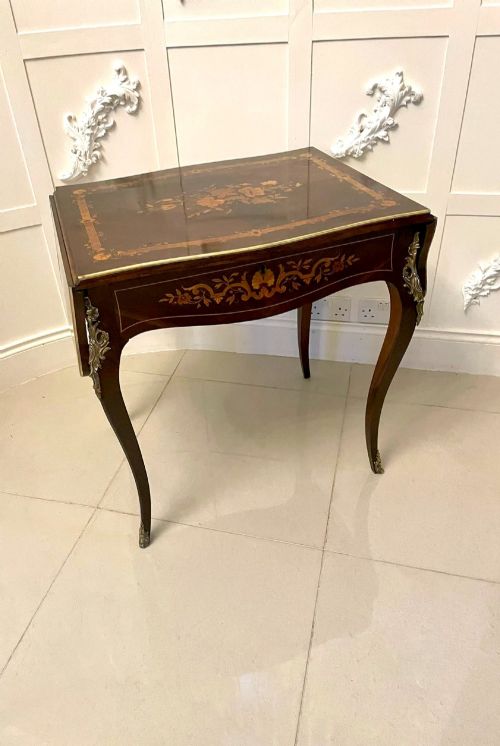
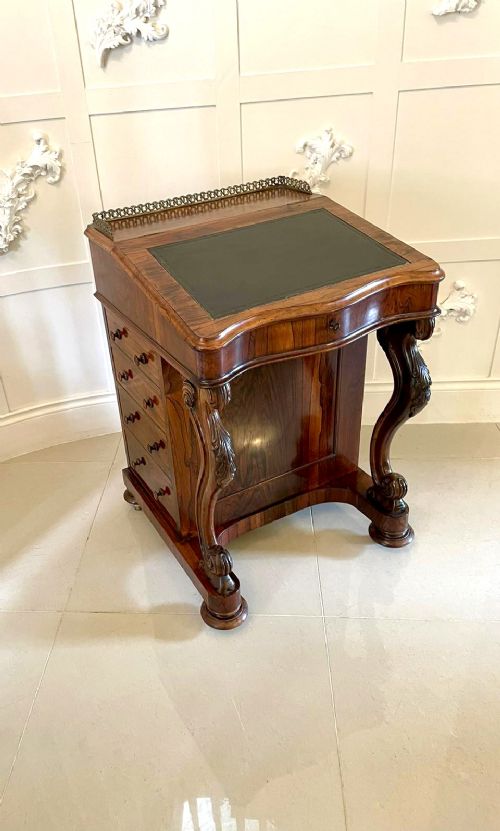
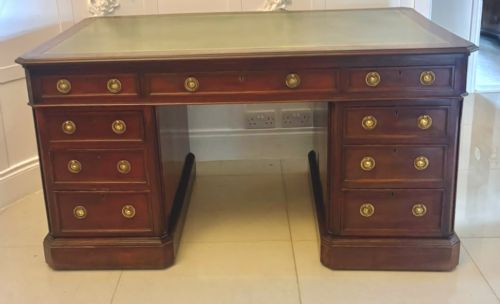
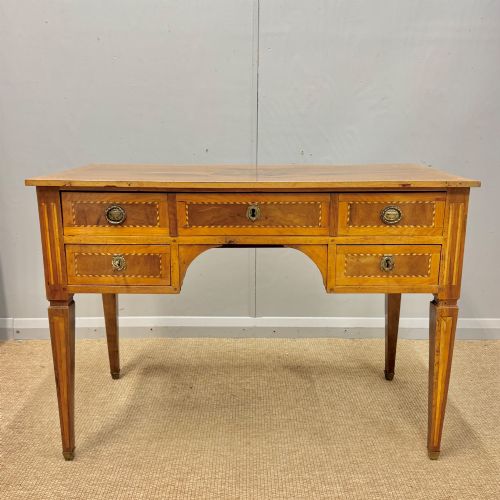
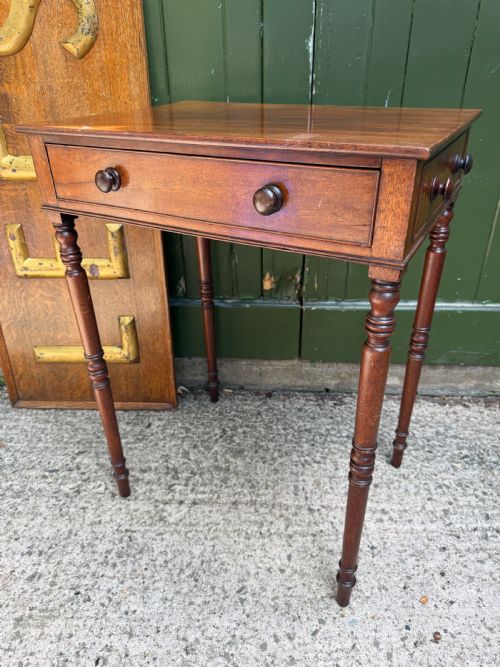
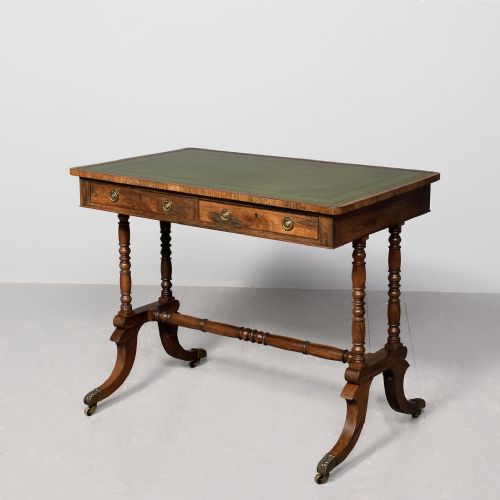
An antique freestanding desk is designed with finished panelling on all four sides so it can float in the middle of a room, serving multiple tasks from writing to administrative work. You will most frequently encounter Victorian and Edwardian examples on this page, alongside earlier Regency, George III, and William IV iterations.
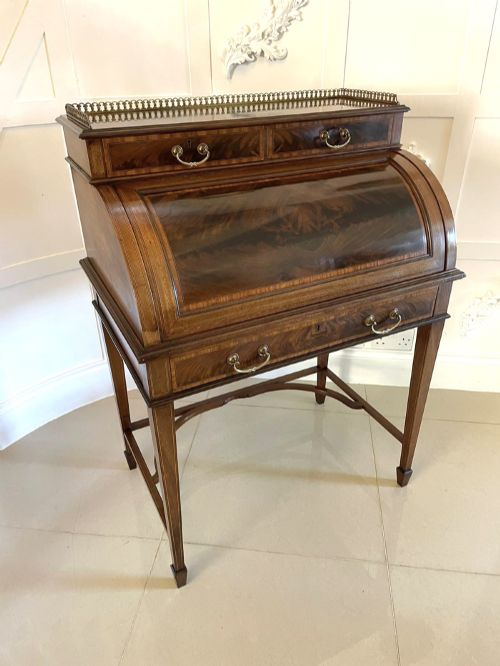
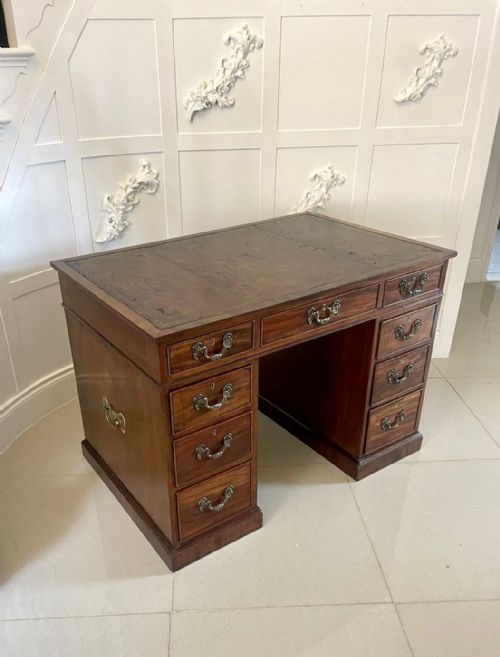
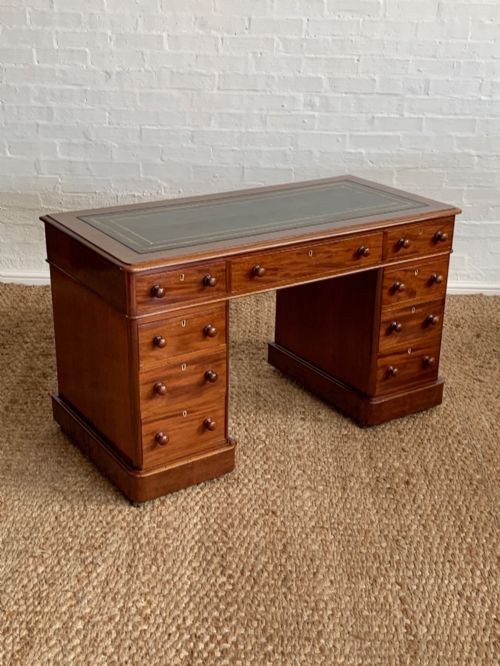
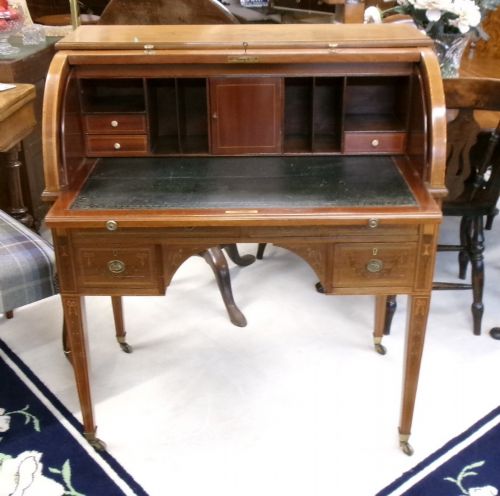
The format spans pedestal kneehole desks, bureau plats, kidney-shaped writing tables, and cylinder desks, giving variety in both workspace and silhouette. Many incorporate leather writing surfaces, fitted stationery drawers, and pull-out slides for extra utility.
Makers and workshops constructed these pieces to anchor studies, libraries, and drawing rooms with substantial presence. Their finished backs and sides distinguish them immediately from standard writing tables meant for perimeter placement.
How They Were Made
Cabinetmakers built the structural carcases using dense timbers such as mahogany, oak, walnut, and burr walnut, often applying satinwood, rosewood, or kingwood veneers across the visible surfaces. Marquetry, parquetry, and brass stringing frequently decorate the drawer fronts and tops.
Writing surfaces were inset with tooled leather, whilst finer French pieces utilised ormolu mounts and bronze detailing around the friezes and legs. Joinery relied on traditional dovetailing for drawers and robust framing to support the heavy timber tops.
Listings feature mahogany, burr walnut, and rosewood across Victorian, Edwardian, and Regency periods.
What Varies in Quality
The refinement of the secondary timbers and the crispness of the carving separate standard workshop output from exceptional furniture. Superior pieces feature matched veneers that mirror across the central axis and fully finished backs adorned with identical inlay to the front.
Hardware such as original brass locks, working keys, and finely chased ormolu mounts elevate an example significantly. The integration of clever internal mechanisms, fitted stationery compartments, and smooth-running writing slides denotes careful maker execution.
Maple and Co·Louis Auguste Moreau
The Antique Freestanding Desk Glossary
- Bureau plat
- A type of French writing desk featuring a rectangular top and drawers in the frieze, finished on all sides for central room placement.
- Partners desk
- A large pedestal desk designed for two people to work opposite each other, featuring cupboards or drawers on both sides.
- Ormolu
- Gilded bronze ornamentation applied to furniture mounts, cast and chased for decorative effect.
- Marquetry
- Decorative veneer work forming pictorial or geometric patterns using various coloured woods.
- Kneehole desk
- A pedestal desk with a central recess for the user's legs, flanked by columns of drawers.
Antique Freestanding Desk: Frequently Asked Questions
Can a freestanding desk go in the middle of a room?
Yes, because the back panels are fully finished and polished just like the front. This allows the piece to sit away from any wall without exposing unfinished timber.
They function particularly well when anchored by a large rug in the centre of a study or library.
What is the difference between a partners desk and a pedestal desk?
A partners desk provides drawer and cupboard access on both sides so two people can sit opposite one another. Standard pedestal desks have drawers on the front and dummy drawers or solid panelling on the reverse.
Both types are built to be freestanding, but partners desks offer twice the storage accessibility.
How do I care for the leather top?
Leather writing surfaces benefit from occasional feeding with specialised leather balms to prevent drying and cracking. Avoid placing direct heat sources or unsealed drinks on the hide.
Gentle dusting with a dry cloth keeps the surface clean without damaging the gold tooling.
How do I identify a Regency period desk?
Regency desks typically display classical architectural lines, sabre legs, or pillar supports executed in rosewood or figured mahogany. Brass inlay and rosewood graining are common hallmarks of this era.
Construction methods such as hand-cut dovetails help confirm the early nineteenth-century date.