
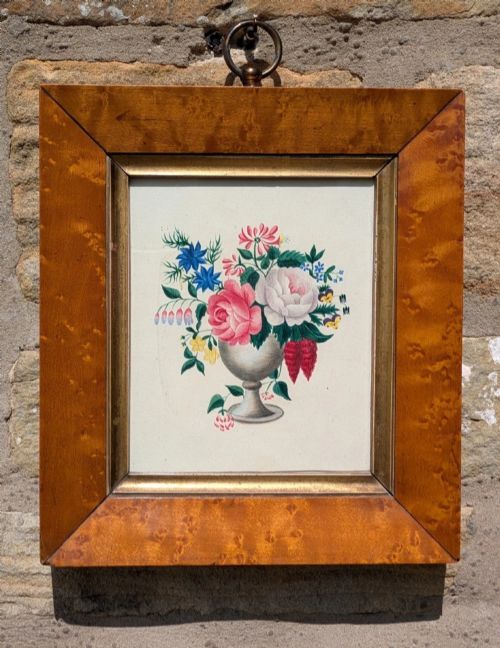
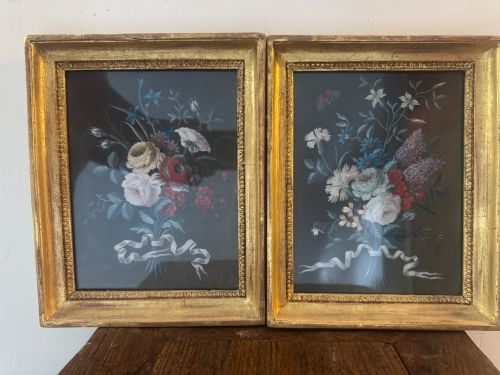
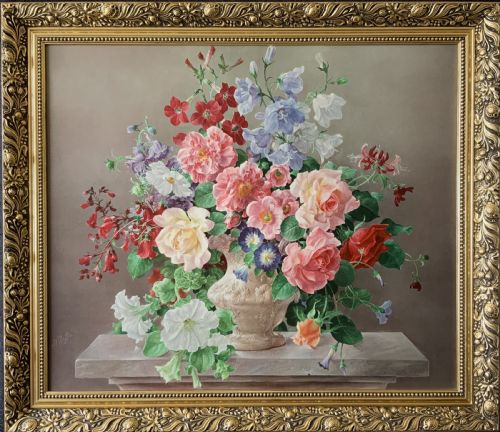
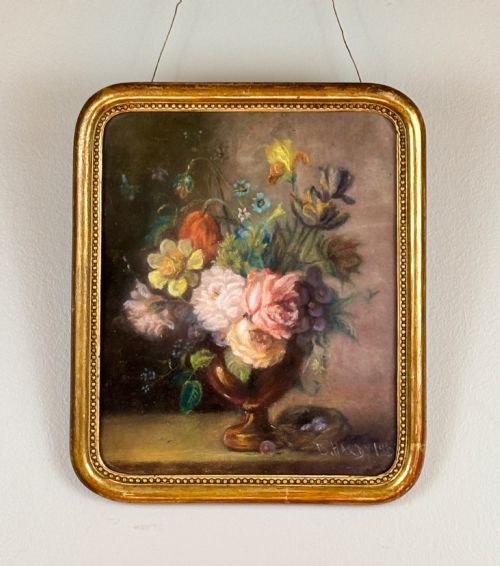
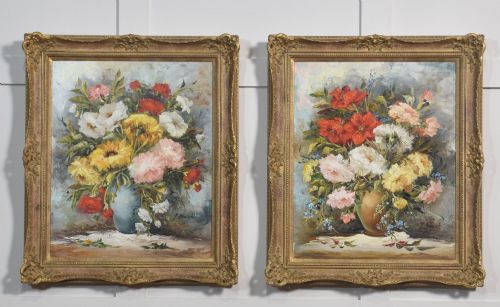


Antique Framed Flower Study
An antique framed flower study brings botanical observation and traditional floral art onto the wall through watercolours, oils, and early engravings.
Antique Framed Flower Study
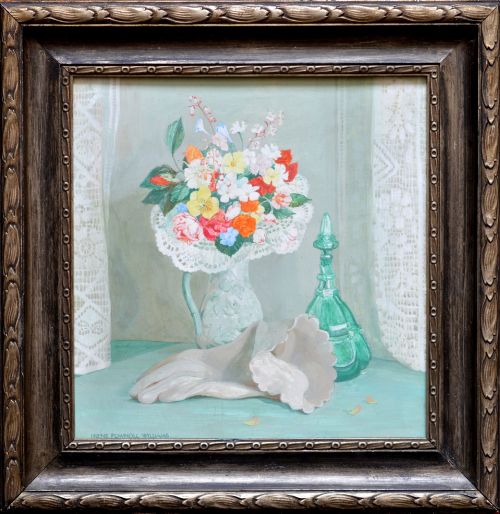
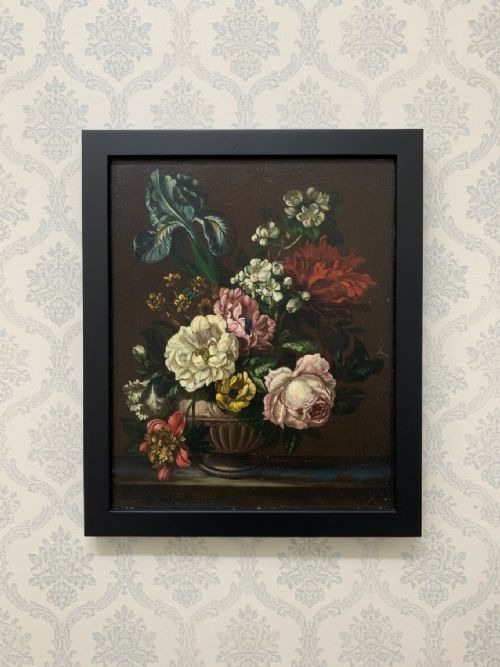
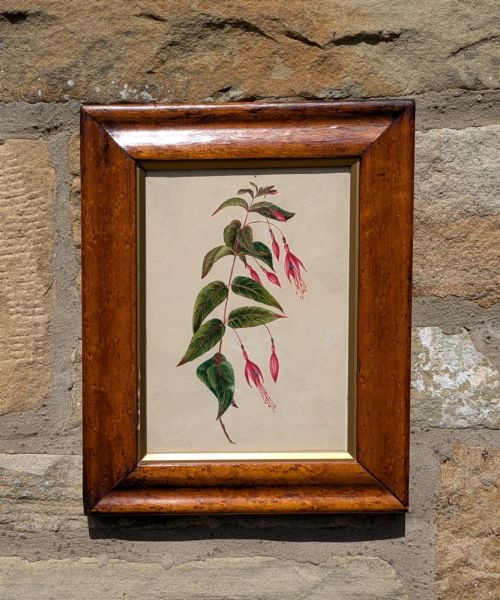
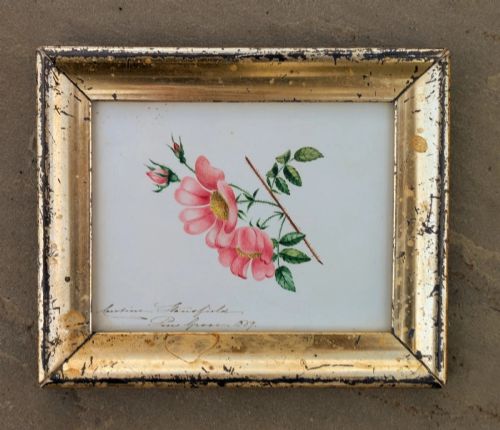
An antique framed flower study captures botanical specimens and floral arrangements across a span of centuries, reflecting changing tastes from Regency precision to mid-century looseness. The selection on this page ranges from delicate nineteenth-century watercolours and gouache studies to robust oil paintings on canvas and panel.
Buyers encounter everything from scientific botanical specimens to painterly still lifes executed by named British and European artists. Common forms include single species studies, pairs of floral watercolours, and framed prints set behind glass within original wood and gilt frames.
How They Were Made
Artists rendered these floral works on paper, canvas, silk, and wood panels using watercolour, gouache, oil paint, pastel, and tempera. Hand-coloured engravings also appear, combining printed line work with delicate washes of applied colour.
Framing typically involves wood and gilt wood moulding, often incorporating gold leaf to accent the artwork. Protective glass covers the paper and silk works, while oil paintings on canvas or panel remain unglazed.
Paper and canvas are the primary supports, complemented by wood panels and silk used in Asian and European decorative works.
What Varies in Quality
Quality rests upon the sureness of the hand and the accuracy of the botanical observation, distinguishing professional artists from amateur practitioners. The handling of light, colour saturation, and composition mark the difference between a standard decorative piece and a refined work of fine art.
The integrity of the framing also dictates overall quality, with period gilt wood frames enhancing the visual weight and historical context of the painting within. Works retaining their original association between artwork and frame command greater interest.
Irene Christobelle Pownoll Williams·D Hardy·William Watt Milne·Ernest Higgins Rigg·Grace Hastie·Marian Chase·L. Wilford·Pierre-Joseph Redouté·Charlotte Isa James·Alice Macallan Swan·Marion Broom·Annie Mary Youngman·M.K Rhodes·Owen Bowen·Kershaw Schofield·Minnie Smythe·George Dionysius Ehert·Olive Higginbottom
The Antique Framed Flower Study Glossary
- Watercolour
- A paint consisting of pigment suspended in a water-soluble binder, frequently utilised on paper for botanical studies.
- Gouache
- An opaque water-based medium that provides denser colour and heavier coverage than traditional watercolour.
- Gilt Wood
- Wood carved and coated with gold leaf or metallic gilt finish, standard for period picture frames.
- Still Life
- A painting or drawing depicting inanimate subject matter, most commonly floral arrangements in this category.
- Tempera
- A permanent, fast-drying painting medium consisting of coloured pigment mixed with a water-soluble binder.
Antique Framed Flower Study: Frequently Asked Questions
How should I hang my flower study?
Keep works on paper out of direct sunlight to prevent the watercolours and gouache pigments from fading over time.
Pair smaller botanical watercolours together on a wall to create a balanced display that echoes nineteenth-century grouping styles.
Are these works original paintings?
The selection includes original watercolours, oil paintings on canvas or panel, and gouache studies alongside hand-coloured historical engravings.
Checking the medium in the listing details will confirm whether a piece is a unique painted artwork or a print.
How do I date an antique painting?
Dating relies on stylistic markers, artist working periods, and the physical construction materials of the panel, canvas, and frame.
Victorian and Regency examples often display distinct paper watermarks, mounting styles, and handwritten inscriptions on the reverse.
What framing is typical for these?
Many pieces retain period wood frames, including gilt wood mouldings finished with gold leaf that complement the artwork.
Works on paper are traditionally mounted beneath glass, while oil paintings on canvas are left open to the room.