




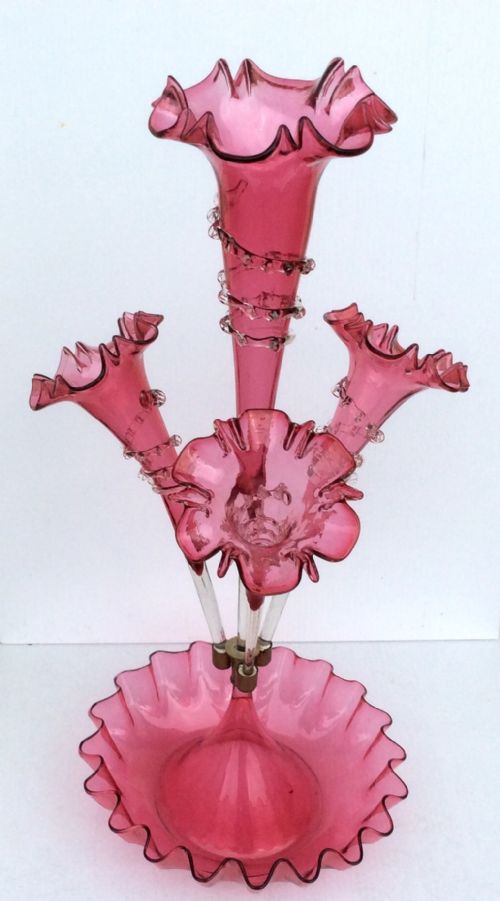
Antique Flower Epergne
An antique flower epergne brings the grand dining table to life, holding cut blossoms high in glass and metal.
Antique Flower Epergne
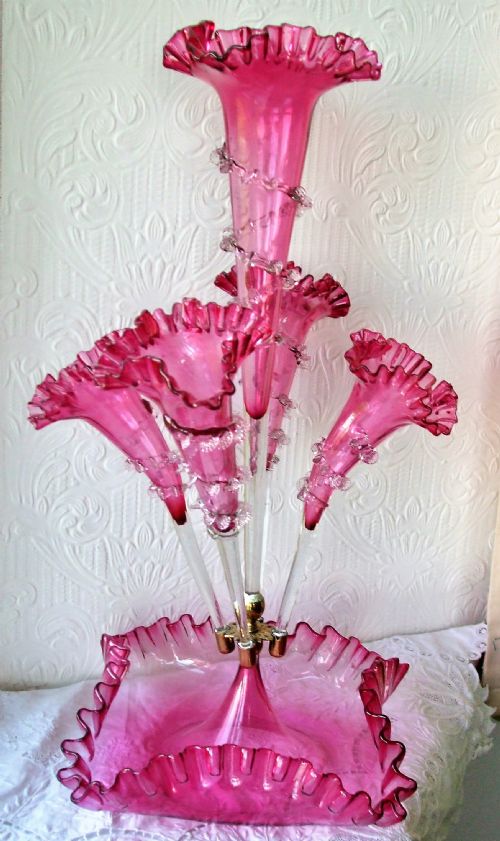
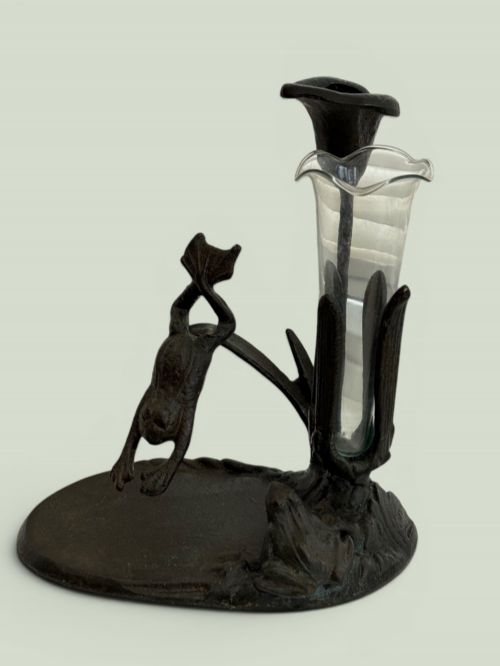
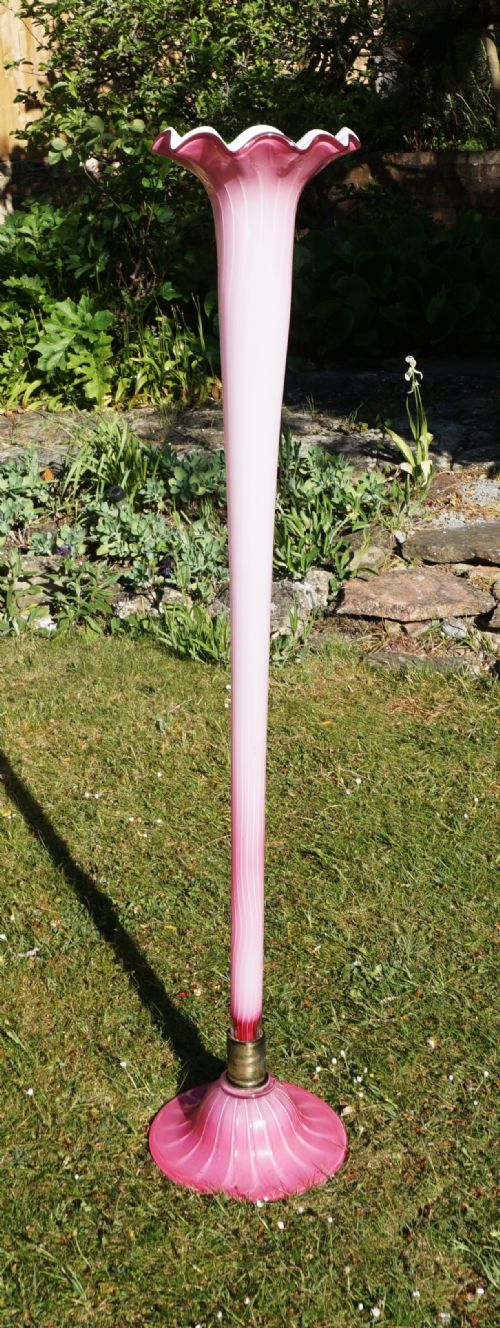
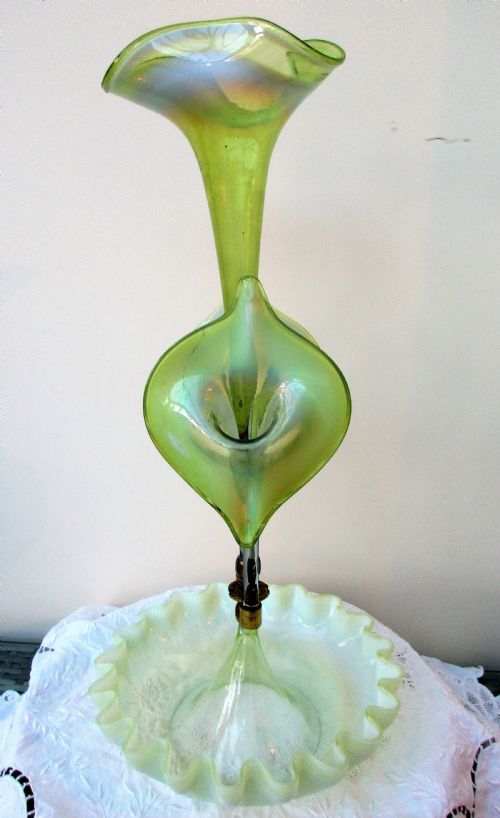
An antique flower epergne stands as a centrepiece designed to hold arrangements of cut flowers across multiple tiers or trumpets. These pieces emerge in various forms, from single trumpet vases to elaborate multi-flute table centrepieces with matching posy vases.
How they were made
Makers shaped glass into trumpets, flutes and lily vases using cranberry, vaseline, ruby, cased and clear glass, frequently adding etched or cut details. Molten metal or silver plate formed the sturdy bases and frames, while bronze and gilt bronze served grander French outputs.
Silver plated and sterling silver mounts secure the glass elements in place, occasionally combining with ceramics such as Royal Worcester pots. Metal components often feature cast ornamentation typical of the nineteenth century and subsequent decades.
Dining guests once had to peek around towering glass lily trumpets just to converse across the mutton.
What varies in quality
Quality rests in the weight and clarity of the glass, the depth of colour in cranberry or cased pieces, and the crispness of any metal casting. Superior examples maintain matched sets of trumpets or flutes that sit securely within their silver plated or bronze mounts.
The refinement of etched glass patterns and the substance of the silver plating or sterling silver base separate standard examples from exceptional ones. Maker attribution, such as work by Walker & Hall, further distinguishes particular pieces.
Walker & Hall·Royal Worcester
The Antique Flower Epergne Glossary
- Epergne
- A large table centrepiece featuring multiple branches or trumpets for holding fruit, sweetmeats or cut flowers. These objects dominated formal dining tables during the Victorian period.
- Cranberry Glass
- A rich red-pink transparent glass created by adding gold to the molten batch. It appears frequently in nineteenth century tablewares.
- Trumpet Vase
- A tall, flaring vessel shaped like a musical horn, commonly used as the central or subsidiary component of a multi-flute flower arrangement.
- Cased Glass
- Glass made from two or more distinct layers of different colours fused together whilst molten. This technique allowed makers to achieve striking contrast when cutting away the outer layer.
- Silver Plate
- A base metal coated with a thin layer of silver using electroplating or older techniques. This method provided the look of solid silver at a lower cost.
Antique Flower Epergne: Frequently Asked Questions
What is an antique flower epergne?
An antique flower epergne is a decorative table centrepiece featuring multiple glass flutes or trumpets mounted in metal or silver plate, designed for displaying cut flowers.
These grand table ornaments were widely used in formal dining rooms throughout the Victorian and Edwardian periods to elevate floral arrangements above the table surface.
How do I clean cranberry glass trumpets?
Clean cranberry glass trumpets gently in warm soapy water using a soft cloth, avoiding abrasive pads or harsh chemical cleaners that might damage the surface.
Take particular care when handling thin glass flutes and separate them from any silver plated or metal mounts before washing.
Were these pieces used for fruit?
Many large designs served a dual purpose, featuring a lower bowl for fruit or sweetmeats alongside upper trumpets for flowers.
Smaller examples focused entirely on floral displays as posy vases or dedicated table centrepieces.
How can I tell Victorian from Edwardian pieces?
Victorian examples often display heavy cranberry or vaseline glass with elaborate etched decoration and ornate silver plated mounts. Edwardian and later pieces frequently shift towards simpler sterling silver bases, clear glass flutes, or Art Nouveau fluid lines.