


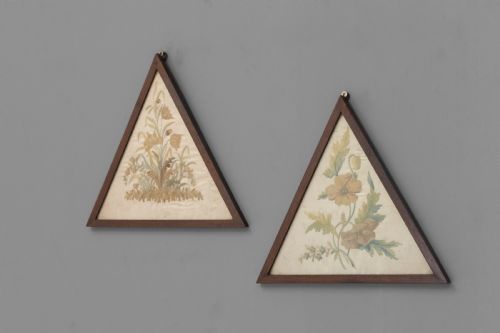


Antique Floral Wall Decor
Antique floral wall decor brings botanical colour and texture into rooms through centuries of oil paintings, embroidered panels and porcelain plates.
Antique Floral Wall Decor
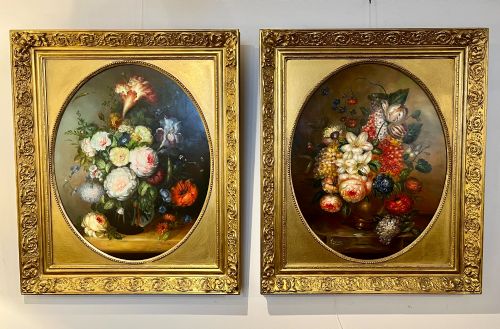
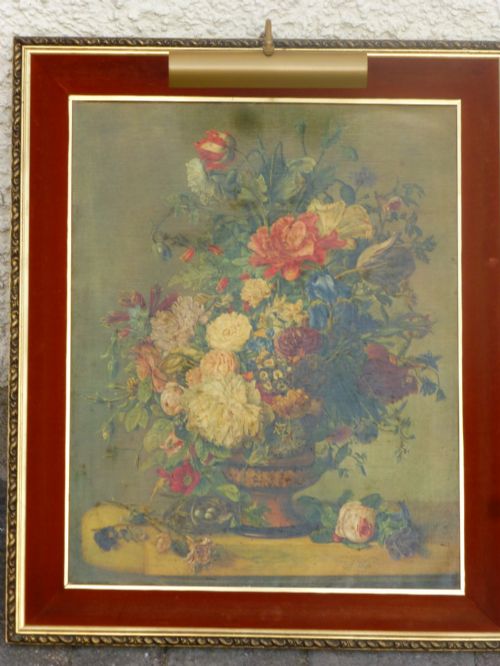
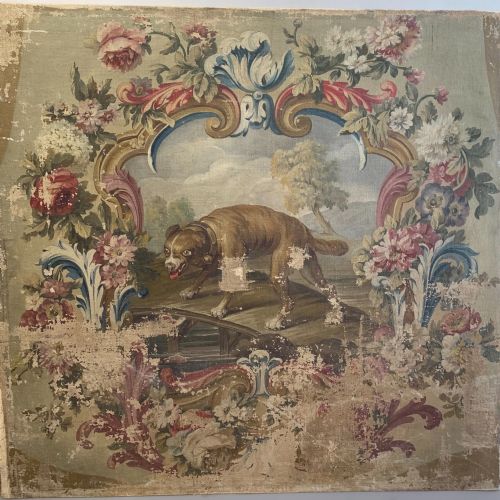
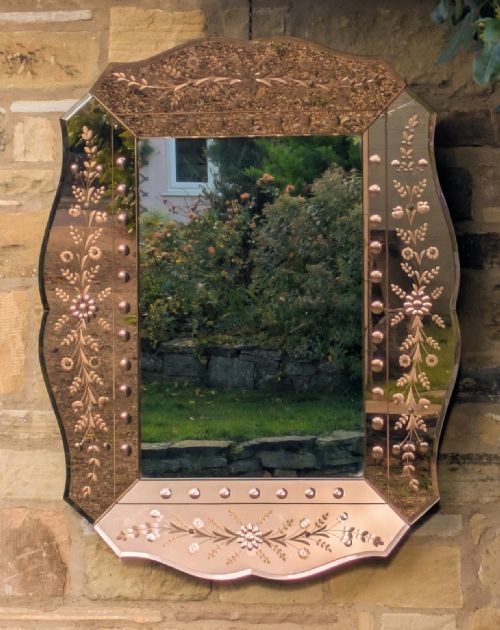
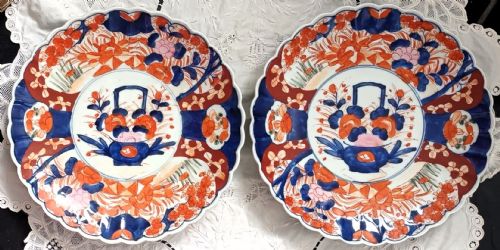
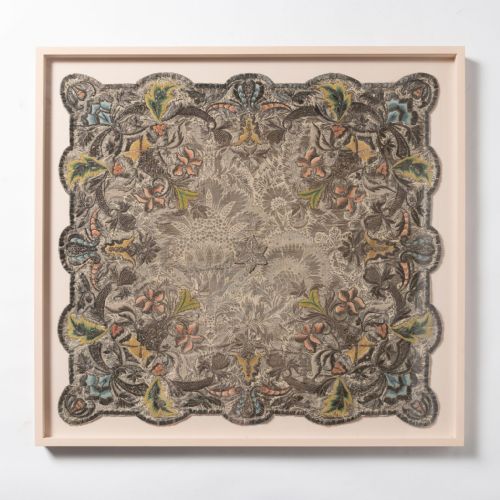
Antique floral wall decor encompasses a wide range of objects designed to adorn vertical surfaces with botanical motifs, spanning from the eighteenth century through to the early decades of the twentieth century. These pieces include framed oil paintings of still life arrangements, hand-carved wooden panels, Japanese Imari porcelain dishes, and delicate silk embroideries.
Origins stretch from European studios and French chateaux to Japanese workshops and Anglo-Indian centres, providing numerous stylistic interpretations of floral subjects. Whether mounted on porcelain, woven into silk, or painted on canvas, each object captures natural forms through historical materials and techniques.
Materials and construction
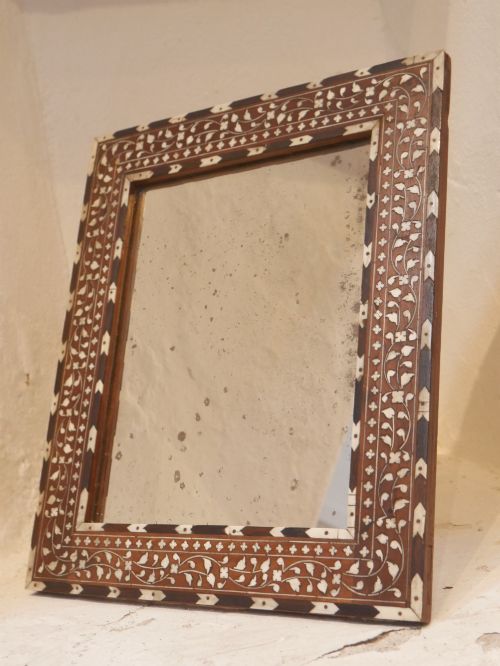
Makers utilised traditional mediums such as oil paint on canvas and wood, alongside porcelain, brass inlay, and carved gilded gesso. Textiles involve silk thread embroidered on ground fabrics, while mirrors combine glass and mirror glass set within wooden or metal frames.
Techniques range from hand-carving and gilding to detailed brushwork, needlework, and porcelain firing. The interaction of glass, pigment, metal, and thread defines the physical presence of these botanical works.
Materials represented include wood, silk, glass, porcelain, enamel, gilded wood, mirror glass, and oil paint.
Assessing quality and execution
Quality rests upon the precision of the handwork, whether in the fine brushstrokes of a still life oil painting, the crisp execution of a carved wooden panel, or the tight stitching of needlework and silk textiles. Finer pieces demonstrate superior control of composition, colour harmony, and material preservation.
The integrity of the original frame or mounting also influences the piece, as period gilded gesso frames and authentic settings preserve the historical context of the artwork. Superior examples maintain their structural stability and surface clarity without extensive intervention.
The Antique Floral Wall Decor Glossary
- Imari porcelain
- Japanese porcelain decorated in underglaze blue, iron red, gold, and supplementary colours, often featuring floral and botanical designs.
- Suzani
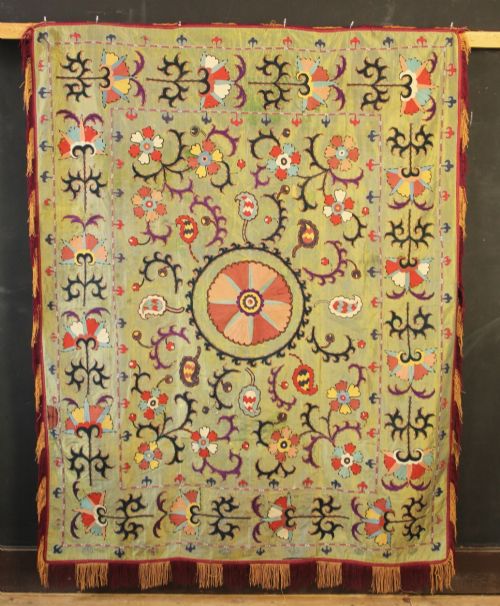
- A type of embroidered tribal textile originating from Central Asia, typically worked in silk on a cotton or linen ground with prominent floral motifs.
- Applique
- An ornamental needlework technique in which pieces of fabric are sewn onto a larger background to form a pattern or picture.
- Gesso
- A paint mixture consisting of a binder mixed with chalk, gypsum, or pigment, applied to wood to create a smooth surface for gilding or painting.
- Engraving
- A printmaking process where an image is incised into a metal plate, allowing the transfer of fine botanical illustrations onto paper.
Antique Floral Wall Decor: Frequently Asked Questions
How do I hang antique textile panels safely?
Textile panels require even support across their entire back rather than single suspension points, often utilising conservation-grade mounting onto padded boards covered in neutral fabric.
Direct sunlight causes fading in silk threads and oil pigments, so placement away from windows preserves the colour and structural integrity of the piece over time.
Are Imari plates suitable for hanging on walls?
Plates designed for display often include manufacturer piercings on the foot ring or are mounted using brass spring hangers that distribute weight evenly across the rim.
Careful installation ensures the ceramic remains secure against the wall while protecting the glaze and hand-painted decoration from accidental impact.
How do I identify the period of a floral oil painting?
Stylistic clues such as the handling of pigment, the subject arrangement, and the composition style offer primary indications of age, ranging from eighteenth-century classical conventions to early twentieth-century modernist approaches.
The backing materials, stretcher construction, and framing techniques provide secondary evidence that helps narrow down the decade of creation.
What is the difference between a suzani and an embroidery?
Suzanis are specifically large, tribal embroidered wall hangings or covers from Central Asia worked in distinctive silk chain stitches, whereas general embroideries encompass a broader global range of needlework styles.
Both utilise floral and garden motifs, but suzanis follow particular regional botanical layouts distinct from European needlework pictures.