
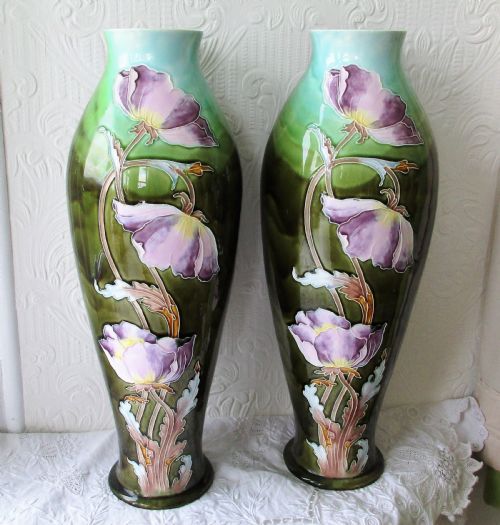
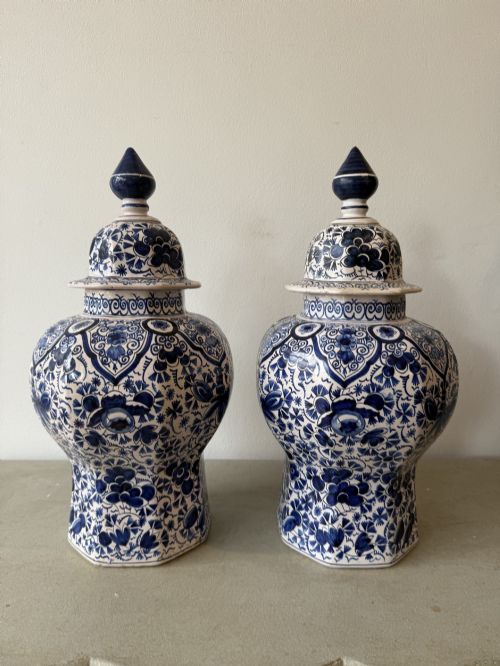
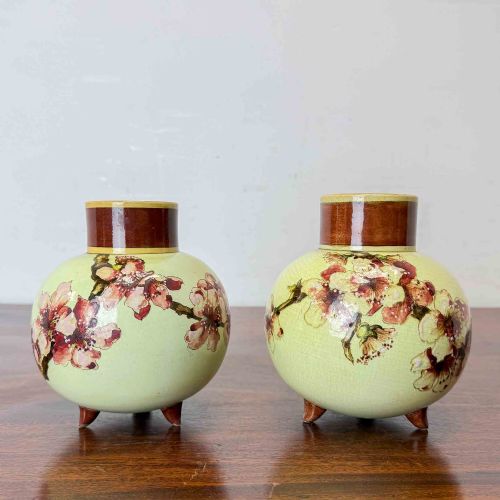
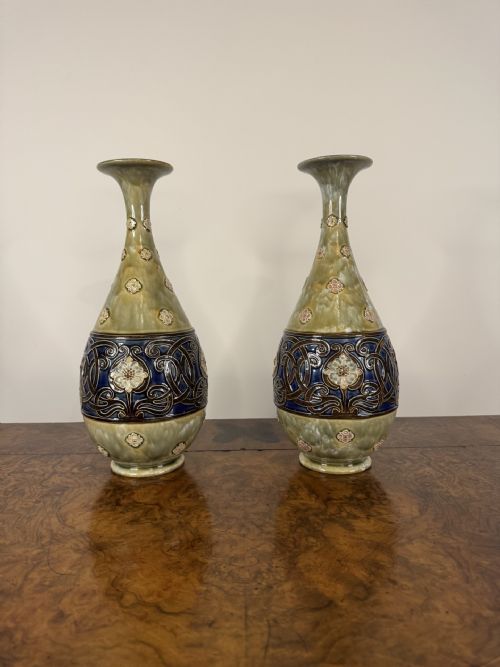
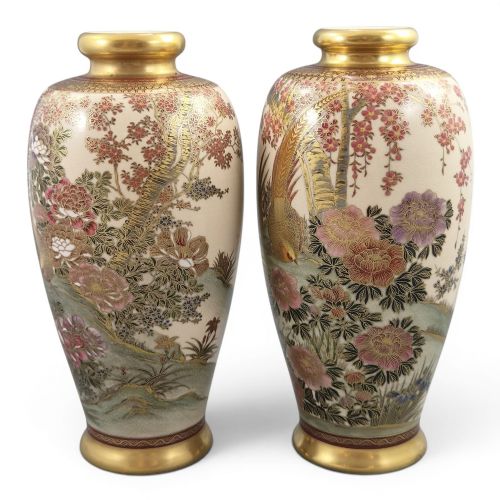


Antique Floral Pottery Pair
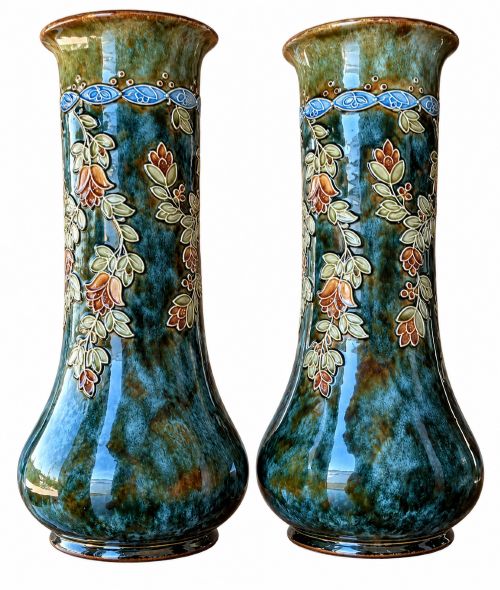
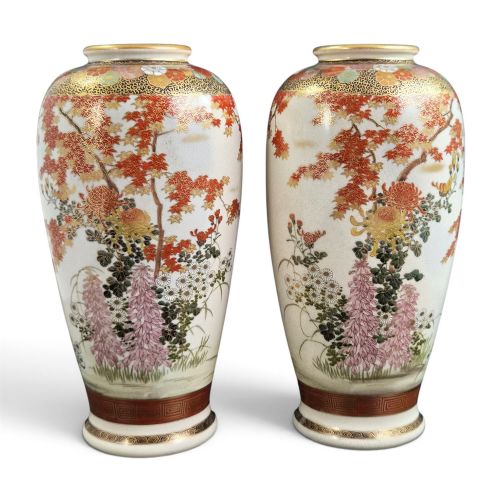
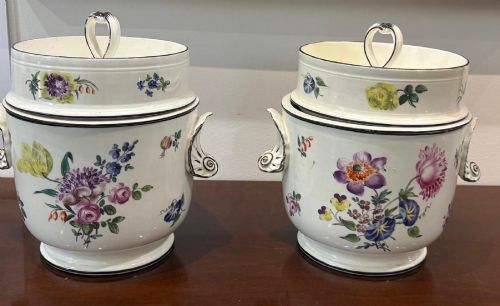
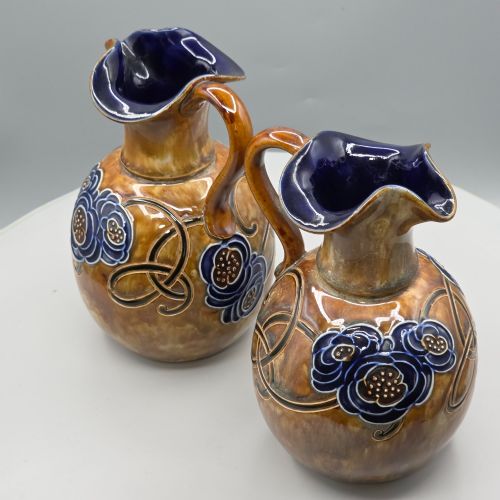
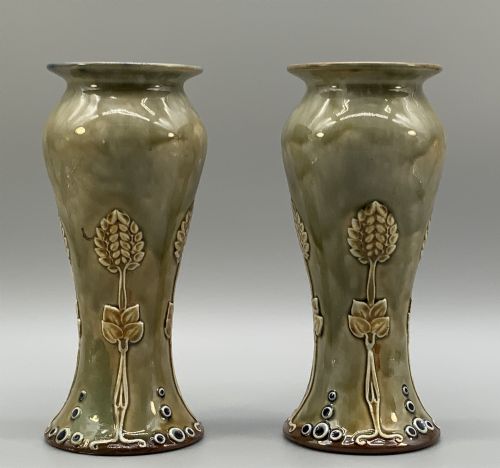
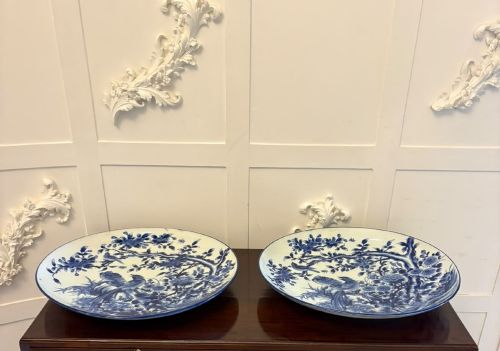
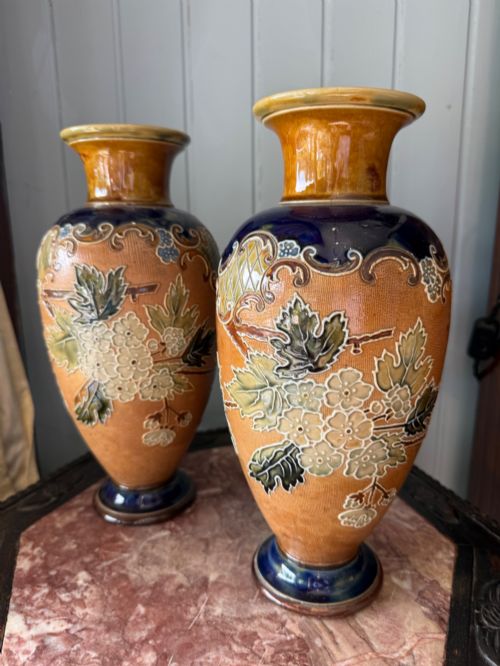
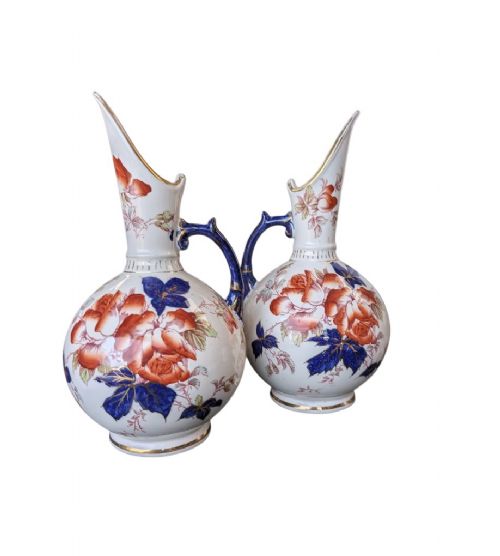
When you search for an antique floral pottery pair, you find matched sets of ceramic vessels carrying botanical decoration.
Antique Floral Pottery Pair
An antique floral pottery pair consists of dual vessels created to display together, decorated with plant or flower motifs. These objects appear in forms ranging from tall vases and ewers to decorative plates and ice pails.
The selections span various global traditions, with English stoneware and creamware sitting alongside Japanese Satsuma and Imari pieces. Pieces from the nineteenth and early twentieth centuries dominate the selection, often carrying the aesthetic hallmarks of the Art Nouveau and Arts and Crafts movements.
Makers utilise standard pottery and porcelain bodies, applying glazes, enamels, and sometimes gold leaf to render floral patterns. Buyers encounter everything from simple blue and white delftware jugs to elaborately painted exhibition pieces.
How they were made
Potters shaped these vessels using earthenware, stoneware, or porcelain bodies, often throwing them on a wheel or forming them in moulds. Artisans then applied tin glazes, salt glazes, or enamel colours before firing the pieces in kilns.
Decorative techniques involved hand-painting floral subjects directly onto the ceramic surface, sometimes supplementing the design with raised slip, enamel, or gold leaf accents. Stoneware pieces frequently incorporated incised or textured patterns into the clay body prior to glazing.
Certain Japanese Satsuma vases carry hidden mon crests that quietly whisper of historic samurai lineages.
What varies in quality
The precision and detail of the hand-painted floral decoration distinguish standard production items from superior works. Exhibition pieces exhibit meticulous brushwork and balanced compositions across both vessels of the pair.
The refinement of the ceramic body and the depth of the glaze application also determine the tier of the piece. Superior examples display crisp moulding, rich enamel saturation, and harmonious integration between the form and the botanical motif.
Royal Doulton·Doulton Lambeth·Maruni Kobe·Manpei·TG Green·Minton·Hakusan·Tagawa·Kinkozan·Hododa·Ernst Wahliss·Mason
The Antique Floral Pottery Pair Glossary
- Stoneware
- A dense, vitreous pottery fired at high temperatures until non-porous. It accepts rich glazes and incised decoration readily.
- Satsuma
- A type of Japanese earthenware featuring a ivory craquelure glaze decorated with polychrome enamels and gilding. These wares were heavily produced for export during the Meiji period.
- Imari
- A style of Japanese porcelain decorated in underglaze blue and contrasting overglaze colours like iron red and gold. The palette remains distinct and highly decorative.
- Faience
- European tin-glazed earthenware related to delftware. It provides an opaque white background suitable for painted floral scenes.
- Baluster
- A vertical architectural form featuring a rounded body swelling above a narrow base. Many tall vases adopt this balanced silhouette.
Antique Floral Pottery Pair: Frequently Asked Questions
What defines an antique floral pottery pair?
These items comprise two matching ceramic vessels decorated with botanical motifs. They are designed to sit symmetrically as a decorative set.
The selection includes vases, plates, jugs, and ewers created across the nineteenth and early twentieth centuries by various European and Asian potteries.
How were these pairs used historically?
Owners placed these dual vessels on mantelpieces, sideboards, or dining tables for pure decoration. Some forms, such as ice pails or posy vases, served functional roles during dining and entertaining.
Larger chargers and decorative plates were typically displayed on walls or stands to showcase intricate painted floral scenes.
How do I care for antique pottery pairs?
Keep these ceramic vessels away from direct sunlight to prevent fading of delicate overglaze enamels and gold leaf. Dust them gently with a soft, dry cloth.
Avoid using water or cleaning solutions on pieces with vulnerable surface decorations or craquelure glazes.
How do I distinguish between periods?
Stylistic indicators help separate eras, such as organic flowing lines for Art Nouveau items or dense geometric patterning for Arts and Crafts pieces. Maker marks, registry numbers, and regional ceramic properties also anchor items to specific decades.
Japanese pieces often correspond to imperial periods like the Meiji era, identifiable through specific artist signatures and traditional motifs.