


Antique Floral Oil Lamp
An antique floral oil lamp brings glowing warmth and decorative colour into a room, combining period craft with practical lighting.
Antique Floral Oil Lamp
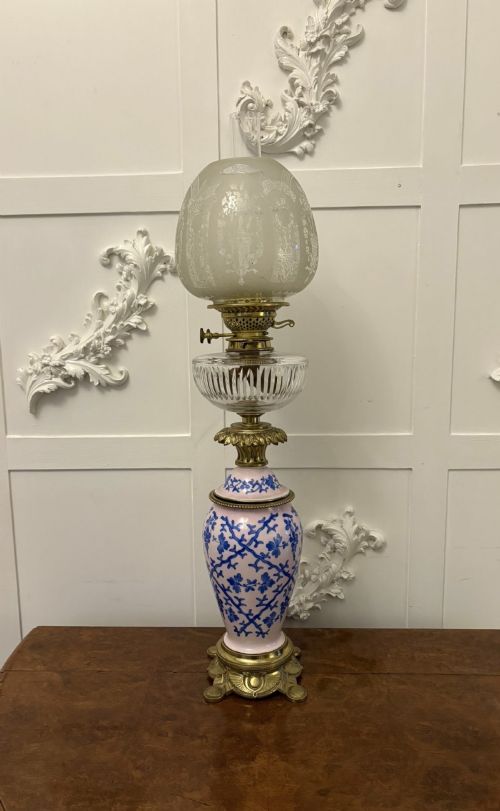
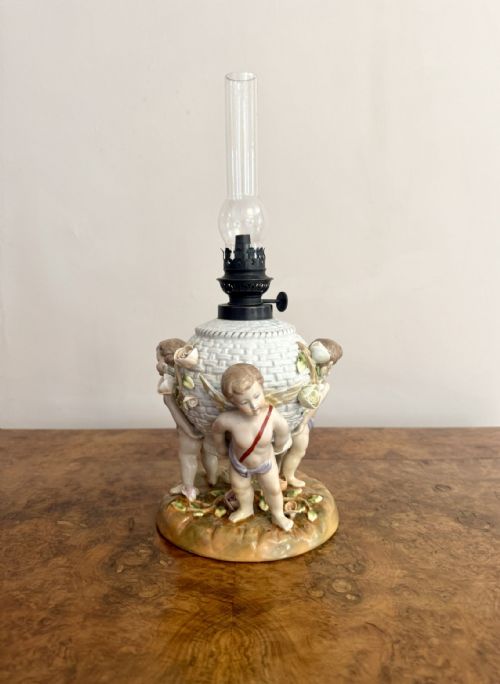
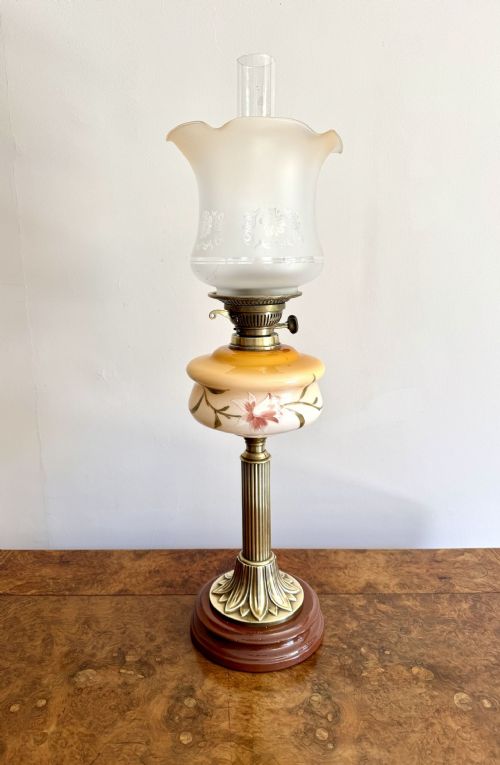
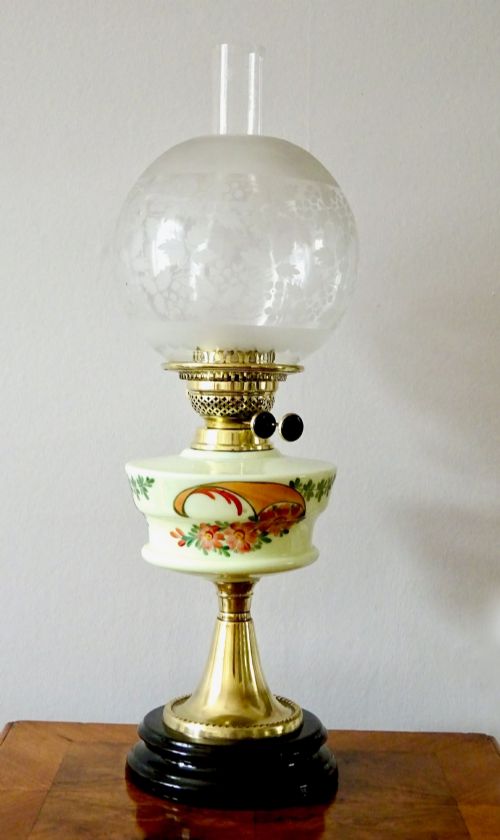
An antique floral oil lamp is a domestic lighting fixture designed to burn paraffin or oil, typically featuring botanical motifs painted on porcelain, ceramic, or glass. These pieces span the Victorian and Edwardian eras, with many examples originating from the nineteenth century.
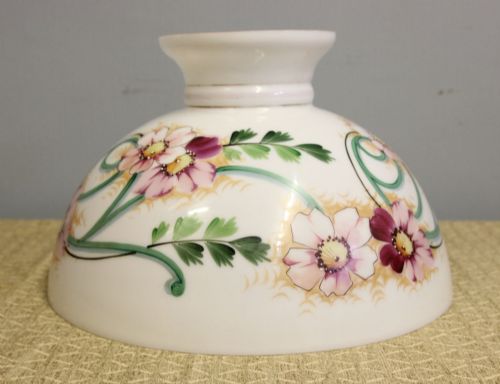
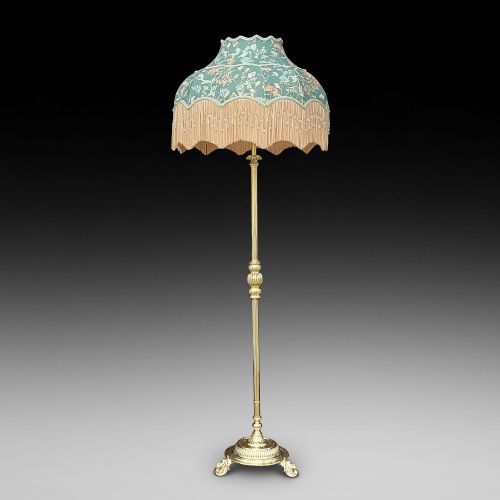
You will encounter various formats on this page, ranging from table lamps and floor standards to hanging shades and individual glass globes. The floral decoration appears hand-painted on fonts, bodies, and shades alike.
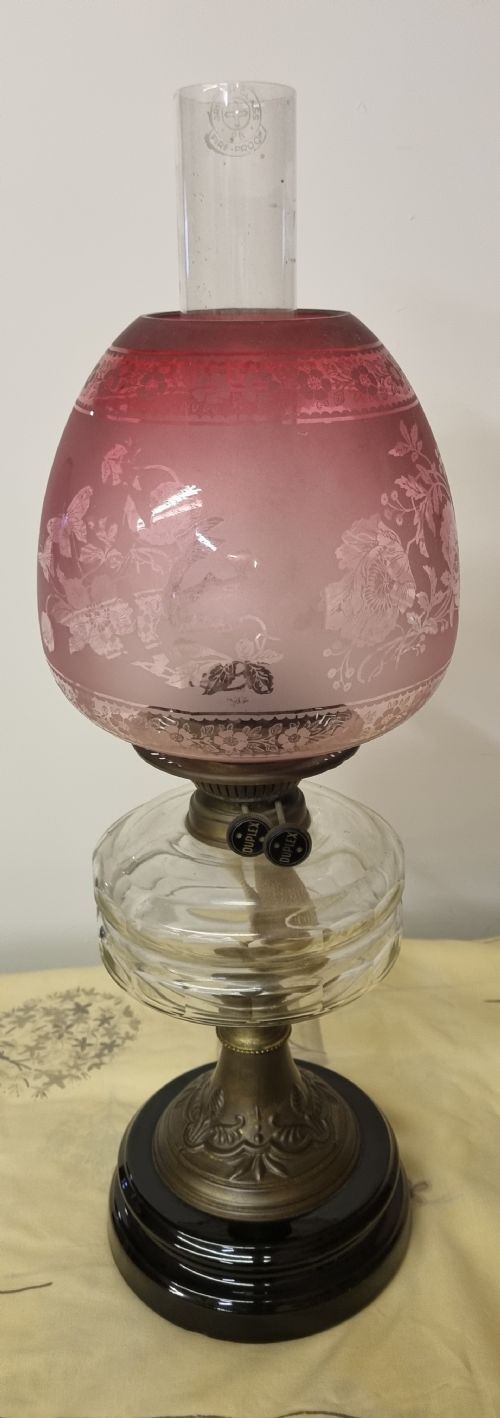
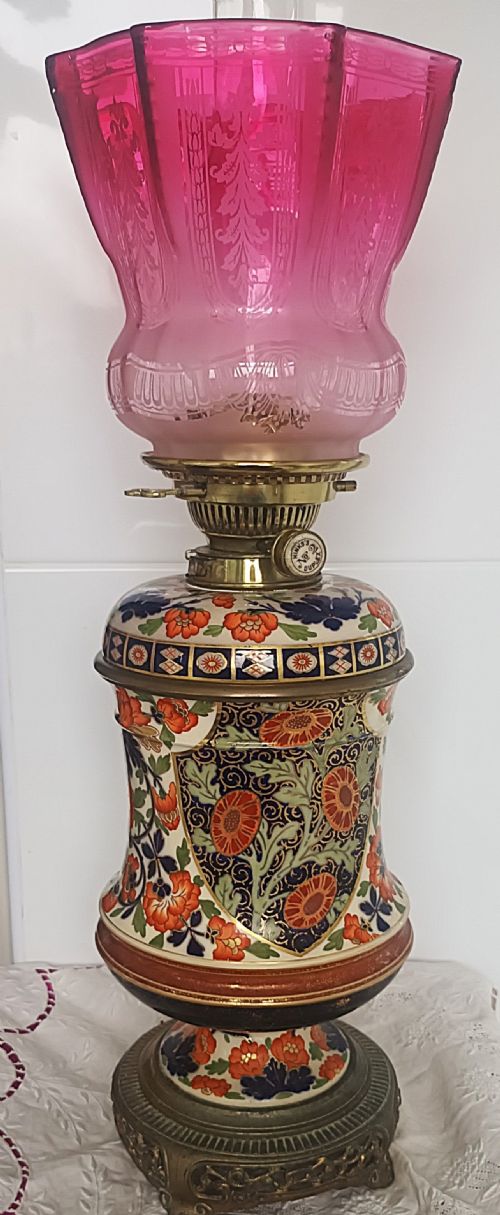
The materials vary from porcelain and ceramic to brass and bronze, often paired with cranberry, opaline, or green glass. Styles shift from Victorian Rococo Revival and Chinoiserie to Art Nouveau and Edwardian designs.
How they were made
The construction of an antique floral oil lamp relies on combining worked metal, blown glass, and fired ceramic or porcelain. Bases and standards utilise cast brass or bronze, providing a sturdy footing for the fuel reservoir.
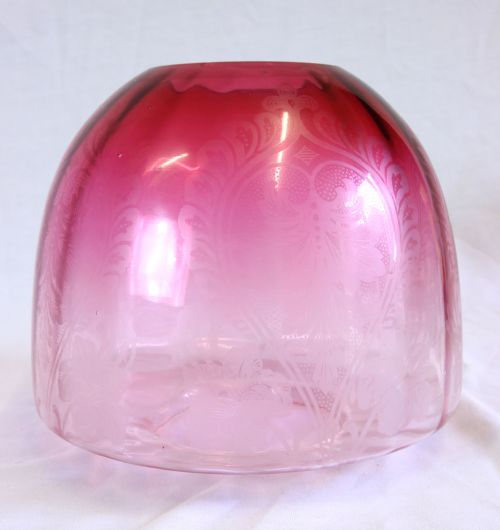
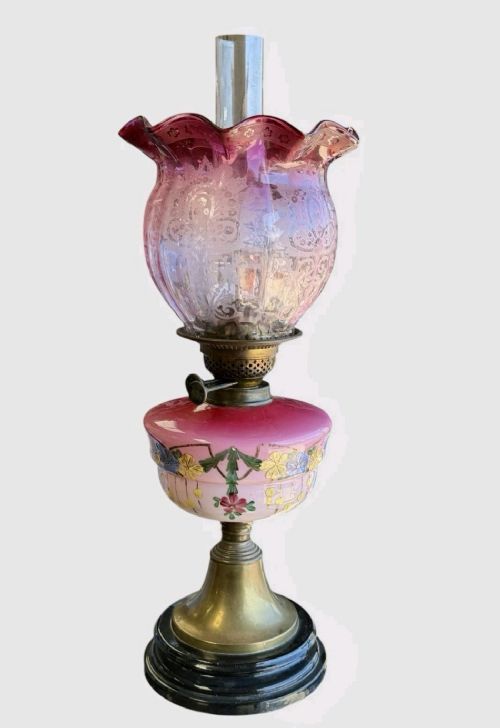
Fonts and shades display hand-painted enamel and floral motifs applied directly to the ceramic or glass surface before firing. Glass components include cranberry, opaline, etched, and crystal varieties, sometimes shaped into frilled or tulip profiles.
Some nineteenth-century shades feature ruffled edges designed to catch the flickering glow of the flame just so.
What varies in quality
Quality in an antique floral oil lamp rests on the crispness of the metal casting and the artistry of the hand-painted botanical details. Finer examples exhibit intricate modelling in the brass or porcelain body alongside finely shaded, detailed floral decoration.
The integration of materials also defines the better pieces, where matching glass shades, hand-painted fonts, and solid metal standards form a cohesive whole. The weight of the metal and the depth of colour in the glass distinguish superior items.
Sitzendorf·Hinks·Taylor Tunnicliff
The Antique Floral Oil Lamp Glossary
- Font
- The reservoir that holds the oil or paraffin beneath the burner. This part often carries the primary floral painted decoration.
- Standard
- The tall central column or pedestal supporting the lamp body and burner above the base. These are frequently cast in brass.
- Opaline glass
- A pale, translucent white glass that diffuses the light softly. It provides a smooth background for painted floral scenes.
- Faience
- Tin-glazed earthenware decorated with coloured pigments. It appears in several nineteenth-century European table lamp designs.
- Frilled shade
- A glass lamp shade with a ruffled or crimped edge, common on Victorian cranberry and green glass globes.
Antique Floral Oil Lamp: Frequently Asked Questions
How do I date an antique floral oil lamp?
Dating relies on examining the materials, burner mechanisms, and stylistic clues such as Victorian Rococo Revival or Art Nouveau curves. The presence of hand-painted porcelain and specific glass types like cranberry or opaline typically points towards the nineteenth century.
Maker marks stamped onto the brass burners or ceramic bases can also help narrow down the decade of manufacture.
What is the difference between a table lamp and a standard?
A table lamp is shorter and designed to sit directly upon a piece of furniture, featuring a compact font and shade. A standard refers to a taller floor lamp version that stands independently on the ground.
Standards often include adjustable brass columns to alter the height of the light source.
How should I clean my antique oil lamp?
Dust metal and glass components gently with a soft, dry cloth to preserve painted floral surfaces. Avoid harsh chemical cleaners that can damage hand-painted enamel or aged brass patina.
Glass shades can sometimes be washed in lukewarm water with mild soap, provided they are dried completely before reassembly.