

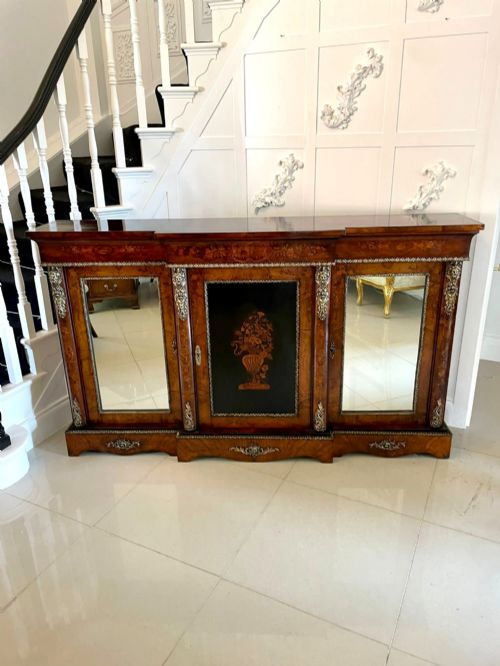
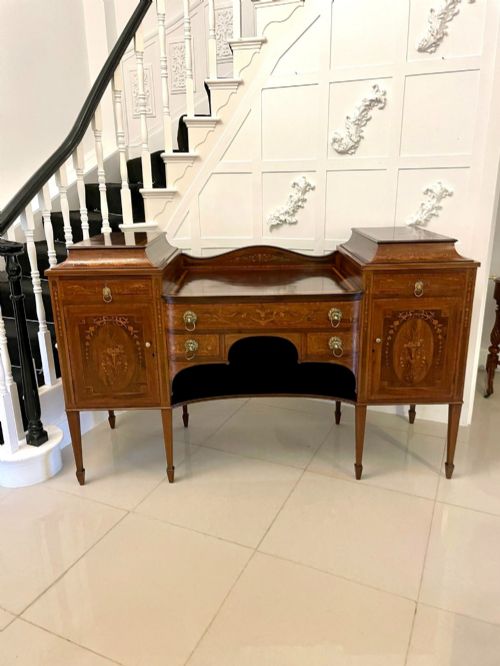
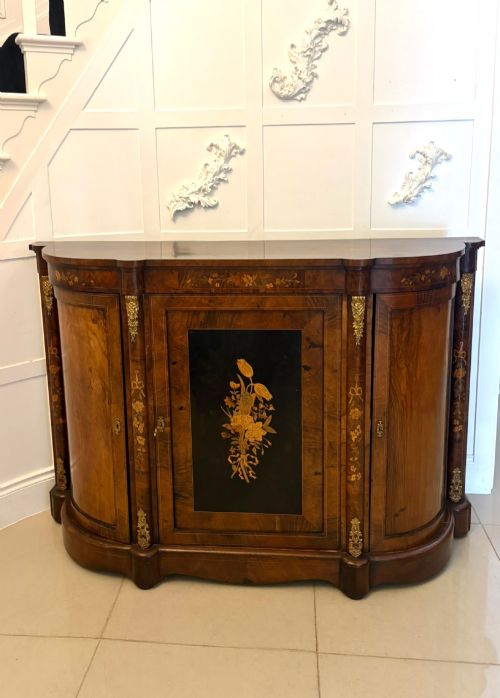


Antique Floral Marquetry Buffet
An antique floral marquetry buffet brings intricate wood-inlaid botanical artistry and grand storage to a room.
Antique Floral Marquetry Buffet
When you search for an antique floral marquetry buffet, you encounter large storage furniture including sideboards, side cabinets, credenzas, and dumb waiters designed for display and utility. These forms originate across the eighteenth, nineteenth, and early twentieth centuries, spanning Victorian, Edwardian, and various continental revival styles.
How they were made
Cabinetmakers constructed these pieces using solid and veneered timbers such as walnut, burr walnut, and mahogany, applying precision cutting techniques to assemble delicate pictorial marquetry. Artisans inlaid contrasting woods to form floral motifs, securing the intricate veneers to sturdy carcases.
Many examples incorporate cast or chased ormolu and gilt bronze mounts, alongside polished marble tops and glazed compartments. Brass details and fine edge-banding complete the construction, combining structural cabinetry with decorative surface ornamentation.
Antique Floral Marquetry Buffet Retail Price Guide 2026
Typical asking prices for floral marquetry buffet among the pieces listed under this phrase on Sellingantiques today, from the lower quarter to the upper quarter. They describe what is for sale here now, not the wider market.
The furniture spans Georgian, Victorian, Edwardian, and continental revival periods.
What varies in quality
The sophistication of the timber selection and the precision of the marquetry define the upper tier of these pieces. Highly figured burr walnut and rich mahogany provide a superior ground for the floral inlay compared to plainer domestic timbers.
Integration of secondary materials like heavy marble slabs, finely chased ormolu mounts, and robust internal cabinetry separates standard utility furniture from exceptional showroom commissions. The crispness of the botanical cutting and the harmony of the timber grain determine the overall success of the design.
Hewetsons London
The Antique Floral Marquetry Buffet Glossary
- Marquetry
- The art of applying small pieces of veneer to a structure to form decorative patterns or pictorial scenes. This technique defines the floral surface decoration characteristic of these cabinets.
- Credenza
- A sideboard or display cabinet originally developed in Italy and widely adopted in nineteenth-century formal interiors. These pieces typically feature glazed doors or central cupboards flanked by curved compartments.
- Ormolu
- Gilt bronze mounts applied to furniture for decorative enrichment and edge protection. Makers used these metallic elements to highlight architectural breaks and corners.
- Burr walnut
- Timber taken from walnut tree growths that produces swirling, highly figured grain patterns. Cabinetmakers valued this material for its dramatic visual texture.
- Dumb waiter
- A tiered serving piece designed to hold dishes or glassware without requiring servant attendance during meals. Eighteenth-century examples utilise rotating or stacked trays supported on central columns.
Antique Floral Marquetry Buffet: Frequently Asked Questions
Where should I place a marquetry buffet?
These substantial pieces anchor dining rooms, grand hallways, or living spaces where their surface inlay can be appreciated. Position them away from direct sunlight and excessive heat sources to protect the delicate wood veneers.
Ensure adequate clearance for doors and drawers to open fully, allowing the internal shelving to be used for storage or display.
How do I clean floral marquetry surfaces?
Dust the timber regularly with a soft, dry cloth to prevent particulate accumulation in the grain and inlay joints. Avoid modern liquid polishes, silicone sprays, and damp cloths that can penetrate the veneer adhesives.
Consult a professional restorer for periodic waxing using traditional beeswax formulations to nourish the historic timber finishes safely.
Are these buffets suitable for daily use?
These sturdy nineteenth and early twentieth-century cabinets offer robust internal storage for dinnerware, linens, or dry goods. Their solid wood construction handles everyday household items reliably when treated with standard care.
Protect marble tops from acidic spills and heavy impacts to preserve the polished stone surfaces over decades of domestic habitation.
How do I distinguish French and English styles?
French pieces often display neoclassical or revival proportions accompanied by extensive ormolu mounts and shaped marble tops. English examples typically favour substantial walnut or mahogany carcases with disciplined geometric framing and floral inlays. Nooks, timber selection, and hardware choices offer further clues to the regional workshop traditions behind each specific cabinet.