


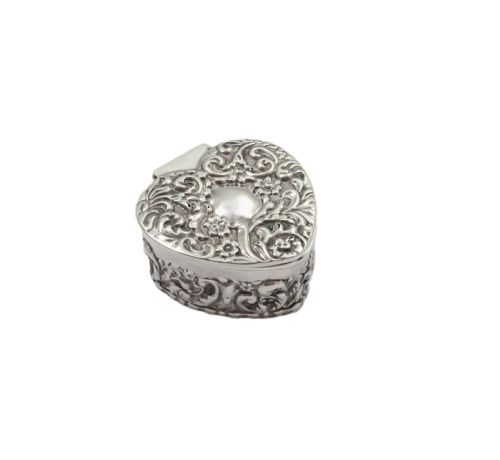


Antique Floral Jewellery Box
An antique floral jewellery box holds personal treasures inside botanical motifs worked in wood, silver, lacquer, or metal.
Antique Floral Jewellery Box
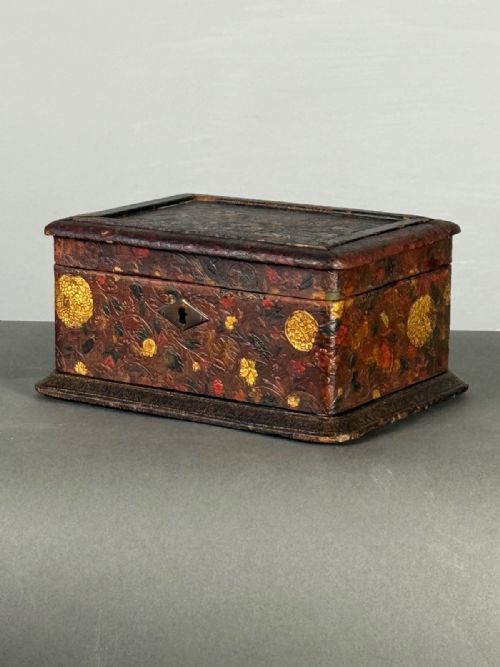
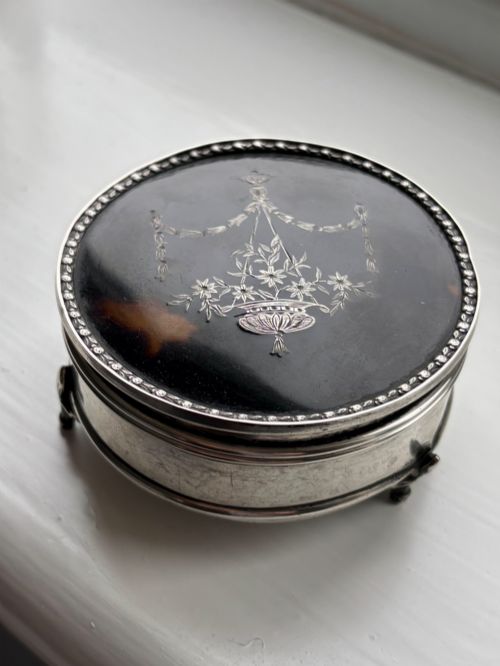
An antique floral jewellery box brings botanical motifs into daily storage, appearing across periods from the Regency era through the Edwardian years. These receptacles range from small tabletop trinket cases to larger fitted cabinets lined for keeping precious items.
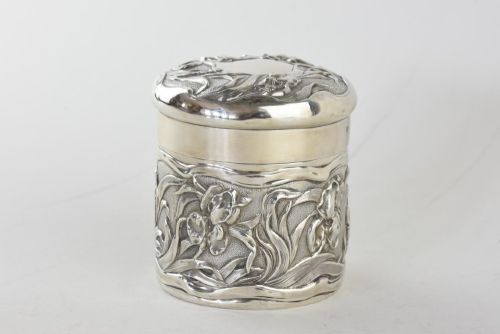
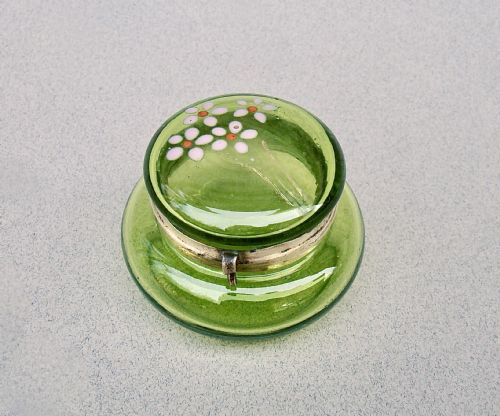
The varieties most often met combine utilitarian storage with decorative artistry, manifesting as silver caskets, inlaid wooden boxes, and lacquered pieces. Makers utilised materials such as rosewood, brass, glass, and sterling silver to render floral patterns upon the lid or panels.
Materials and Construction
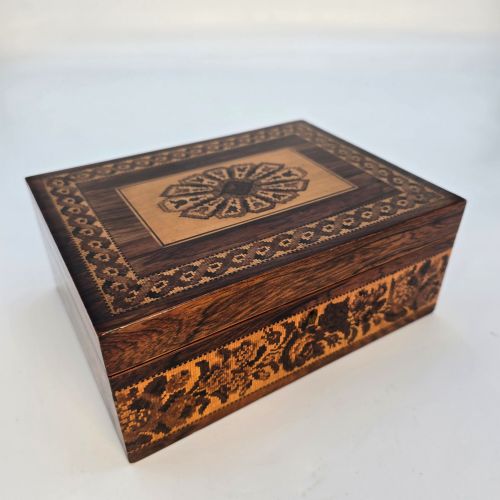
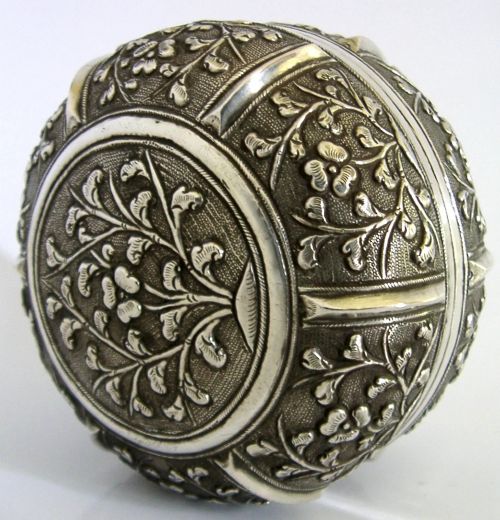
Craftsmen built these containers using robust woods like oak and rosewood, frequently applying intricate marquetry, penwork, or Tunbridge Ware wood mosaics to form the floral designs. Metalworking techniques such as repoussé, casting, and cloisonné enamel brought raised floral reliefs and coloured botanical details to silver, copper, and bronze caskets.
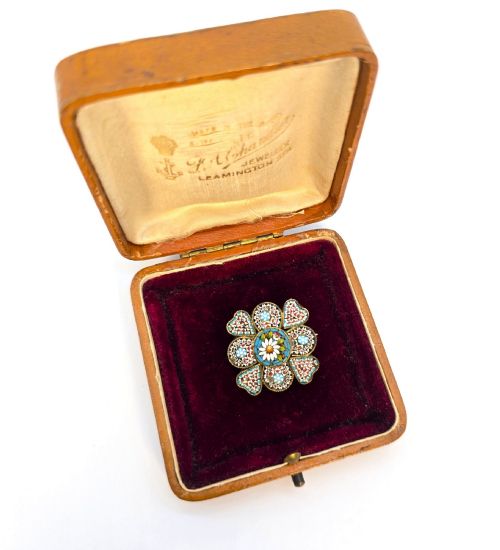
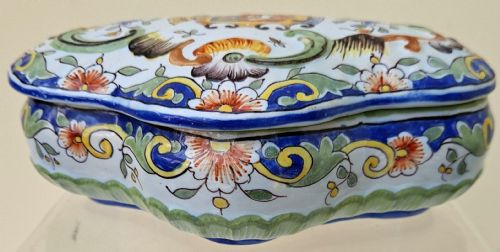
Surface decoration often involved specialised applications including lacquer, porcelain panels, micro-mosaics, and pietra dura stone inlay. These diverse mediums allowed artisans to depict floral subjects with varying degrees of texture and polychromatic depth.
Markers of Distinction
The division between standard production and exceptional work rests upon the precision of the botanical execution and the integrity of the materials. Pieces exhibiting hand-chased metal relief, complex multi-wood marquetry, or finely detailed micro-mosaics represent superior craftsmanship.
Internal fittings, original linings, and the seamless integration of decorative panels into the structural wood or metal further elevate the standing of a box. Superior examples maintain crisp definition in their floral motifs without excessive wear to the underlying substrate.
Susse Freres Paris·Ollivant and Botsford·Goldsmiths and Silversmiths Company·Edmund Nye·S Theeman
The Antique Floral Jewellery Box Glossary
- Marquetry
- The art of applying pieces of veneer to a structure to form decorative patterns. Floral motifs in wood boxes often utilise contrasting timber shades.
- Repoussé
- A metalworking technique where a design is hammered into relief from the reverse side. Silver and copper boxes frequently employ this method for raised floral decoration.
- Pietra dura
- The inlay of cut and fitted polished coloured stones to create pictures. This technique appears on stone-mounted wooden boxes.
- Tunbridge Ware
- Woodworking characterised by minuscule mosaic tiles forming pictorial designs. Boxes from specific English makers use this method to depict flowers.
- Cloisonné
- Enamelling technique where metal wire is soldered to a base to form compartments filled with paste. Japanese examples apply this to floral jewellery boxes.
Antique Floral Jewellery Box: Frequently Asked Questions
What periods do these floral boxes come from?
The pieces span multiple eras, beginning around the Regency period and continuing through the Victorian and Edwardian decades into the early twentieth century.
Craftsmanship reflects the prevailing aesthetic of each decade, shifting from penwork and Tunbridge Ware to Art Nouveau metalwork and Japanese cloisonné.
How were these decorative boxes used?
Owners kept small personal valuables, rings, brooches, and keepsakes inside these containers upon dressing tables or cabinets.
Larger versions functioned as table cabinets or fitted jewellery caskets designed to secure a lady's daily adornments.
What materials are typical for floral boxes?
Construction relies heavily on timbers such as rosewood, boxwood, and oak, frequently paired with sterling silver, brass, or copper.
Surface ornamentation incorporates glass, lacquer, porcelain, enamel, and pietra dura stone to realise the floral themes.
How do I identify different styles?
Victorian and Regency examples often feature intricate wood marquetry, penwork, or paper-mache constructions with floral painted or inlaid scenes.
Edwardian and later pieces frequently utilise sterling silver with repoussé botanical decoration or Asian cloisonné enamel work.