







Antique Floral Figurine
An antique floral figurine brings the charm of natural gardens into the home through sculpted porcelain and delicate painted blooms.
Antique Floral Figurine
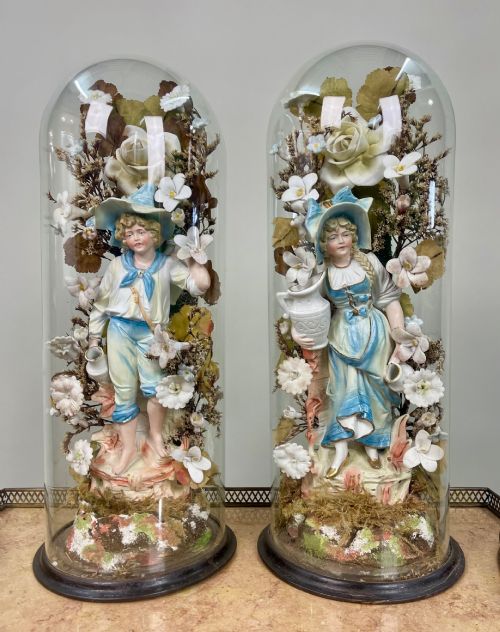
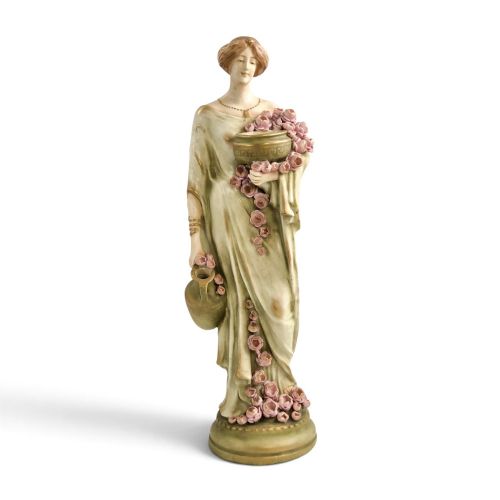
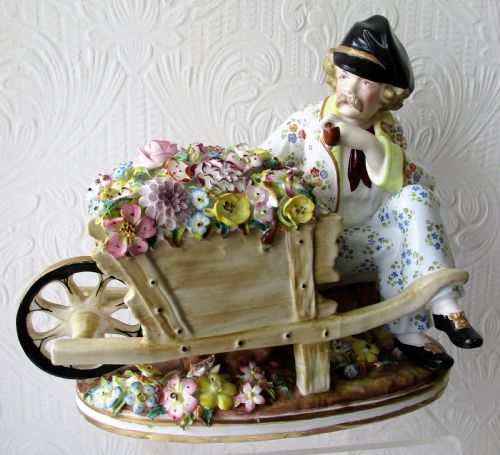
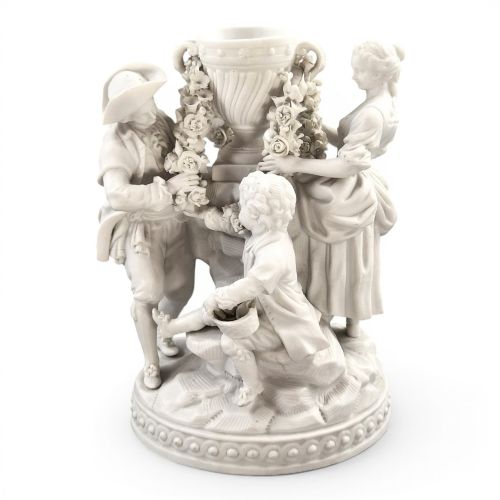
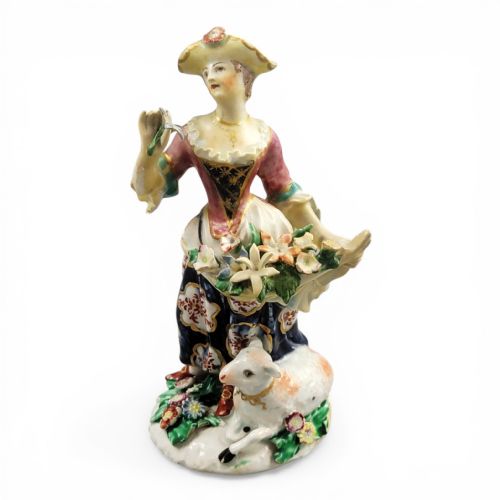
The antique floral figurine category encompasses sculpted ceramic figures intertwined with delicate petals, blossoming garlands, and natural foliage. These pieces capture botanical motifs alongside human figures, animals, and mythological subjects, reflecting centuries of European craftsmanship.
Buyers will most frequently encounter nineteenth-century Continental porcelain works on this page, alongside earlier Georgian and Regency period figures. Forms range from standalone figures holding flowers to complex figural candlesticks and decorative groups set among ceramic shrubbery.
The selection also spans diverse aesthetics, touching upon Rococo revival curves, ornate Victorian detailing, and later Art Nouveau styling. These objects served primarily as interior ornament for drawing rooms and mantelpieces, prized for their colourful presence.
Materials and Techniques
Makers primarily utilised fine porcelain and biscuit porcelain, shaping clay bodies through intricate mould work and hand modelling. Artisans built individual ceramic petals and leaves by hand before attaching them to the main body prior to firing.
Surface decoration relied upon enamel glazes, applied colours, and touches of gold leaf or gilding to highlight garments and botanical details. Some pieces incorporate bronze or glass elements, complementing the primary ceramic medium with mixed materials.
Antique Floral Figurine Retail Price Guide 2026
Typical asking prices for floral figurine among the pieces listed under this phrase on Sellingantiques today, from the lower quarter to the upper quarter. They describe what is for sale here now, not the wider market.
Listings feature porcelain, bronze, and terracotta sculptures alongside glass decanters and oil paintings.
Assessing Quality
Quality rests heavily upon the delicacy and preservation of the applied floral elements, as hand-modelled petals demand immense skill to execute without heaviness. Finer examples display crisp moulding and subtle hand-painting that brings realistic depth to leaves and blossoms.
John Bevington·Royal Worcester·Derby Porcelain·Samson Paris·Minton·Sitzendorf·Meissen·Royal Berlin·Hans Müller·A Gory
The Antique Floral Figurine Glossary
- Bocage
- Foliage background or leafy arbour made of porcelain, often framing figures in eighteenth and nineteenth-century ceramic groups. It provides a dense botanical setting behind the central subject.
- Biscuit porcelain
- Unglazed ceramic fired once to a porous, matte finish that resembles marble. This technique highlights fine sculptural detail without the glossy shine of standard glaze.
- Vieux Paris
- General term for porcelain manufactured by various independent workshops in and around Paris during the eighteenth and nineteenth centuries. These items are noted for inventive sculptural forms and rich gilding.
- Patch period
- Specific era in Derby porcelain production identified by circular kiln support marks on the base of figures. It helps date early pieces accurately to the mid-eighteenth century.
Antique Floral Figurine: Frequently Asked Questions
How should I clean my figurine?
Dust these delicate ceramic pieces gently with a soft, dry brush to protect fragile applied petals and gilded surfaces. Avoid using water or liquid cleaners, which can damage painted details and historic finishes.
Keep figures away from direct sunlight and areas subject to sudden temperature changes to preserve the integrity of the glaze and body. Proper placement ensures the piece remains stable and secure from accidental knocks.
Were these figures meant to be functional?
Most figurines served purely as decorative ornaments designed to grace mantelpieces, tables, and cabinets in wealthy homes. Some examples were incorporated into functional items like candlesticks, candelabra, and chambersticks.
Even when mounted as lamps or holding candle sockets, their primary purpose remained aesthetic. They added refined colour and botanical interest to interior spaces.
How do I identify the period of a piece?
Examine the base for factory marks, impressed numbers, and painted symbols that link the work to specific historic kilns and operational eras. Stylistic clues such as Rococo curves or Victorian ornamentation also offer reliable dating hints.
Comparing the texture of the paste, glaze quality, and painting style against documented examples helps narrow down the decade of manufacture. Unmarked pieces require careful comparison with known factory output.
What does the term bocage mean?
Bocage refers to the leafy background arbour made of porcelain that frequently frames figures in eighteenth and nineteenth-century groups. It mimics a dense thicket of leaves and flowers, providing a lush naturalistic backdrop.
This intricate feature required immense skill from the ceramicist to form and fire successfully. Its presence often enhances the decorative impact and visual completeness of a figure.