
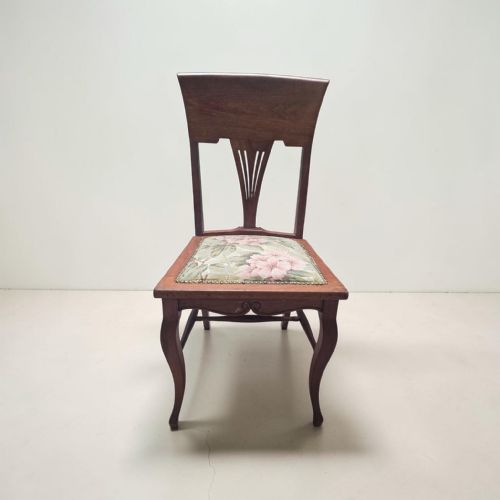
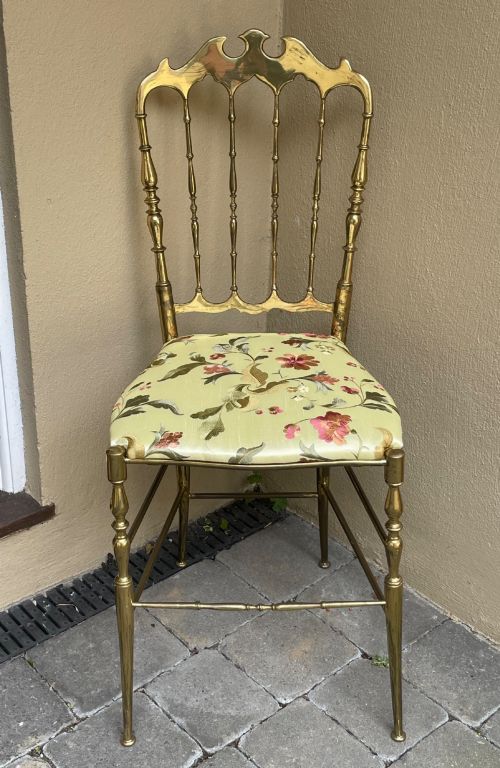
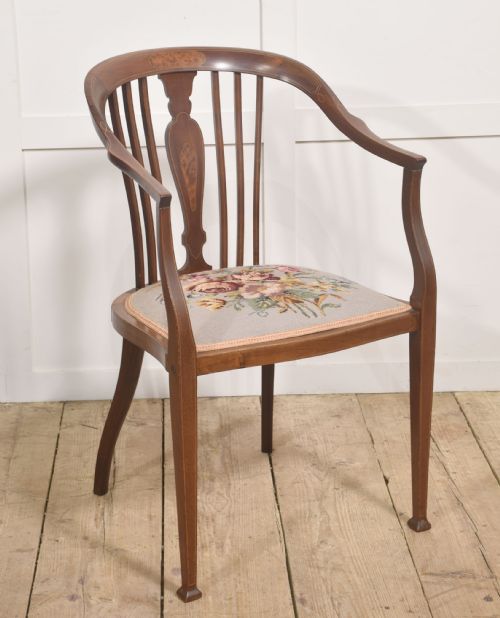


Antique Floral Desk Chairs
These antique floral desk chairs combine period timber frames with textile seats, bringing pattern and historic seating to a workspace.
Antique Floral Desk Chairs
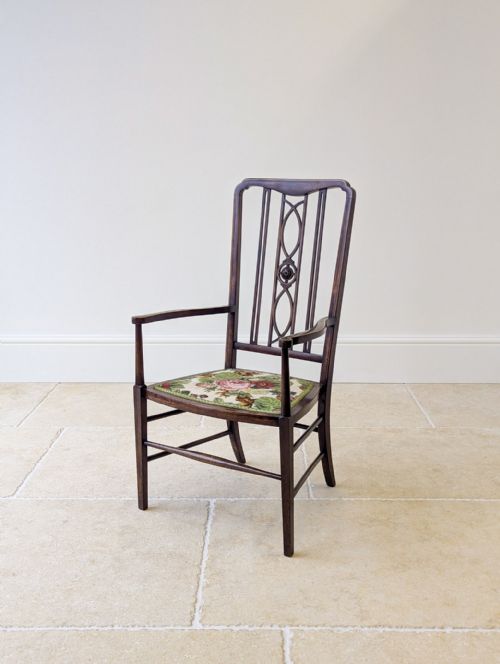
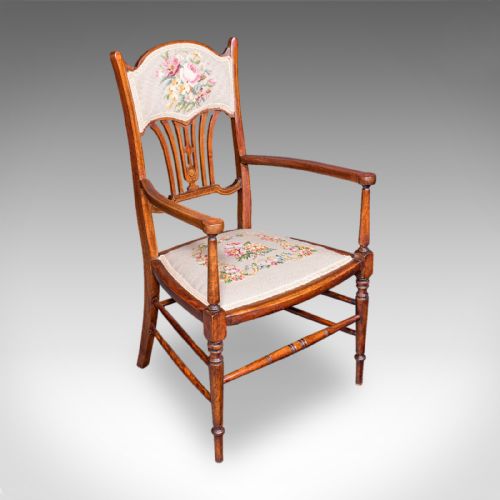
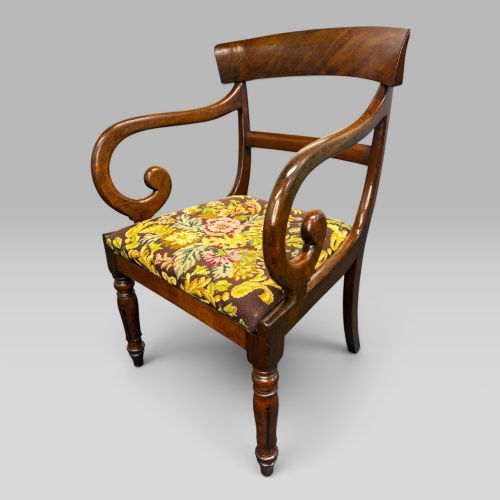
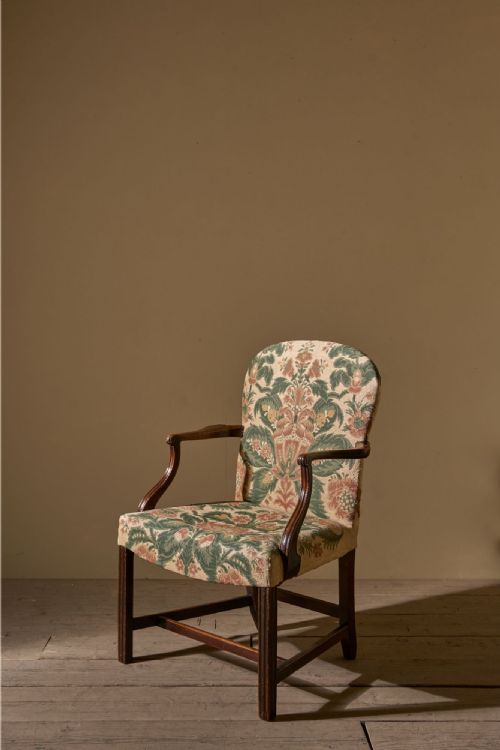
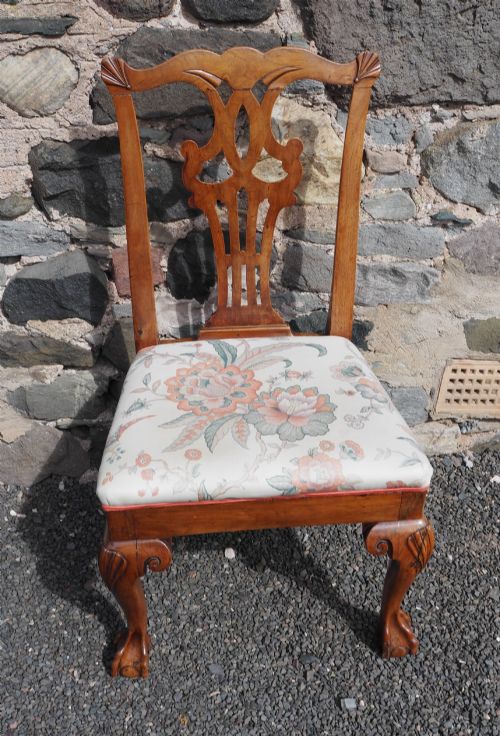
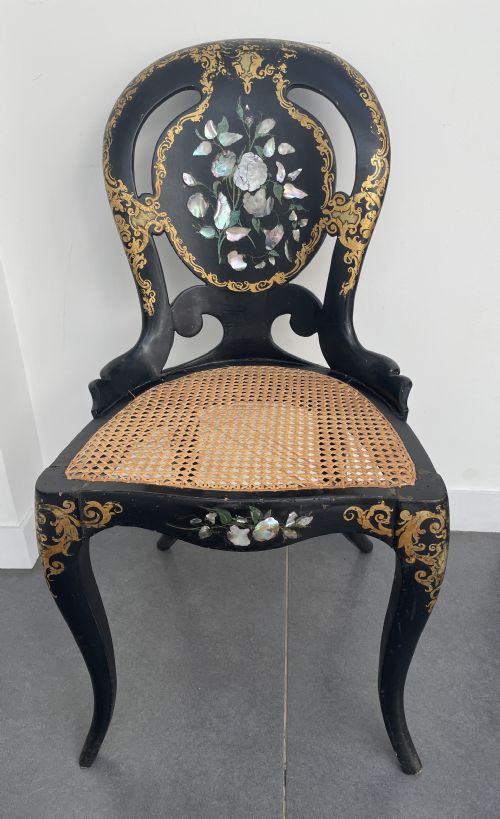
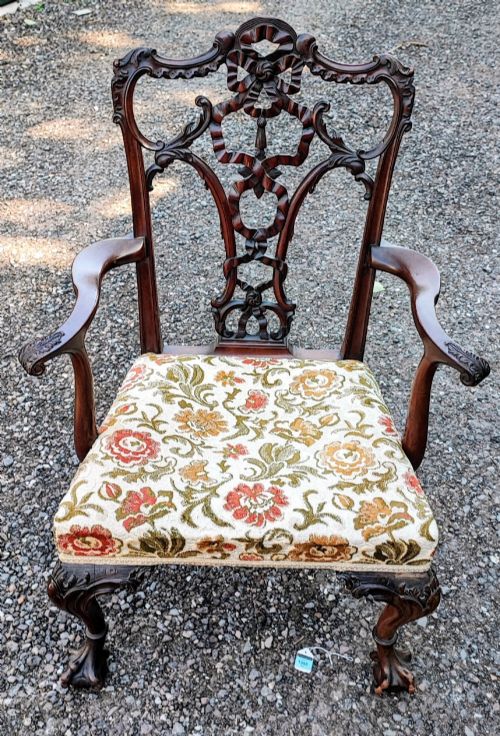
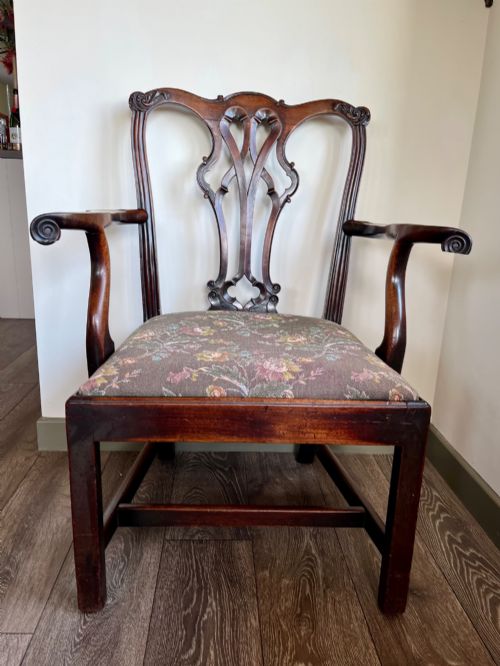
These pieces are designated as antique floral desk chairs through a combination of utilitarian seating forms and botanical textile upholstery or painted decoration. The selection spans 18th century examples up to early 20th century revivals, appearing alongside related armchairs and carver chairs.
Victorian and Edwardian iterations dominate the selection, often taking the form of mahogany or walnut frames fitted with tapestry, needlepoint, or floral fabric seats. Buyers also encounter Georgian and Regency models featuring carved woodwork and painted floral motifs upon the splat back.
The underlying frames vary from library desk seats to lighter salon armchairs adapted for workspace use. Each piece integrates period cabinetry with decorative textile elements, bridging domestic comfort and functional study furniture.
Materials and construction methods
Makers utilised dense hardwoods such as mahogany, walnut, and oak to build the structural frames, often enhancing the surfaces with satinwood inlay or marquetry. Beech and padouk also appear among the regional and imported timber variations.
Upholstery techniques involve traditional stuffing secured over webbing, finished with woven tapestry, needlepoint, or printed floral fabric. Alternatively, some regional pieces feature hand-painted floral decoration directly applied to the wooden back splats.
Mahogany and walnut form the primary frame materials across these listings, paired with tapestry, needlepoint, and painted floral details.
Factors determining quality
The grade of an antique floral desk chair rests on the crispness of timber carving, the precision of inlaid marquetry, and the structural integrity of the joints. Finer examples display meticulous hand-cut joinery and sophisticated wood selections.
Upholstery execution and the preservation of original textile or painted floral details heavily influence the overall standard. Pieces retaining period needlepoint or intact marquetry show greater fidelity to their original workshop production.
Jas Shoolbred·Louis Majorelle
The Antique Floral Desk Chairs Glossary
- Marquetry
- Decorative veneer work assembled in geometric or floral patterns using various coloured woods. This technique adorns the backrests and frames of select Georgian and Dutch pieces.
- Splat back
- The vertical central strip of wood running from the seat up to the top rail of a chair. These elements frequently feature carved vases or painted floral decoration.
- Needlepoint
- A type of canvas work embroidery executed with yarn, commonly found on Victorian and Regency seat pads. It provides durable botanical patterns for daily use.
- Carver chair
- An armchair, often styled to match a set of smaller dining or side chairs. These serve as substantial desk seating in period libraries and studies.
- Cabriole leg
- A furniture leg that curves out and then narrows inward, emulating an animal's leaping leg. This form appears on walnut and mahogany seating from the 18th century.
Antique Floral Desk Chairs: Frequently Asked Questions
How do I identify a true desk chair from a dining chair?
Desk chairs often feature lower profiles, broader armrests, or swivelling and rolling mechanisms suited to prolonged writing tasks. Dining chairs maintain fixed heights and upright postures designed specifically for dining tables.
Examine the undercarriage and seat proportions for evidence of heavy daily study use rather than formal dining room service.
Are these antique chairs comfortable for daily computer work?
Period seating offers sturdy support and upright posture, though the cushions lack modern ergonomic adjustments. Upholstered seats provide firm padding rather than deep sink-in comfort.
Buyers using these pieces for long hours often add a discreet, matching period textile cushion to enhance daily sitting comfort.
How should I care for antique wood and floral fabric?
Keep timber away from direct heat sources and sunlight to prevent the wood from splitting and the floral fabrics from fading. Apply microcrystalline wax sparingly to maintain the polish on mahogany and walnut frames.
Vacuum textile and tapestry seats gently with a soft brush attachment to remove dust without damaging fragile historic fibres.
What indicates a Georgian piece versus a Victorian revival?
Georgian seating displays authentic 18th-century cabinetmaking techniques, hand-cut joinery, and patination acquired over centuries of use. Victorian revival pieces utilise mid-to-late 19th-century machine assistance and display sharper, less weathered timber edges.
Comparing secondary woods and fastener types helps confirm the exact period of manufacture.