



Antique Floral Credenza
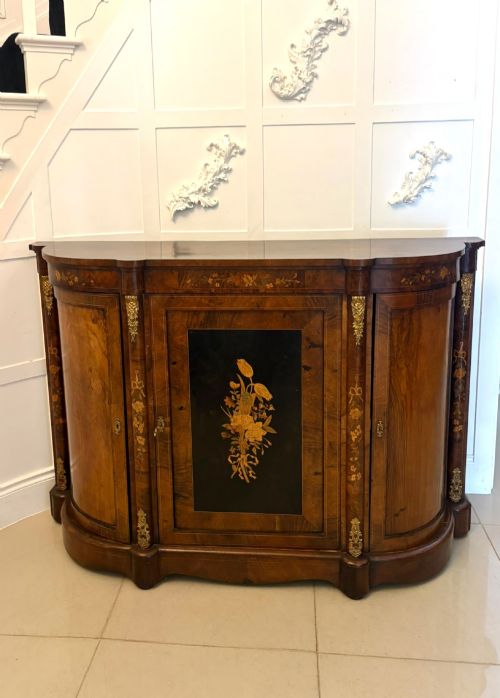
An antique floral credenza brings together rich walnut timbers and intricate botanical inlay, offering a striking centrepiece for formal rooms.
Antique Floral Credenza
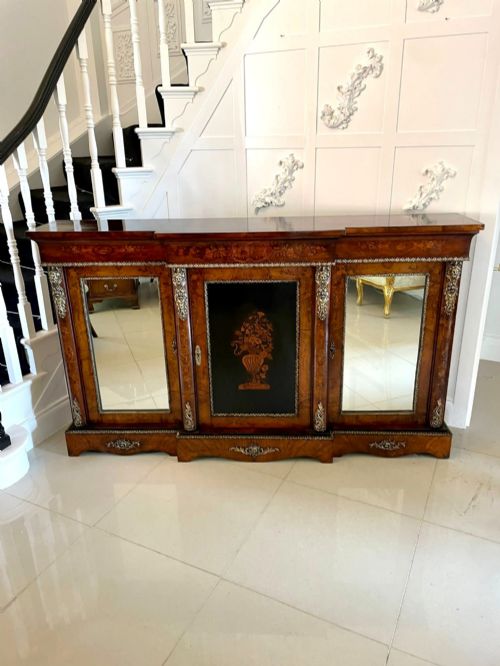
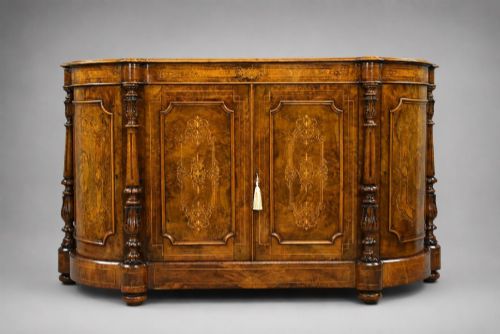
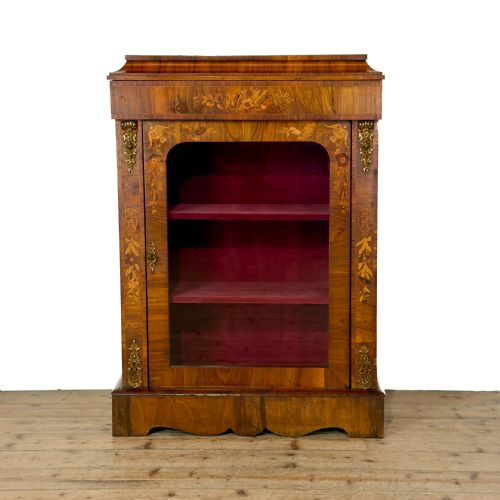
When you search for an antique floral credenza, you encounter low-profile cabinets designed for display and storage, most frequently originating from the Victorian era. These pieces combine spacious central cupboards with curved glass-panelled side doors, resting close to the floor on plinth bases.
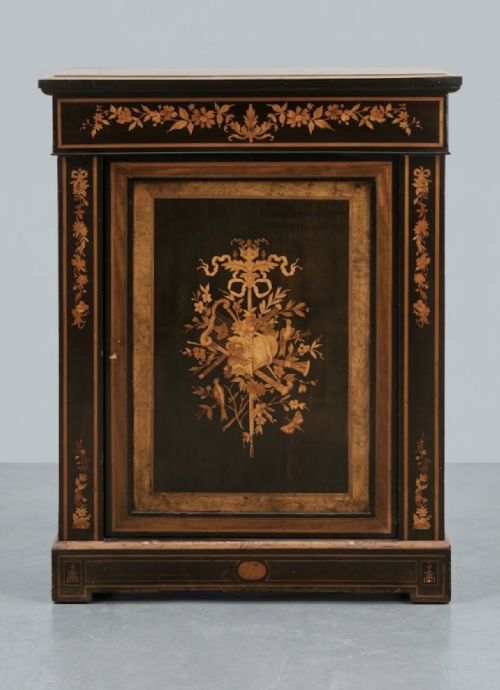
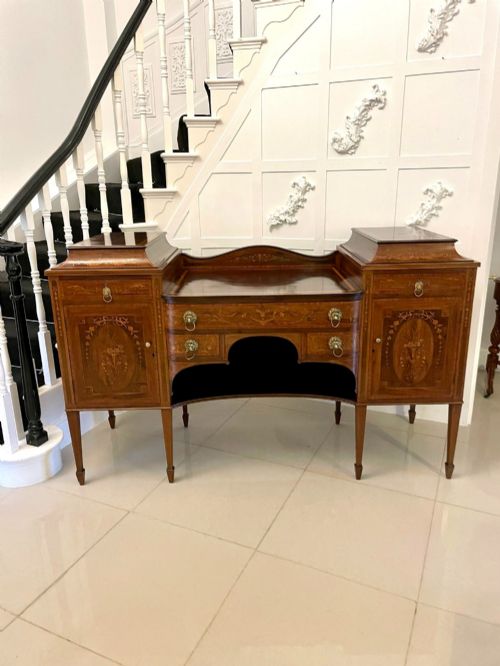
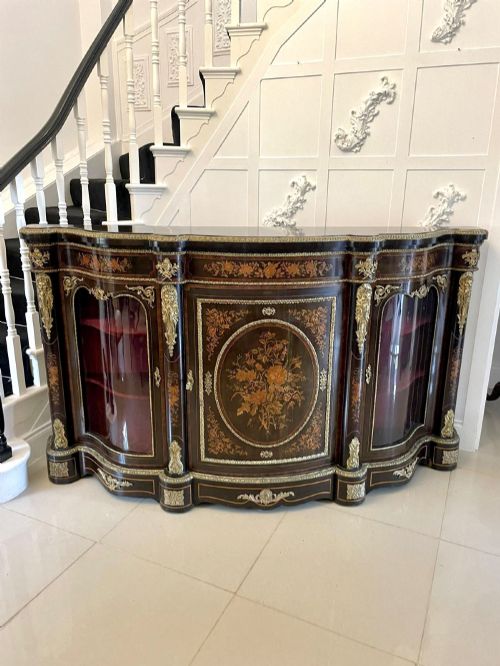
The aesthetic relies heavily on figured woods like burr walnut, inlaid with delicate botanical marquetry depicting flowers and foliage. Alongside standard credenzas, the selection includes related side cabinets and serpentine-fronted sideboards bearing similar floral ornamentation.
How they were made
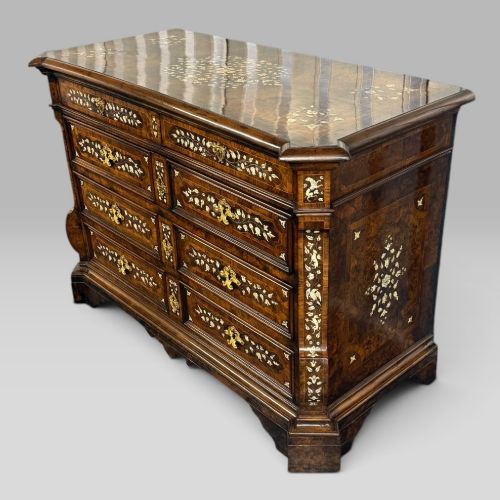
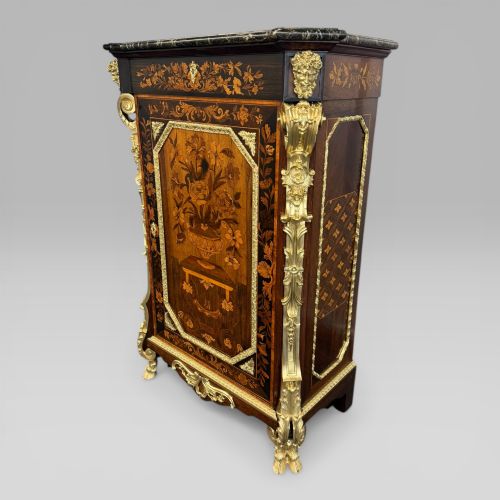
Cabinet makers utilised dense hardwood carcasses, predominantly burr walnut, mahogany, or ebonised wood, as the foundation for complex timber veneers. Surfaces were then decorated using marquetry techniques, setting contrasting woods like satinwood and kingwood into the primary panels to form botanical motifs.
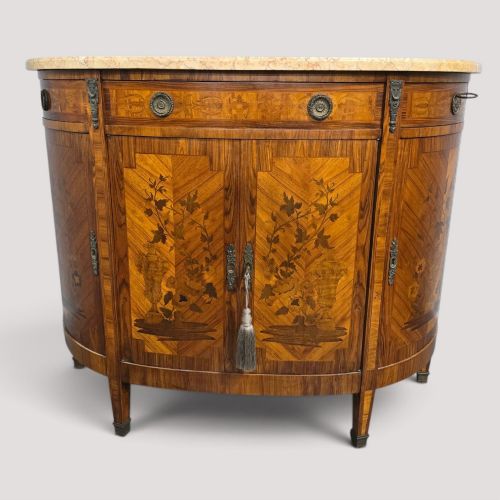
Many examples incorporate cast or chased ormolu mounts to frame the doors and highlight the structural curves, frequently paired with white marble tops on French and Victorian iterations.
Several credenzas hide delicate floral marquetry so fine that individual tulip petals appear shaded by scorching the wood edges.
What varies in quality
The distinction between ordinary and exceptional pieces lies primarily in the precision of the marquetry and the choice of timber figure. High-grade examples display deeply figured burr walnut with crisp, multi-toned floral inlays that retain sharp botanical details without lifting or shrinking.
Ormolu mounts also signal tier; superior pieces feature heavier, finely chased gilt-bronze fittings that integrate seamlessly with the carcase, whereas lesser items use simpler brass trim.
Hewetsons London·Edward Holmes Baldock·Paul Sormani
The Antique Floral Credenza Glossary
- Marquetry
- Decorative veneer work forming pictures or patterns by assembling tiny pieces of tinted wood, shell, or ivory. On these pieces, it typically forms floral arrangements.
- Ormolu
- Gilt-bronze mounts applied to furniture for decorative enrichment. Makers cast and chased these metal ornaments to accent corners and borders.
- Burr Walnut
- Timber taken from a walnut tree growth, producing a swirling, mottled grain pattern. It provides the highly decorative primary surface for many cabinets.
- Serpentine
- A furniture front characterised by a concave central section flanked by two convex curves, or the reverse. This shape demands advanced carpentry skills.
- Demi-Lune
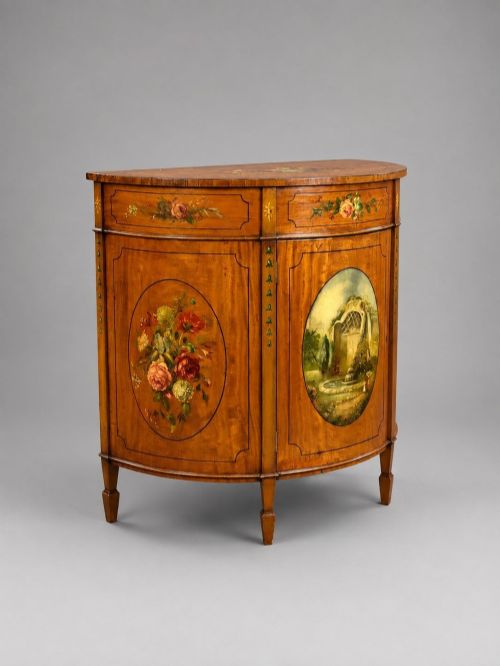
- Half-moon shaped furniture designed to sit flat against a wall. These console cabinets and commodes often feature painted satinwood surfaces.
Antique Floral Credenza: Frequently Asked Questions
What is an antique floral credenza used for?
These cabinets served historically in dining rooms and drawing rooms to store silver, linen, and glassware while displaying ornaments on the top surface. The glass side compartments were specifically intended for showing off prized porcelain and small collectibles.
Today, they function well in modern interiors as statement sideboards or media consoles, providing enclosed storage while anchoring a room's decorative scheme.
How do I care for antique marquetry?
Protect the delicate wood veneers and inlaid floral motifs by keeping the cabinet away from direct sunlight and steady heat sources, which can dry out the timber and cause lifting. Maintain the finish by dusting with a soft, dry cloth and applying a microcrystalline wax sparingly.
Avoid using modern liquid polishes or silicone sprays, as these can penetrate vulnerable aged joints and degrade the traditional French polish finish.
Are all floral credenzas Victorian?
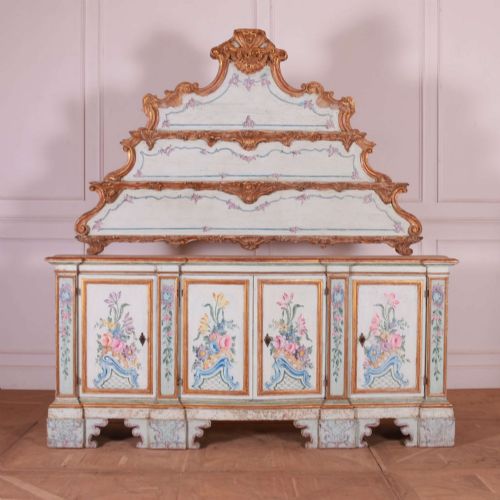
While the majority of these pieces originate from the Victorian period, particularly around eighteen-sixty, the style spans other eras as well. You will also find Edwardian painted satinwood versions and French Louis XVI style cabinets featuring similar floral marquetry.
Examining the construction methods, timber types, and interior secondary woods helps confirm whether a specific piece aligns with nineteenth-century manufacturing or later revivals.
How do I identify burr walnut?
Burr walnut is recognisable by its dense, swirling grain patterns filled with small knot clusters and irregular eyes. It creates a rich, highly figured surface that differs markedly from straight-grained timber.
Cabinet makers used this prized wood selectively for primary facade panels, often framing the wild grain within straight-grained walnut borders to accentuate the floral inlay.