



Antique Floor Bookcase
An antique floor bookcase brings architectural weight and organised warmth to a room, holding centuries of collected volumes within reach.
Antique Floor Bookcase
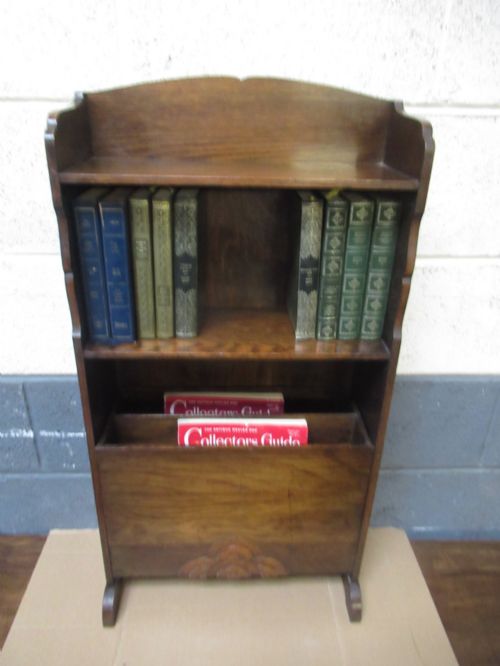
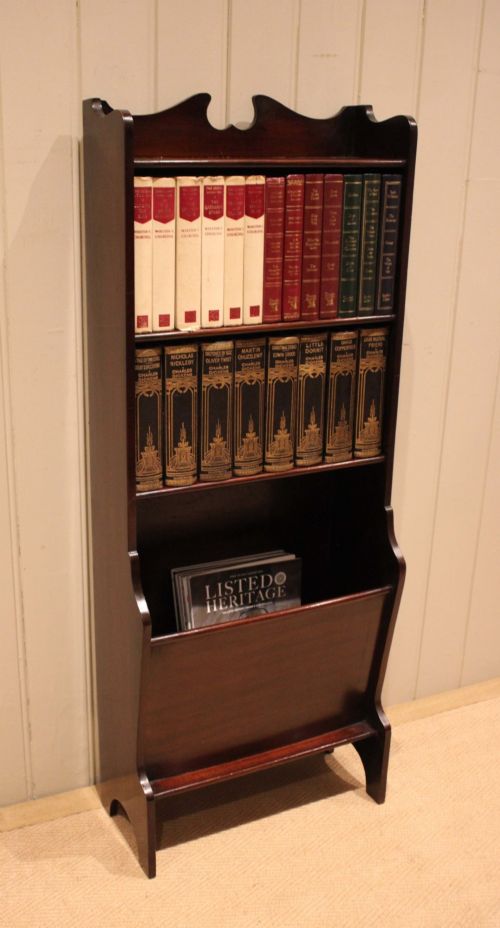
An antique floor bookcase encompasses everything from tall breakfront library pieces and low open dwarf shelves to revolving stands and glazed display cabinets. Mahogany remains the dominant timber across the selection, appearing alongside walnut, oak, and pine.
Makers adapted forms to suit domestic spaces, producing tiered waterfall shelves, corner cupboards, and combined bookcases featuring integrated magazine racks or brass stands. Pieces span the Georgian, Victorian, and Edwardian eras, with later revivals drawing on Regency and Arts and Crafts traditions.
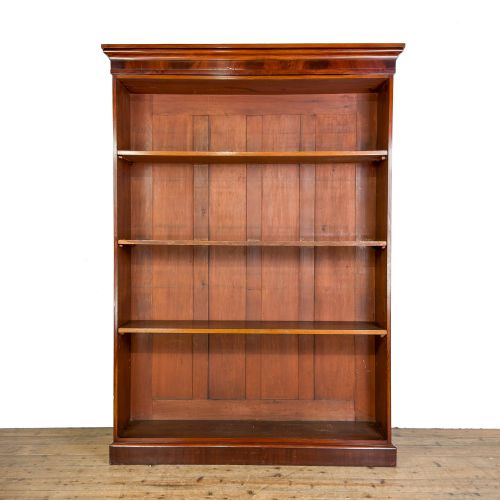
Buyers will most frequently encounter mahogany examples dating from the nineteenth and early twentieth centuries, constructed either as open shelving or with glazed doors. Painted finishes and parcel gilt decoration also emerge among the Georgian and Edwardian variations.
Materials and construction methods
Cabinet makers relied heavily on solid mahogany and walnut for structural stability and fine grain, frequently pairing them with oak or pine for secondary framing and internal shelving. Timber selection governed both the load-bearing capacity of the shelves and the visual elegance of the finished piece.
Glazing techniques required skilled joinery to set glass panels within delicate astragal frames, while revolving designs incorporated brass mechanisms to support heavy rotation. Surface treatments ranged from polished wood finishes to cream paint with parcel gilt highlights.
Antique Floor Bookcase Retail Price Guide 2026
Typical asking prices for floor bookcase among the pieces listed under this phrase on Sellingantiques today, from the lower quarter to the upper quarter. They describe what is for sale here now, not the wider market.
Listings feature woods including mahogany, walnut, oak, pine, and brass, spanning the Georgian, Victorian, Edwardian, and 1940 periods.
Assessing craftsmanship and proportion
Quality rests upon the crispness of the joinery and the selection of timber veneers, where finely figured mahogany distinguishes superior cabinet work from utilitarian pine or basic oak. The integration of architectural details, such as carved gallery tiers or inlaid stringing, marks out the more ambitious workshops.
Proportion and structural integrity define the higher tiers of the range, ensuring that open shelves and revolving stands remain rigid under the weight of books. Original glass, working brass hardware, and unaltered surface finishes elevate the standing of any individual piece.
The Antique Floor Bookcase Glossary
- Breakfront
- A piece of furniture whose central section projects forward from the flanking wings. This classical arrangement adds architectural depth to large library bookcases.
- Waterfall bookcase
- Graduated open shelves that step back from bottom to top, resembling the cascade of a stream. This profile became popular during the nineteenth century for display.
- Astragal
- A small moulding used to divide glass panes within a cabinet door. These slender wooden bars create a grid pattern characteristic of Georgian and Edwardian glazed bookcases.
- Book trough
- A shallow, open receptacle designed to hold a small selection of volumes upright on a table or stand. They often feature slanted sides for easy reading access.
- Parcel gilt
- A surface decoration where selected carved details or mouldings are highlighted with gold leaf over a painted or polished ground.
Antique Floor Bookcase: Frequently Asked Questions
How do I clean a mahogany bookcase?
Dust the wood regularly with a dry, soft lint-free cloth to prevent particle buildup. Avoid modern silicone sprays that can damage historic polishes.
Apply a traditional beeswax sparingly once or twice a year to nourish the timber. Buff gently with a clean cloth to maintain a natural lustre without creating a sticky film.
Can adjustable shelves hold heavy books?
Many period bookcases feature fixed shelving, particularly in open dwarf formats and revolving stands. Check the thickness of the timber before loading heavy volumes onto upper tiers.
If the shelves are adjustable, ensure the support pegs fit snugly into their slots. Distribute heavy folios toward the bottom to maintain stability.
Where should I place an open bookcase?
Position the piece against an interior wall away from direct sunlight and radiators. Extreme temperature fluctuations cause timber to warp and split over time.
Allow a small gap between the back of the bookcase and the wall for air circulation. This prevents dampness from accumulating behind enclosed shelves.
What is a revolving bookcase?
A revolving bookcase is a compact freestanding unit mounted on a concealed central pivot and a brass or wooden stand. It allows users to access multiple directions of books from a seated position.
These pieces were especially popular in studies and libraries where floor space was limited. The internal mechanism requires gentle handling to ensure smooth rotation.