




Antique Fish Cutlery
Antique fish cutlery spans ornate Victorian and Edwardian cased servers, offering specialised elegance for dining tables.
Antique Fish Cutlery
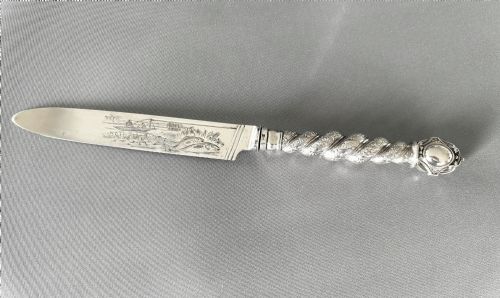
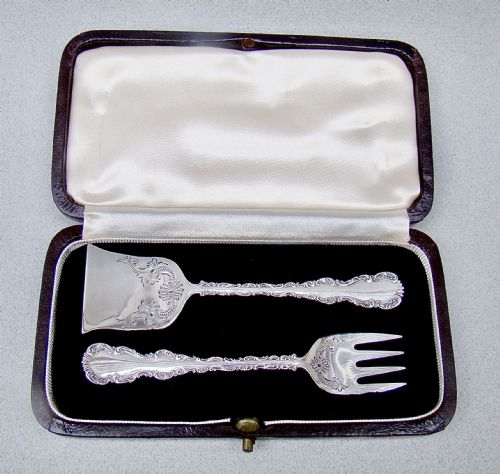
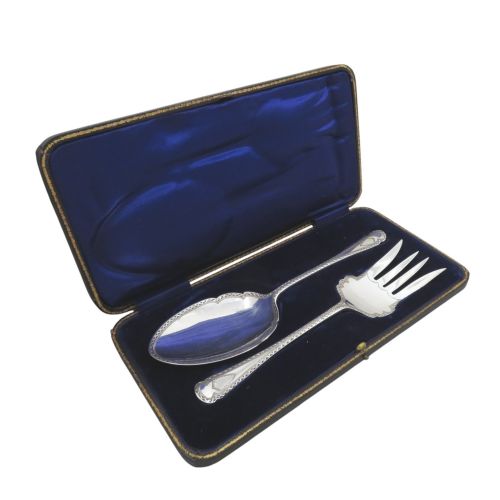
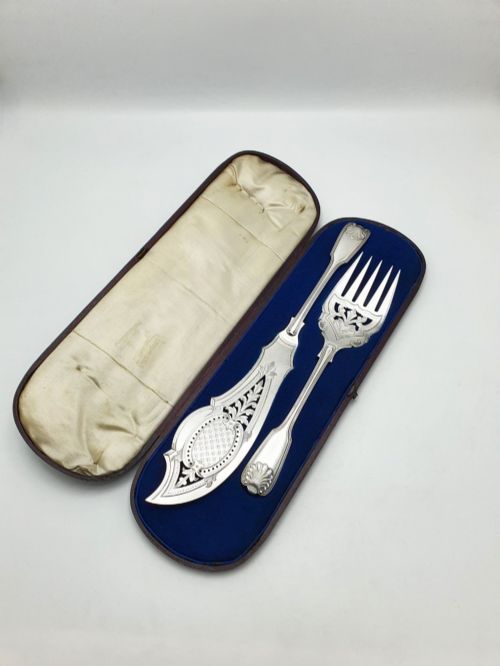
When you search for antique fish cutlery, you encounter specialised implements designed for course dining, including fish slices, servers, and lobster picks. The pieces on this page comprise sterling silver and silver plated utensils alongside cased sets intended for specific seafood courses.
The most common forms you meet are Victorian and Edwardian servers, often featuring pierced blades and decorative engraving. Sets range from individual knives and forks to large cased presentation pairs and full canteens.
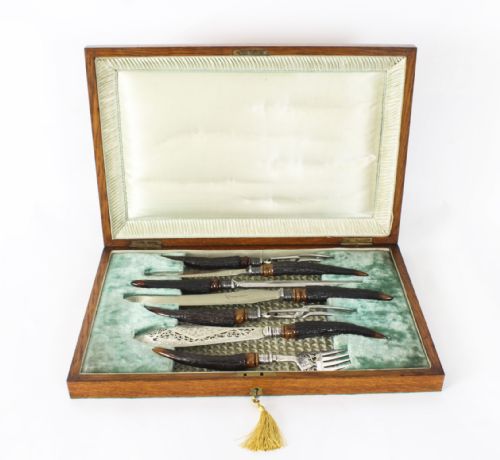
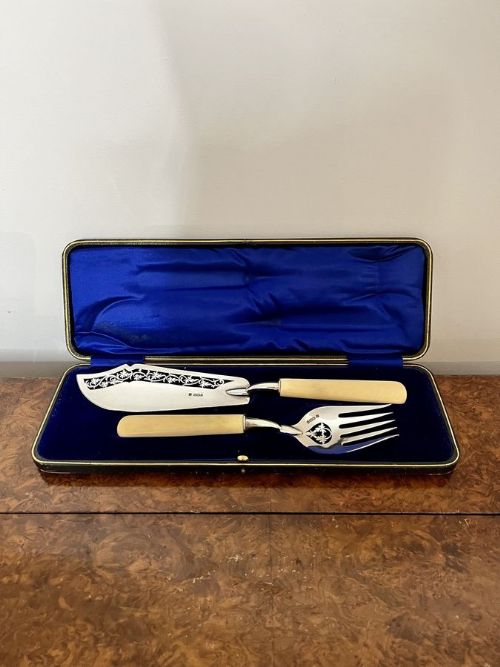
Origins span English, Irish, and French workshops, encompassing styles from George IV and French Restoration to Art Deco. Handles frequently incorporate organic materials like bone, mother of pearl, and antler horn.
Materials and construction
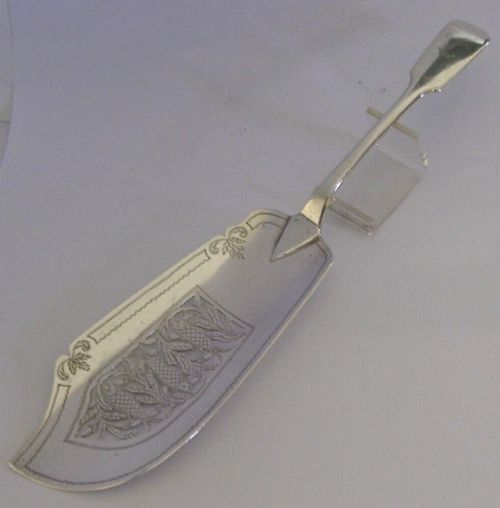
Maker techniques rely heavily on solid sterling silver and durable silver plating applied over base metals. Blades and servers are frequently pierced with intricate scrollwork or engraved with hunting and floral motifs.
Handles utilise natural materials including carved mother of pearl, polished bone, antler horn, and wood, secured to metal shafts with pins. Many sets are housed in custom wooden cases lined with velvet and silk to protect the polished surfaces.
Antique Fish Cutlery Retail Price Guide 2026
Typical asking prices for fish cutlery among the pieces listed under this phrase on Sellingantiques today, from the lower quarter to the upper quarter. They describe what is for sale here now, not the wider market.
Several Victorian servers sport hunting and dog engravings, proving that even a delicate fish supper occasionally required a sporting hound.
Distinctions in quality
Quality rests upon the weight of the silver, the depth and clarity of the blade engraving, and the integrity of the handle materials. Solid sterling silver pieces carry distinct hallmarks indicating the year and maker, contrasting with plated alternatives.
Superior sets feature matching fitted wooden cases lined in velvet or silk, whilst lesser examples lack original housing. The fineness of the piercing work on the servers and the matching of natural handles across a full set elevate the standing of the pieces.
Henry Wilkinson·Suckling Ltd·Waring and Gillows·Alvin·William Howe
The Antique Fish Cutlery Glossary
- Fish slice
- A wide, flat server designed specifically for lifting and serving portions of fish at the dining table. These blades often feature extensive pierced decoration and engraved aquatic or botanical motifs.
- Sterling silver
- An alloy containing 92.5 percent silver by mass, widely utilised in British cutlery production for durability and lustre. Pieces bear official hallmarks indicating the assay office and date of manufacture.
- Mother of pearl
- An iridescent internal layer of shells utilised as a natural handle material for Edwardian and Victorian cutlery sets. It offers a smooth tactile surface with subtle colour variation.
- Silver plate
- A manufacturing method where a thin layer of silver is bonded to a base metal core, common in nineteenth-century serving sets. This technique provided the appearance of solid silver at a lower production cost.
- Canteen
- A fitted box or cabinet designed to store a complete set of cutlery securely. These wooden enclosures are typically lined with velvet or silk to prevent scratching.
Antique Fish Cutlery: Frequently Asked Questions
What is antique fish cutlery used for?
These specialised implements were created for the formal consumption of fish courses during Victorian and Edwardian dining. The wide blades of the servers allowed the user to lift delicate fish flesh without breaking it.
Smaller knives and forks matched the service of individual portions, while picks were utilised for crustaceans like lobsters. Each tool was shaped to handle seafood without transferring metallic tastes to the food.
How do I identify the date of fish servers?
British sterling silver pieces carry hallmarks that include assay office marks, standard marks, and date letters. Consulting registered punch marks reveals the exact year of manufacture.
For silver plated items without official date hallmarks, stylistic clues such as the handle material and engraving style help narrow the decade of production.
Are cased sets more desirable?
Cased sets preserve the cutlery alongside its original fitted velvet or silk lining, offering protection and historical context. The presence of a matching wooden case often indicates a higher grade of presentation intended for gifting or formal dining.
Uncased items remain functional and collectible, but complete cased pairings retain the original presentation format favored by Victorian and Edwardian households.
How should I care for silver fish cutlery?
Silver and silver plated items require gentle cleaning with specialised polishes to remove tarnish without wearing away thin plating. Hand washing in warm, soapy water preserves organic handle materials like mother of pearl and bone.
Avoid submerging wooden handles or cased items in water, as moisture damages the internal velvet or silk linings and loosens pinned attachments.