



Victorian Fish Fork
These victorian fish fork items are period table pieces designed for serving seafood, offering both solid metals and decorative handles.
Victorian Fish Fork
When you search for a victorian fish fork, you encounter specialist flatware designed specifically for the dining habits of the nineteenth century and the early twentieth century. The selections on this page span the Victorian era, late Victorian period, and Edwardian times, often appearing as matched pairs or within larger canteens of cutlery.
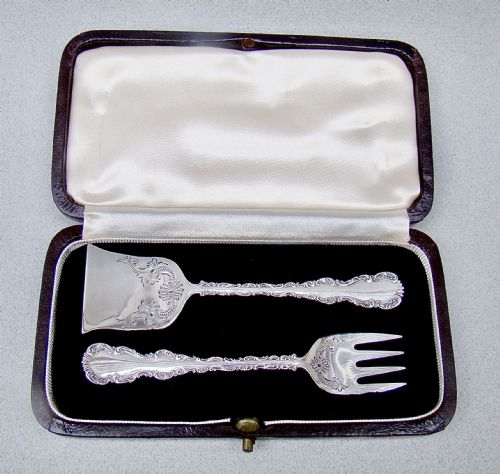
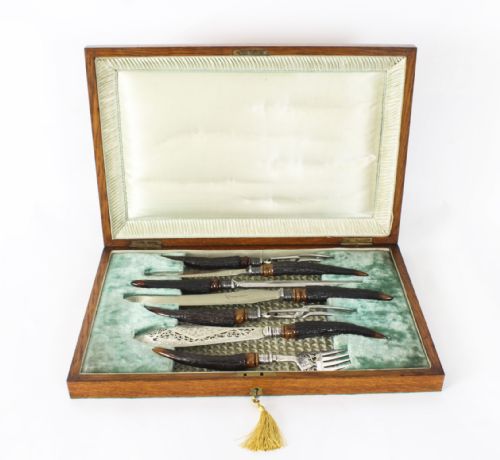
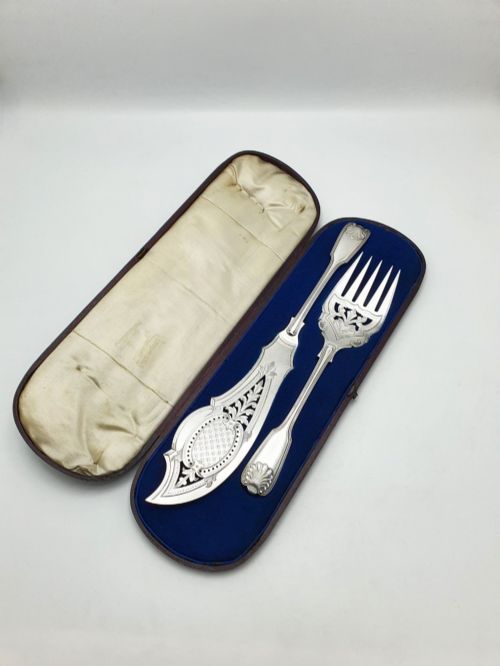
Most items take the form of dedicated fish servers, serving cutlery, or individual canteen pieces. Many survive complete with their original presentation cases lined in velvet, leather, or satin, pointing to their original use as gifts or prized household possessions.
Materials and construction
Makers utilised sterling silver and silver plate for the blades and tines, frequently applying detailed engraving depicting hunting scenes or floral motifs. Handles were formed from natural materials such as stag antler and horn, secured to the metal elements with pins.
Production methods combined silversmithing techniques with specialised cutlery manufacturing, particularly in centres like Sheffield. Cased sets incorporated fitted interiors lined with fabric to protect the polished metal and organic handle materials.
Victorian Fish Fork Retail Price Guide 2026
Typical asking prices for victorian fish fork among the pieces listed under this phrase on Sellingantiques today, from the lower quarter to the upper quarter. They describe what is for sale here now, not the wider market.
Listings feature items spanning from the 1870s through the Edwardian period, incorporating materials like stag antler, velvet, and sterling silver.
Judging quality in victorian fish fork items
The distinction between standard examples and finer pieces rests upon the crispness of the engraving and the quality of the materials selected for the handle. Hand-engraved motifs executed with precision display greater artistry than simpler machine-stamped patterns.
The presence of an original fitted presentation case lined in materials like satin or velvet elevates the standing of a piece. Furthermore, solid sterling silver construction commands higher regard than silver plate, while matched sets with harmonious horn or antler handles show superior original assembly.
Henry Wilkinson·Alvin·Mappin & Webb
The Victorian Fish Fork Glossary
- Sterling silver
- A silver alloy containing 92.5 percent pure silver by mass, widely utilised for high-end Victorian flatware and serving pieces.
- Silver plate
- A layer of silver applied to a base metal core, common in nineteenth-century cutlery manufacture to provide the appearance of solid silver at a lower cost.
- Canteen
- A fitted box or chest designed to hold a complete set of cutlery or flatware in organised slots or trays.
- Tines
- The pointed prongs on a fork used for piercing or lifting food, which on fish forks are often broader and feature a pierced blade design.
- Antler
- The shed horn material derived from deer species, shaped and polished to form tactile, textured handles on serving cutlery.
Victorian Fish Fork: Frequently Asked Questions
What is a victorian fish fork used for?
These forks were created for serving specific courses of fish during formal nineteenth-century banquets and family dinners. Their broader tines and decorative blades allowed diners or hosts to lift delicate fish flesh away from the bone without damaging it.
They appear both as individual serving pieces and as part of larger canteens intended for twelve persons. Their design reflects the highly specialised dining culture of the period.
How do I date a victorian fish fork?
Dating relies upon hallmarks stamped into the metal, maker marks, and stylistic clues such as late Victorian or Edwardian design motifs. Items often correspond to specific decades like the 1880s or 1890s based on assay office records.
The presence of original fitted cases lined in velvet or satin can also help narrow the manufacturing period when combined with the style of engraving on the blade.
How should I care for cased cutlery?
Cased items should be stored in dry conditions away from direct sunlight to protect the original velvet, leather, or satin interiors. Occasional gentle cleaning with appropriate silver care products maintains the appearance of the metal without harming engraved details.
Natural handle materials like horn and antler benefit from avoiding excessive moisture or harsh chemical immersion during maintenance.