

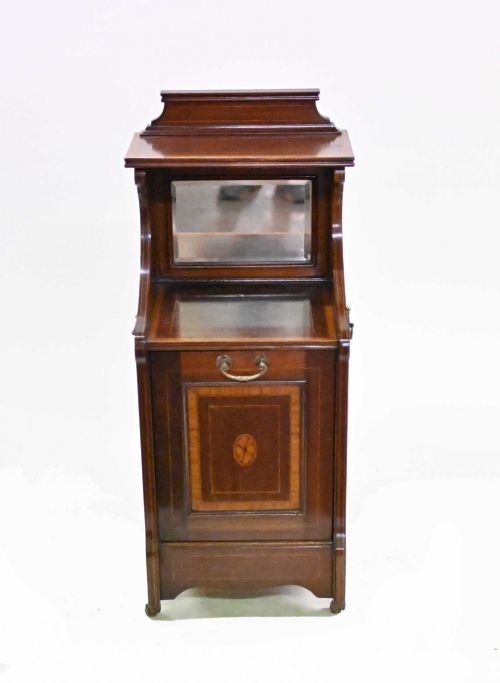


Antique Fireside Cabinet
An antique fireside cabinet is a sturdy and practical hearthside storage piece, keeping coal and fuel tidy beside the grate.

Antique Fireside Cabinet
An antique fireside cabinet serves as a dedicated container for household fuel, traditionally designed to hold coal near the hearth while keeping the room clean. These practical furnishings take several forms across the evidence, appearing most frequently as purdoniums, coal boxes, and freestanding cabinets.
The pieces on this page span the Victorian and Edwardian eras, alongside late nineteenth-century examples, representing the domestic styles popular during those periods. Workshops of this era produced them in substantial woods such as oak, mahogany, walnut, and rosewood to withstand daily fireside use.
Makers often integrated specialised hardware, such as brass handles, iron linings, or ormolu mounts, to manage the heavy fuel safely. Buyers encounter forms ranging from simple lidded bins to elaborate cabinets featuring marquetry inlay and carved details.
How they were made
Cabinetmakers constructed these pieces from dense timbers like oak, mahogany, and walnut, frequently applying rosewood veneers and marquetry inlay to the exterior surfaces. These decorative techniques elevated a utilitarian fuel container into a refined piece of drawing-room furniture.
Functional metal elements such as brass handles, hinges, and linings were essential for durability, protecting the timber from heavy coal and ash. Many examples incorporate metal coal scoops or shovels designed to sit within dedicated side attachments.
Antique Fireside Cabinet Retail Price Guide 2026
Typical asking prices for fireside cabinet among the pieces listed under this phrase on Sellingantiques today, from the lower quarter to the upper quarter. They describe what is for sale here now, not the wider market.
The listings show oak, mahogany, walnut, and rosewood alongside brass, glass, and iron.
What varies in quality
Quality rests in the selection of timbers and the precision of the cabinetwork, distinguishing standard utility boxes from finely finished reception-room pieces. Finer examples display intricate marquetry inlay, careful carving, and high-grade brass or ormolu mounts.
The structural integrity of the internal mechanisms, such as the tilting hopper in a purdonium or the fitting of the inner metal liner, marks the distinction between workshop grades. Pieces that retain their original shovel and matching hardware represent the upper tier of survivals.
The Antique Fireside Cabinet Glossary
- Purdonium
- A specialised coal cabinet featuring a hinged sloping front or a tilt-out bin designed for domestic fuel storage. This form became popular in Victorian and Edwardian homes to keep coal tidy by the hearth.
- Coal box
- A freestanding timber container with a lid used to hold solid fuel for an open fire. These boxes often include interior metal linings to contain coal dust and residue.
- Marquetry
- The art of applying pieces of veneer to a structure to form decorative patterns and pictures. Makers utilised this technique on rosewood and walnut cabinets to create elaborate floral or geometric designs.
- Ormolu
- Gilded bronze ornamentation applied to the exterior of furniture pieces. It added a decorative metallic contrast to dark woods during the nineteenth century.
- Fireside companion
- A collection of hearth tools, sometimes housed alongside or integrated into cabinet furniture. These sets typically included shovels, pokers, and tongs.
Antique Fireside Cabinet: Frequently Asked Questions
How were these cabinets used?
They were placed next to the fireplace to store coal, logs, or kindling close to the hearth. The enclosed design kept household dust and debris away from the main living space.
Many included fitted metal liners and matched shovels to make transferring fuel to the grate clean and straightforward.
What woods are most common?
Oak and mahogany appear frequently across the pieces recorded in the evidence. Cabinetmakers also employed walnut and rosewood for more formal reception rooms.
Inlays and brass detailing were often added to complement the primary timber and match other nineteenth-century furniture.
How do I date an antique cabinet?
Dating relies on observing the prevailing styles, timber choices, and construction methods recorded in the piece. Victorian examples often feature heavy carving and rosewood, while Edwardian pieces frequently utilise oak.
Details such as brass mountings and inlay styles help place the item within the late nineteenth or early twentieth century.