

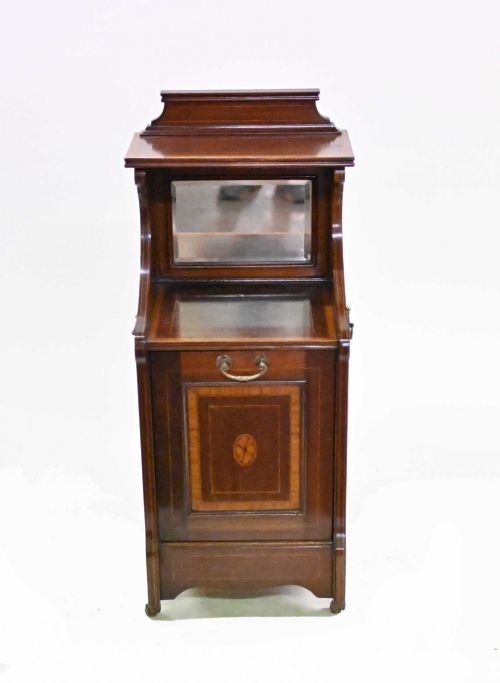
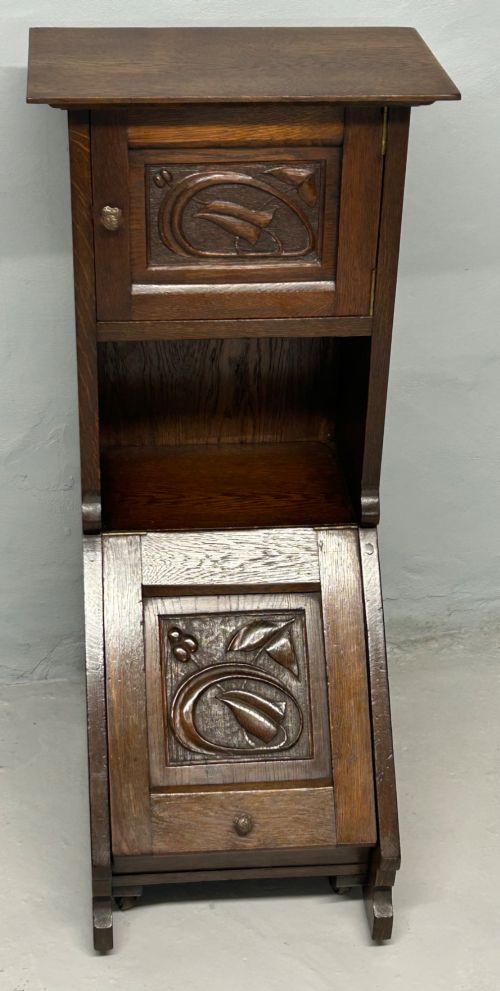


Edwardian Purdonium Cabinet
These Edwardian purdonium cabinet pieces are fireside coal storage units that combine practical utility with period craftsmanship.

Edwardian Purdonium Cabinet
When you search for an edwardian purdonium cabinet, you encounter specialised coal storage furniture designed to sit beside the fireplace. These pieces generally take the form of enclosed cabinets or boxes intended to hold coal neatly in the domestic interior. The examples found here span the Edwardian era, Victorian period, and late nineteenth century.
Most pieces on this page originate from the Edwardian period or the late nineteenth century, taking forms such as coal boxes, purdoniums, and scuttles. They function as domestic hearth accessories that keep fuel out of sight while complementing the room's decor. The construction reflects the domestic requirements of the period, often including fitted interiors or matching shovels.
Materials and construction
Cabinet makers utilised timber frameworks of oak, mahogany, and rosewood to build these coal containers. Surfaces frequently feature marquetry inlay, veneer work, or carved details that align with Edwardian, Victorian, and Art Nouveau styles.
Metal components play a structural and decorative role, with brass handles, hinges, and linings appearing alongside iron and ormolu mounts. Glass elements and metal liners assist with the containment and handling of fuel.
Edwardian Purdonium Cabinet Retail Price Guide 2026
Typical asking prices for edwardian purdonium cabinet among the pieces listed under this phrase on Sellingantiques today, from the lower quarter to the upper quarter. They describe what is for sale here now, not the wider market.
Many a Victorian household entrusted its dirty fossil fuel to a cabinet fancier than the grand piano in the parlour.
Distinctions in quality
The choice of timber and decorative technique dictates the standing of an individual piece. Elaborate rosewood cabinets featuring marquetry inlay and ormolu mounts occupy a different decorative tier from simpler oak or mahogany coal boxes.
Hardware selection and internal fittings further differentiate the construction. Solid brass mounts, fitted shovels, and precise cabinet joinery elevate the execution of the design.
The Edwardian Purdonium Cabinet Glossary
- Purdonium
- A specialised cabinet or box designed to hold household coal near a fireplace. It usually incorporates a sloping front or an internal tilting container for easy access.
- Marquetry Inlay
- Decorative patterns formed by fitting contrasting veneers into a timber surface. This technique creates complex floral or geometric designs on the cabinet exterior.
- Ormolu
- Gilt bronze mounts applied to furniture for decorative effect. These metal ornaments enhance the visual richness of the piece.
- Fireside Companion
- An accessory set or related item used alongside the hearth. These pieces coordinate with the purdonium to service the fireplace.
Edwardian Purdonium Cabinet: Frequently Asked Questions
What is an edwardian purdonium cabinet used for?
These cabinets serve as designated containers for storing domestic coal near the fireplace. They keep the fuel contained and out of sight.
Inside, a metal-lined compartment or removable box holds the coal, often accompanied by a small shovel stored within the unit.
How do I identify an Edwardian coal box?
Edwardian examples typically exhibit lighter timbers like oak and mahogany, sometimes paired with subtle inlay work. They reflect the domestic styles of the early twentieth century.
Victorian pieces from the preceding decades often utilise darker woods such as rosewood and feature heavier ornamentation or marquetry.
Are these cabinets freestanding?
Most coal purdoniums and cabinets function as freestanding furniture items designed to sit directly on the floor beside the hearth. Their finished backs and sides allow placement in various positions.
They integrate with other fireside accessories while remaining mobile enough to reposition during room cleaning.
What materials are common in these pieces?
Primary construction relies on hardwoods including oak, mahogany, and rosewood. Brass, iron, and metal provide structural support and operational hardware.
Decorative additions frequently include marquetry inlay, glass, and ormolu mounts that distinguish particular stylistic periods.