



Antique Fire Rail
An antique fire rail protects the hearth while offering a practical bar for warming textiles, appearing most often in brass or iron during the Victorian and Edwardian eras.
Antique Fire Rail
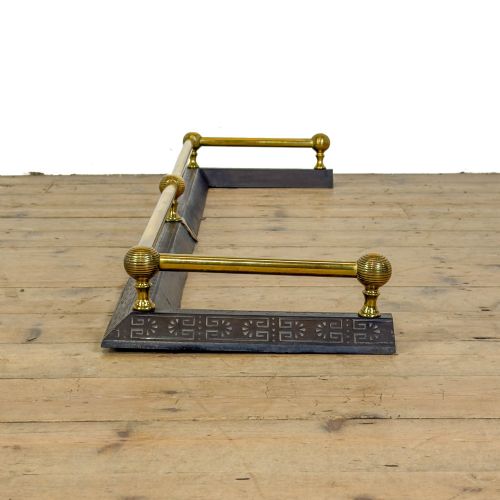
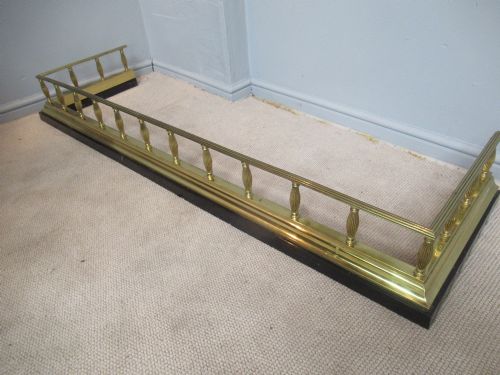
When buyers search for an antique fire rail, they encounter hearth furniture designed to sit around domestic fireplaces to contain embers and keep rooms safe. These pieces frequently double as nursery fire guards or extendable curbs featuring integrated rails for drying or warming garments.
The versions most common on this page date from the nineteenth century into the early twentieth century, spanning Victorian and Edwardian periods. They originate as English or French workshop pieces and appear in forms ranging from low brass curbs to tall wire mesh guards with top rails.
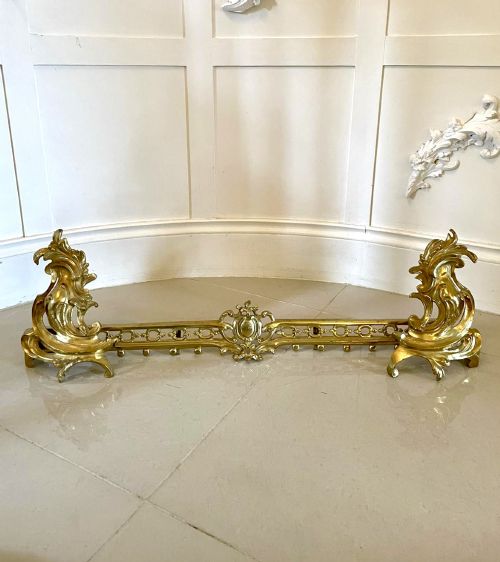
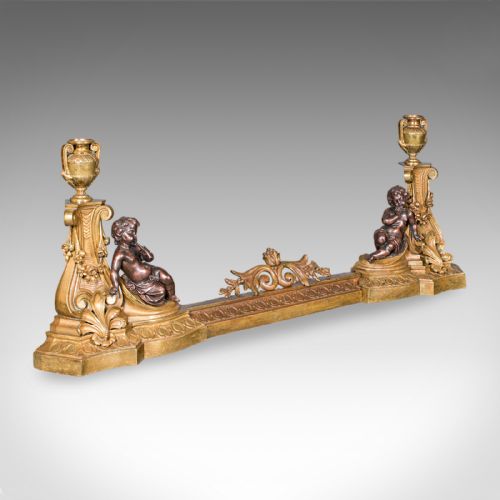
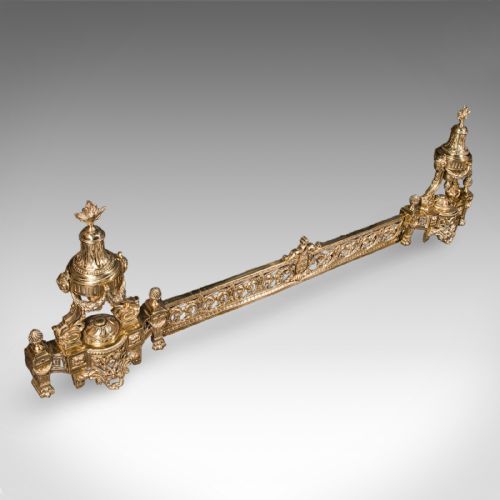
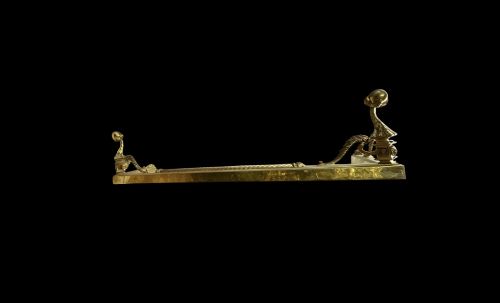
Many items combine functional iron or steel frames with polished brass decorative elements, lions, or pierced sheet metal. Adjustability is a common characteristic, allowing a single curb or fender to fit varying hearth dimensions.
Assessing quality
Quality in an antique fire rail rests on the weight of the metal and the crispness of the casting work rather than surface gleam alone. Heavy gauge brass and solid iron frames indicate superior construction that resists warping from hearth heat.
Fine examples display detailed chasing on applied mounts and robust mechanisms on adjustable curbs. Simpler items use thinner sheet metal and basic tubular bars, while superior pieces incorporate complex pierced brass panels and substantial decorative lions or heavy scrolled feet.
Listings feature brass, iron, and steel fire rails spanning the Georgian, Victorian, Edwardian, and early twentieth-century periods.
The Antique Fire Rail Glossary
- Fire fender
- A low metal barrier placed around the hearth to keep burning coals and ash contained. It often incorporates a seat or an adjustable frame.
- Nursery guard
- A tall protective screen of wire mesh and metal bars designed to keep children away from flames. Many include integrated rails.
- Nappy rail
- A horizontal bar fitted to a fire guard or fender used for airing and drying clothes or nappies. This feature appears frequently on nineteenth-century examples.
- Fire kerb
- An alternative term for a low hearth fender that frames the fireplace opening. These often feature extension mechanisms.
- Pierced fender
- A metal curb decorated with decorative pierced or cut-out patterns in the sheet metal. These designs often reflect Victorian or Art Nouveau tastes.
Antique Fire Rail: Frequently Asked Questions
What is an antique fire rail used for?
An antique fire rail serves primarily to bound the hearth area, preventing hot embers from rolling onto domestic flooring. The integrated rail provides a convenient spot for warming garments or drying textiles near the warmth of the fire.
Historically, tall versions with mesh panels also protected small children and pets from open flames in nineteenth-century homes. Today, they function as decorative period accessories that anchor a traditional fireplace setting.
How do I measure for a fire rail?
To fit a fire rail correctly, measure the width and depth of your hearth stone or fireplace opening precisely. Many period examples feature adjustable frames that accommodate varying mantel widths.
Take note of the clearance required for fire irons and hearth accessories before selecting a fixed or extending model. Ensure the internal dimensions match the footprint of your fireplace surround.
How do I date an antique fire rail?
Dating relies on observing material combinations, manufacturing techniques, and stylistic markers present in the ironwork or brass. Heavy cast brass, elaborate scrollwork, and specific motifs point towards Victorian and Edwardian production.
Earlier pieces from the Regency period often show distinct neoclassical styling or simpler iron construction. Examine the fasteners, joins, and metal gauge to help place the item within the nineteenth or early twentieth century.
Are these pieces adjustable?
Many of the listed brass and iron fenders and curbs feature sliding mechanisms that allow the width to be altered. This adjustability was common in period manufacturing to suit different hearth sizes.
Fixed models also exist, particularly among nursery guards and heavy cast examples designed for specific room dimensions. Check the listing details to confirm whether a particular piece offers an extending function.